

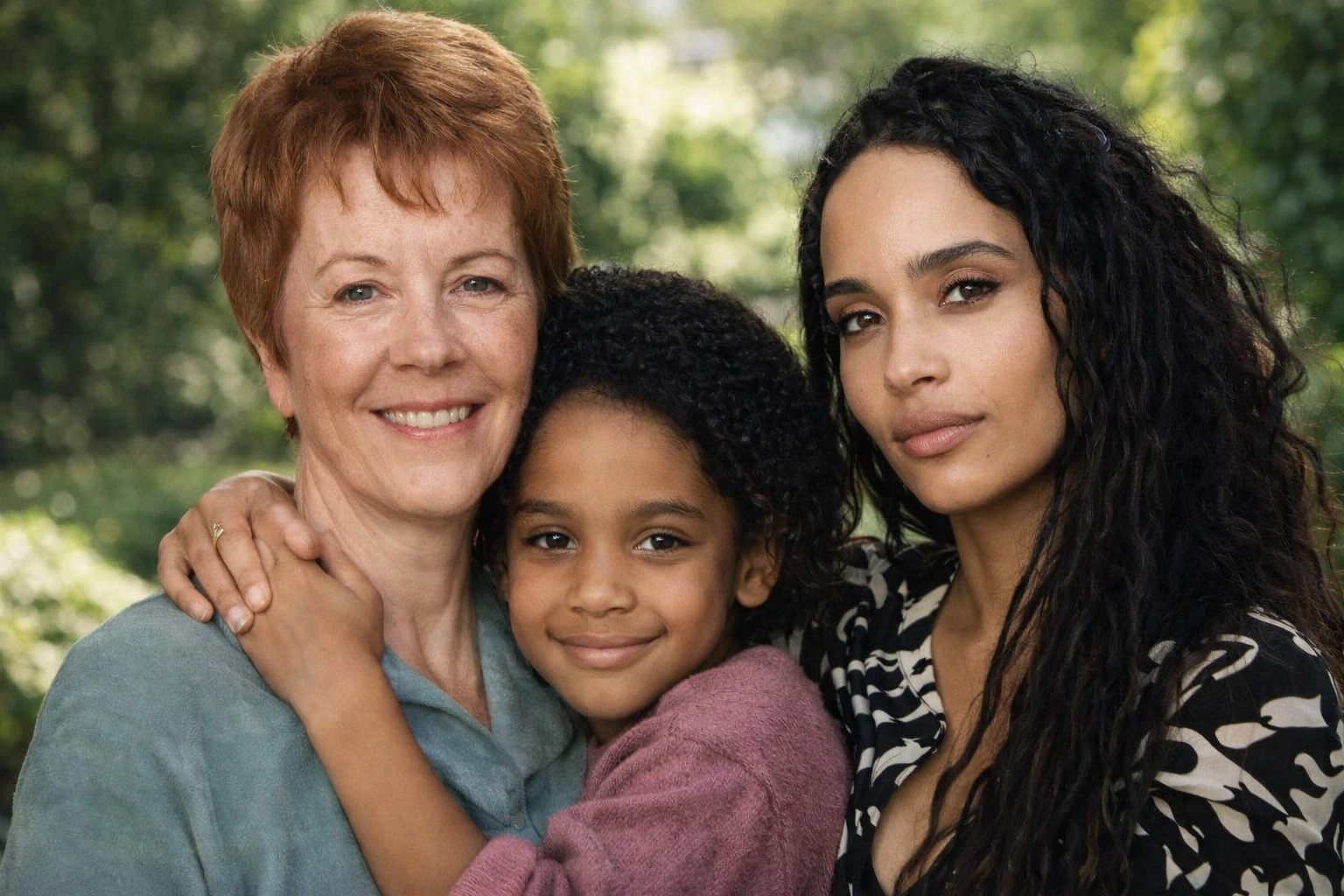
Long before Lisa Bonet became one of television’s most distinctive presences, and decades before Zoë Kravitz emerged as a defining face of modern Hollywood, there was a quieter figure shaping the foundation beneath both of them. Arlene Litman never pursued fame, never built a public persona, and rarely appears in archival interviews or media profiles. Yet her influence runs quietly through one of the most recognizable multigenerational families in American entertainment.
That contrast—between her private life and her public ripple effect—is what continues to draw attention to her name. People don’t search for Arlene Litman because she courted celebrity; they search because she sits at the origin of stories about identity, family, and belonging that her daughter and granddaughter have carried into the public eye. To understand her is to understand part of what shaped them.
Early Life and Family Background
Arlene Joyce Litman is widely believed to have been born in 1940, with several genealogical records placing her early life in Pittsburgh, Pennsylvania. These details are repeated across multiple biographical references, though they are not supported by extensive archival reporting or widely published obituaries. What can be said with reasonable confidence is that she came from an Ashkenazi Jewish background, a heritage that remained part of her daughter’s and granddaughter’s identities.
Her upbringing took place in a mid-20th-century America that was still sorting through questions of race, religion, and assimilation. Jewish families in cities like Pittsburgh were navigating their own place within a broader American identity, balancing tradition with integration into mainstream culture. That environment likely shaped Litman’s worldview, though direct accounts of her childhood or early influences remain largely absent from the public record.
What emerges instead is a picture formed through context rather than documentation. She grew up in a period when higher education and teaching were common professional paths for women seeking stable careers. That trajectory would later define her adult life, placing her in classrooms rather than public stages.
Education and Career as a Teacher
Arlene Litman is consistently described in public sources as a teacher, most often a schoolteacher. Some secondary accounts suggest she may have taught music, though this detail is less firmly established than her broader role in education. What is clear is that her professional life centered on teaching rather than entertainment, even as her family would later become closely associated with the arts.
Teaching, particularly in the decades following World War II, was both a practical and respected career for women. It offered stability, independence, and a defined role within the community. Litman’s work in education suggests a life rooted in routine, responsibility, and service rather than public recognition.
There is little documentation of her specific schools, subjects, or career milestones, which is not unusual for educators of her era who did not seek public attention. What remains is the broader understanding that she worked in a field that shaped young minds and required a steady presence—qualities that would also define her role as a parent.
Relationship with Allen Bonet
At some point in the late 1960s, Arlene Litman’s life intersected with that of Allen Bonet, an opera singer of African American descent. Their relationship, which led to the birth of their daughter Lisa Michelle Bonet in November 1967, placed Litman within a family dynamic that reflected broader social shifts happening in the United States at the time.
Interracial relationships were still uncommon and often met with resistance during that period, particularly in certain communities. While specific details about Litman and Allen Bonet’s relationship are limited, the fact of their union situates them within a changing cultural moment. They were part of a generation beginning to challenge older social boundaries, even if quietly.
The relationship did not last long. Public accounts indicate that Litman and Bonet separated when Lisa was still very young, leaving Litman to raise their daughter primarily on her own. That shift would define the structure of their family moving forward.
Raising Lisa Bonet
Arlene Litman’s most significant and documented role was as the primary parent in Lisa Bonet’s upbringing. After separating from Allen Bonet, she moved with her daughter to the San Fernando Valley in California, where Bonet spent much of her childhood. This relocation placed them within reach of Los Angeles, a city that would later become central to Bonet’s career.
Lisa Bonet has spoken in interviews about her early life, describing a childhood marked by feelings of difference and isolation. Growing up as a mixed-race child in environments that often lacked diversity, she faced challenges in finding a sense of belonging. These experiences were shaped by both her racial identity and the family structure in which she was raised.
Within that context, Litman’s presence as a single mother becomes especially important. While Bonet has not provided extensive public commentary on her mother, she has acknowledged the emotional complexities of her upbringing. Litman’s role was not simply logistical; she was the primary figure navigating her daughter through a world that did not always offer easy acceptance.
Influence on Identity and Perspective
The influence of Arlene Litman is most clearly seen through the lens of Lisa Bonet’s reflections on identity. Bonet has described feeling caught between worlds, not fully embraced by either Black or white communities during her youth. That experience has become a recurring theme in discussions about her life and career.
Litman’s Jewish background contributed to this layered identity. It added another dimension to Bonet’s sense of self, one that extended beyond the more visible aspects of race. While there is little public record of how Litman herself discussed or practiced her heritage, it remained part of the family narrative.
Here’s where it gets interesting. The challenges Bonet faced did not lead her to retreat from public life; instead, they informed a career marked by independence and a refusal to conform. That approach can be traced, at least in part, to the environment in which she was raised—an environment shaped largely by Litman.
Grandmother to Zoë Kravitz
Arlene Litman’s legacy extends into a third generation through her granddaughter, Zoë Kravitz. As the daughter of Lisa Bonet and musician Lenny Kravitz, Zoë grew up within a family already connected to both entertainment and cultural discourse. Her background, like her mother’s, includes both African American and Ashkenazi Jewish heritage.
Kravitz has spoken openly about her mixed identity, often referencing the complexity and richness of her family history. While Litman herself remained out of the spotlight, her place in that lineage is clear. She is part of the story that Kravitz carries forward in her work and public persona.
The continuity across generations is striking. What began as a private family dynamic has become part of a broader cultural conversation about identity, representation, and belonging. Litman did not seek that outcome, but her role in it is undeniable.
Public Image and Privacy
One of the defining aspects of Arlene Litman’s life is how little of it is publicly documented. Unlike many relatives of celebrities, she did not appear to engage with media, publish memoirs, or cultivate a public image. Her absence from the spotlight is not accidental; it reflects a deliberate or natural inclination toward privacy.
That absence has created space for speculation, particularly in online biographies that attempt to fill gaps with unverified details. Some sources provide specific dates, locations, and personal anecdotes that are difficult to confirm through reliable reporting. This makes it important to approach such claims with caution.
The truth is simpler and more grounded. Litman lived a life outside the entertainment industry, even as her family became part of it. Her privacy is not a mystery to be solved but a characteristic to be respected.
Reported Death and Later Years
Many genealogical and biographical sources state that Arlene Litman died in 1998 in Los Angeles, California. Like other details about her life, this information is widely repeated but not extensively documented in major news archives. It is generally accepted as accurate, though it lacks the depth of reporting seen with more public figures.
There is little publicly available information about her later years, including her activities, health, or personal relationships during that time. This lack of detail reinforces the broader pattern of her life: present in the background, influential within her family, but largely absent from public narratives.
What remains is the understanding that her impact did not depend on public recognition. It was felt most strongly within her immediate circle, particularly by her daughter.
Cultural and Generational Impact
Arlene Litman’s story is not one of fame, but it intersects with themes that continue to resonate. Her life touches on issues of interracial relationships, single parenthood, cultural identity, and the ways family shapes public figures. These themes are not unique to her, but her connection to widely recognized individuals brings them into sharper focus.
The generational continuity is especially compelling. Lisa Bonet’s experiences as a mixed-race child informed her career and public voice, while Zoë Kravitz has carried those themes into a new era. Litman’s role in that chain is foundational, even if it remains understated.
Not many people know this, but the most enduring influence in a public figure’s life often comes from those who never step into the spotlight. Litman’s story illustrates that truth with unusual clarity.
Frequently Asked Questions
Who was Arlene Litman?
Arlene Litman was an American schoolteacher best known as the mother of actress Lisa Bonet and the maternal grandmother of actress Zoë Kravitz. She lived a largely private life outside of the entertainment industry.
What was Arlene Litman’s profession?
She is most commonly described as a teacher or schoolteacher. Some sources suggest she may have taught music, though this detail is not consistently confirmed across reliable records.
Was Arlene Litman married to Allen Bonet?
Arlene Litman had a relationship with opera singer Allen Bonet, and they had one daughter together, Lisa Bonet. Public accounts indicate that they separated when Lisa was very young.
What is known about her early life?
She is believed to have been born in 1940, possibly in Pittsburgh, Pennsylvania, and came from an Ashkenazi Jewish background. Detailed information about her childhood and education is limited.
Did Arlene Litman have other children?
There is no widely confirmed public record indicating that she had children other than Lisa Bonet.
When did Arlene Litman die?
Many sources state that she died in 1998 in Los Angeles, California. While widely accepted, this information is not extensively documented in major news archives.
Why is Arlene Litman still searched today?
Interest in her comes from her connection to Lisa Bonet and Zoë Kravitz. People often search for her to better understand the family background and identity of these well-known figures.
Conclusion
Arlene Litman’s life does not fit the usual mold of a celebrity biography, and that is precisely what makes it worth examining. She did not build a public career, leave behind a trail of interviews, or seek recognition beyond her immediate world. Yet her influence is visible in the lives and voices of those who followed her.
Her story is a reminder that not all legacies are loud. Some are carried quietly through family, shaping how people see themselves and how they move through the world. In Litman’s case, that influence extends across generations, connecting private experience to public expression.
There is a temptation to fill in the gaps, to turn a limited record into a complete narrative. But the more honest approach is to accept what can be known and respect what remains private. That balance allows her story to stand as it is: grounded, understated, and quietly significant.
In a culture that often measures importance by visibility, Arlene Litman offers a different perspective. She mattered not because she was seen, but because of what she helped shape—and that, in many ways, is the more enduring kind of impact.
