

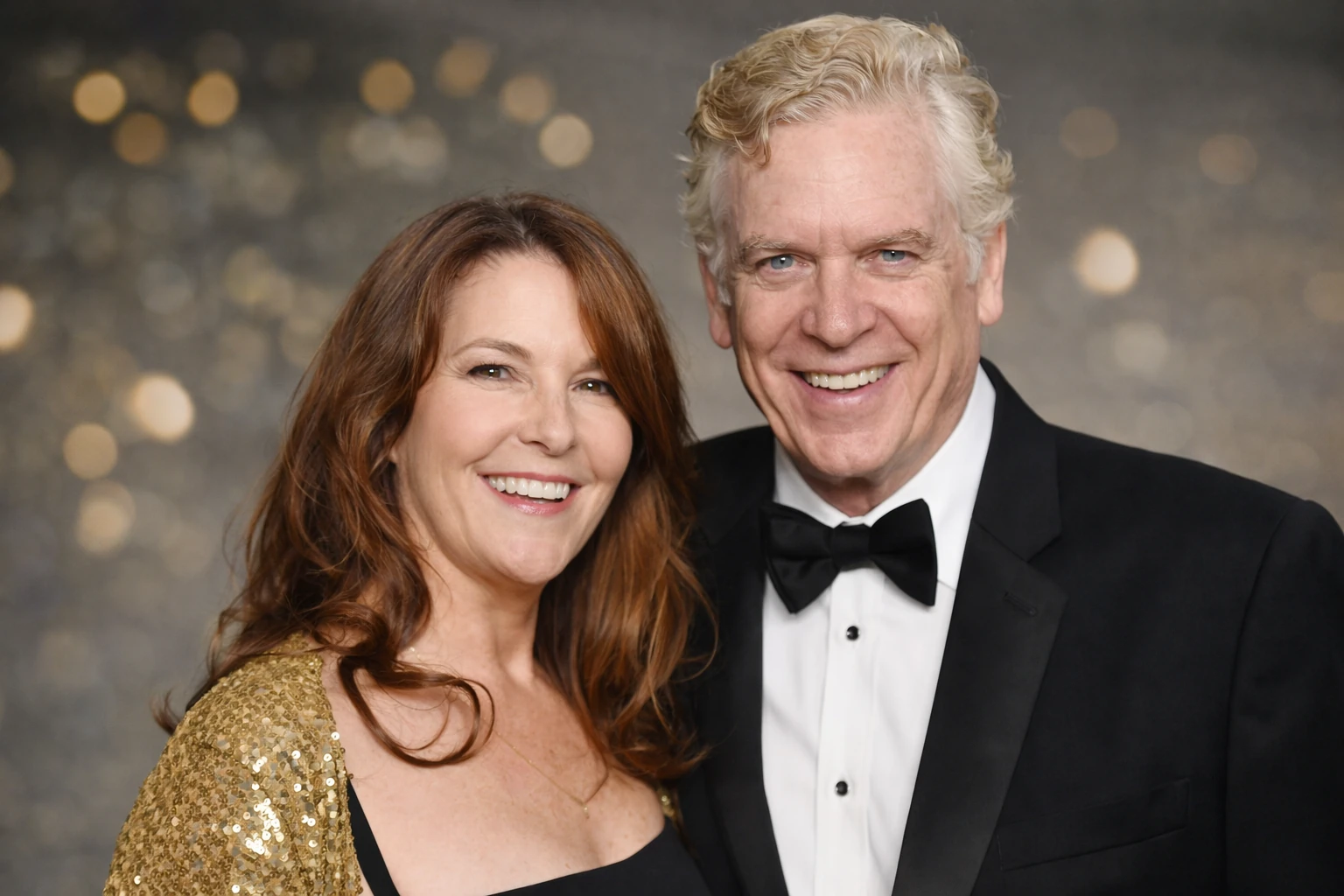
Lupe Gidley has spent much of her life in proximity to fame without ever fully stepping into its glare. At red carpet premieres, she often appears alongside her husband, actor Christopher McDonald, smiling for cameras before returning to a quieter, largely private life. For many people, her name surfaces only in connection with his—yet her story, though lightly documented, offers a revealing look at what it means to live adjacent to Hollywood while resisting its demands for constant visibility.
Her public footprint is small, but it is not empty. A handful of screen credits, a long-standing marriage, and decades of intermittent public appearances form the outline of a life that has unfolded largely outside the celebrity narrative machine. The result is a biography that feels incomplete in places, but also unusually grounded. What is known about Lupe Gidley—or Lupe McDonald, as she is often credited—comes not from oversharing, but from scattered, verifiable moments.
Early Life and Background
One of the defining features of Lupe Gidley’s biography is how little of her early life has been publicly confirmed. Unlike many figures connected to the entertainment industry, she has not participated in detailed interviews about her upbringing, family background, or education. That absence has led to a wave of online speculation, but much of it lacks credible sourcing.
What can be cautiously inferred comes from a small number of firsthand remarks and contextual clues. In a 2014 interview tied to Billy Joel’s official website, Gidley recalled being 23 years old when she appeared in the music video for “We Didn’t Start the Fire” in 1989. That places her roughly in a generation coming of age in the late 1980s, though it does not provide a confirmed birthdate or hometown.
This limited record suggests that Gidley’s early life was not shaped in the public eye. There is no clear evidence of early fame, child acting, or industry lineage. Instead, her entry into entertainment appears to have come as a young adult, likely through modeling or casting opportunities common in music video production during that era. Beyond that, the details remain largely private, and responsible reporting stops where verifiable information ends.
Entry Into Entertainment
Gidley’s most widely recognized appearance came early, in Billy Joel’s 1989 music video for “We Didn’t Start the Fire.” The video, known for its rapid montage of historical references, featured a rotating cast of faces representing generational change. Her presence in the video is documented in official credits and later retrospectives, making it one of the few firmly established milestones in her career.
At the time, music videos were still a relatively new cultural force, offering exposure that could rival film or television for emerging performers. Gidley herself described the experience as exciting and novel, reflecting a moment when MTV-era visibility could open doors without necessarily leading to a conventional acting career.
Her appearance in the video did not immediately translate into a steady stream of roles. Instead, her career would take a more intermittent path, with long gaps between projects. This pattern suggests that acting may not have been her primary focus, or that she chose to engage with the industry selectively rather than pursuing it as a full-time profession.
Screen Credits and Acting Work
Although her acting résumé is modest, it is verifiable. Lupe McDonald, as she is often credited, appears in several productions across different decades. These include the Daft Punk music video “The Prime Time of Your Life” (2006), as well as smaller film projects such as Money Shot (2014), Finding Out (2015), and Klarinet Klub (2018).
These roles do not place her among widely recognized actors, but they do confirm a continued, if occasional, connection to performance work. The span of nearly three decades between her earliest and later credits also suggests a sustained, if low-profile, relationship with the creative industries.
What’s striking is the absence of a traditional career arc. There is no clear breakthrough role, no period of intense output, and no pivot into directing or producing that might extend her presence behind the scenes. Instead, her work appears episodic, reflecting either personal choice or a different set of priorities outside the industry.
Marriage to Christopher McDonald
Lupe Gidley’s most visible public role is as the wife of actor Christopher McDonald. The couple married on November 7, 1992, and their relationship has endured for more than three decades—a notable span in an industry often defined by short-lived partnerships.
Christopher McDonald is best known for his roles in films such as Happy Gilmore, where he played the memorable antagonist Shooter McGavin, as well as numerous television appearances and supporting roles across a wide range of genres. His steady career has kept him in the public eye, and by extension, has occasionally brought Gidley into view.
Photographs from premieres and industry events show the couple together over many years, from the mid-1990s through the 2020s. These appearances are infrequent but consistent, reinforcing the impression of a stable partnership that operates largely outside the media spotlight. There are no widely reported controversies or public disputes associated with their marriage, which further distinguishes it from many high-profile Hollywood relationships.
Family Life and Children
Lupe Gidley and Christopher McDonald have four children: Jackson Riley McDonald, Hannah Elizabeth McDonald, Rosie McDonald, and Ava McDonald. Public information about the children is limited, reflecting what appears to be a deliberate effort to maintain privacy.
Family appearances at film premieres and public events offer glimpses into their lives. In the early 2000s, the McDonald family attended several Hollywood premieres together, with photo captions identifying the children by name. More recent appearances, including events in the 2020s, show at least some of the children continuing to accompany their parents on occasion.
Despite these appearances, there is little publicly available information about the children’s careers or personal lives. This restraint aligns with the broader pattern of Gidley’s public presence: visible when necessary, but otherwise carefully guarded.
Public Image and Privacy
Gidley’s public image is shaped as much by what she has not done as by what she has. She does not appear to maintain a strong social media presence, does not give frequent interviews, and has not built a personal brand around her identity as a celebrity spouse. In an era where visibility is often equated with relevance, that choice stands out.
But here’s the thing. Absence from the spotlight does not mean absence from public life. Gidley’s appearances at industry events over decades suggest a continued connection to Hollywood, even if it is not her primary arena. She occupies a space that is increasingly rare: someone who participates in the cultural world without fully submitting to its demands.
This selective visibility has had an unintended consequence. The lack of detailed, firsthand information has allowed less reliable sources to fill the gaps with speculation. Many online profiles now present unverified details about her background, finances, and personal history as if they were established facts. The truth is simpler and more grounded, even if it leaves some questions unanswered.
Financial Life and Net Worth
There is no publicly verified figure for Lupe Gidley’s net worth. Estimates that appear online are often derived from unsourced assumptions or extrapolated from her husband’s career. Without confirmed financial disclosures, those figures should be treated with caution.
Christopher McDonald’s long acting career, which includes dozens of film and television roles, provides a more concrete financial anchor for the family. As a character actor with steady work, he has likely accumulated a substantial income over time, though exact figures vary depending on the source and are often presented as estimates.
Gidley’s own contributions to household income are less clearly defined in public records. Given her limited acting credits, it is unlikely that her personal earnings from the entertainment industry form a major portion of the family’s wealth. However, without direct confirmation, any detailed breakdown remains speculative.
Later Years and Current Status
In recent years, Lupe Gidley has continued to appear occasionally at public events alongside her husband. Photographs from premieres in the 2020s show her maintaining the same composed, understated presence that has characterized her public image for decades.
There is no indication that she has returned to acting in a significant way, nor is there evidence of a shift into other public-facing roles. Instead, her life appears to remain centered around family and selective engagement with the industry.
What’s surprising is how consistent that pattern has been. Over more than thirty years, Gidley has neither withdrawn completely from public view nor embraced it fully. She has remained in a middle ground that allows for both connection and privacy.
The Challenge of Telling Her Story
Writing about Lupe Gidley requires a different approach than writing about more documented figures. The available information is limited, and much of what circulates online cannot be verified through reliable sources. That creates a tension between curiosity and accuracy.
The truth is, her story is defined as much by its boundaries as by its content. She represents a kind of public figure who resists easy categorization: not fully private, not fully public, and not easily reduced to a set of searchable facts.
For readers, this can be frustrating. For writers, it is a reminder that not every life is meant to be fully mapped. In Gidley’s case, what can be known is enough to form a clear outline, even if the finer details remain out of reach.
Frequently Asked Questions
Who is Lupe Gidley?
Lupe Gidley, also known as Lupe McDonald, is an actress with a small number of screen credits and the wife of actor Christopher McDonald. She is best known for her appearance in Billy Joel’s “We Didn’t Start the Fire” music video and for her long-standing marriage.
Is Lupe Gidley an actress?
Yes, she has appeared in several projects, including music videos and independent films. However, her acting career has been limited and intermittent rather than extensive.
How long has Lupe Gidley been married?
She has been married to Christopher McDonald since November 7, 1992. Their marriage has lasted more than three decades.
Do Lupe Gidley and Christopher McDonald have children?
Yes, they have four children: Jackson Riley, Hannah Elizabeth, Rosie, and Ava McDonald. Public details about their lives are limited.
What is Lupe Gidley’s net worth?
There is no verified public figure for her net worth. Any estimates found online should be treated cautiously, as they are not supported by confirmed data.
What is Lupe Gidley doing now?
She appears to be living a largely private life, with occasional public appearances alongside her husband at film premieres and industry events.
Conclusion
Lupe Gidley’s life does not fit neatly into the standard template of celebrity biography. There are no headline-making roles, no highly publicized controversies, and no constant stream of interviews to fill in the gaps. Instead, there is a quieter story built from verifiable moments and long-term relationships.
Her marriage to Christopher McDonald offers one of the clearest throughlines, showing a partnership that has endured in an industry where longevity is rare. At the same time, her own appearances on screen and at public events suggest a connection to the creative world that is personal rather than career-driven.
What remains most striking is her choice to maintain distance from the mechanisms of fame. In a culture that often demands visibility, Gidley has kept much of her life out of reach. That decision shapes not only how she is seen, but also how she is remembered.
In the end, Lupe Gidley matters not because of a long list of credits or public achievements, but because of the way her story reflects a different kind of presence—one that exists beside the spotlight, rather than inside it.
