

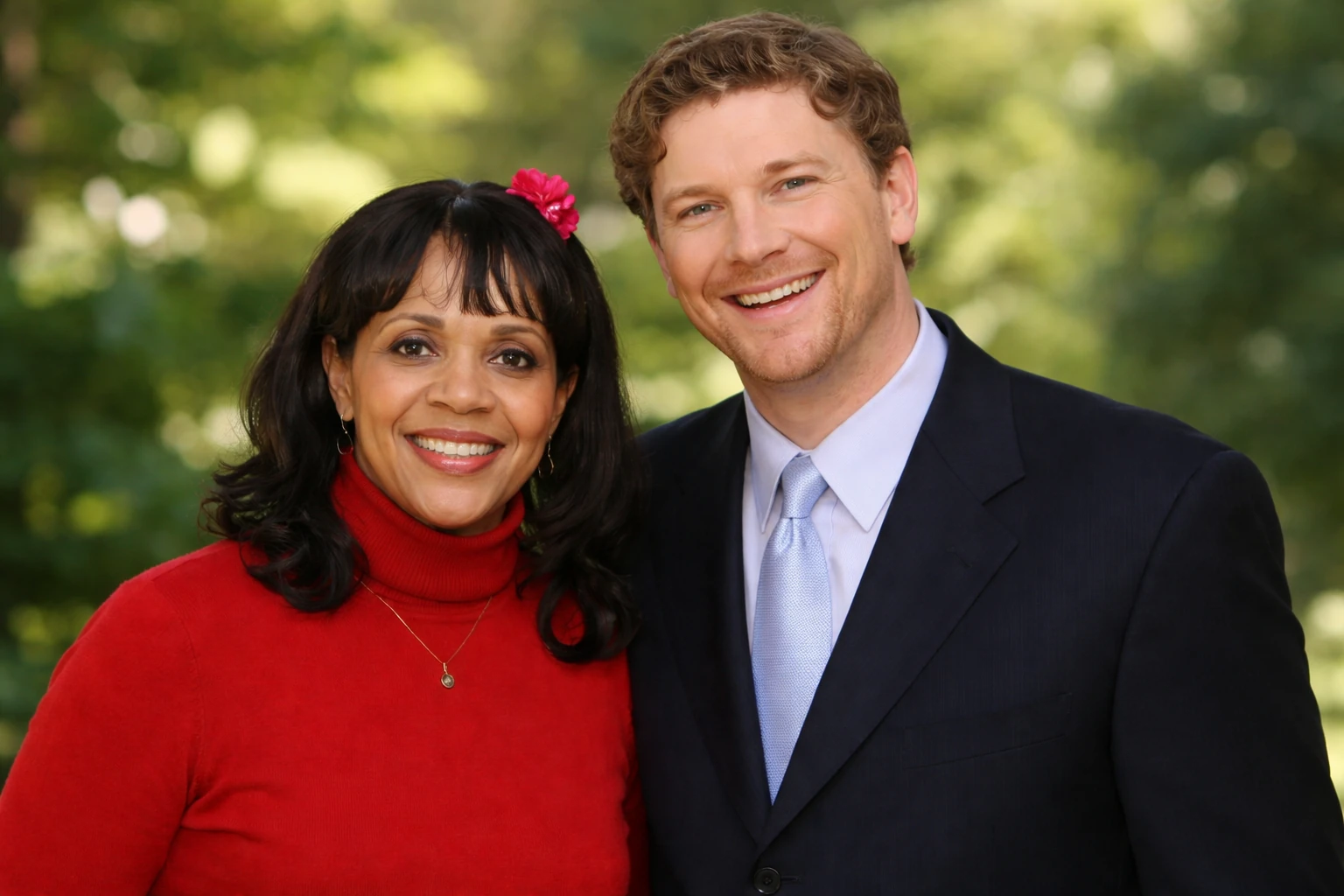
Dorothy Bowles Ford enters the public record not through speeches or headlines of her own, but through a single, telling moment preserved in congressional history. At her husband’s swearing-in ceremony on Capitol Hill in the 1970s, her young son reportedly raised his hand and declared that he wanted to follow the same path. The anecdote, attributed to her years later, offers a glimpse of a woman positioned quietly at the center of a political family’s formation—present, observant, and deeply involved, even if rarely in the spotlight.
For many readers, Dorothy Bowles Ford’s name surfaces while searching for information about former U.S. Representative Harold E. Ford Jr. or his father, Harold Ford Sr. The Ford family has long held a place in American political history, particularly in Tennessee, where Harold Ford Sr. became one of the state’s most influential figures. Dorothy Bowles Ford, as his former wife and the mother of his children, occupies a lesser-known but still meaningful role in that story. Her life reflects a pattern common in political families: a blend of public proximity and personal privacy that leaves only fragments of a larger narrative.
This biography aims to present what is verifiably known about Dorothy Bowles Ford, while acknowledging the limits of the public record. In an age where online profiles often blur fact and speculation, her story stands as a reminder that not every figure connected to power has been fully documented. What remains, however, is enough to understand her place in a family that shaped a chapter of modern American politics.
Early Life and Background
Reliable information about Dorothy Bowles Ford’s early life is limited. Unlike many public figures, she has not been the subject of detailed biographies, interviews, or autobiographical accounts. Her birth date, place of upbringing, and early education are not clearly established in widely accepted public records. That absence has led to a proliferation of conflicting claims online, many of which cannot be verified through credible sources.
What can be inferred is that she came of age during a period of significant social and political change in the United States. The late 1960s, when she married Harold Ford Sr., were marked by the civil rights movement’s continued influence and shifting opportunities for African American families entering professional and political spheres. Her eventual employment in a federal agency suggests a level of education and professional competence consistent with that era’s expanding workforce.
The lack of detailed documentation does not diminish her importance. Instead, it reflects a broader historical pattern in which women connected to political figures often appear only in relation to their spouses or children. Dorothy Bowles Ford’s early years remain largely private, but her later life places her firmly within the orbit of national public service.
Marriage to Harold Ford Sr.
Dorothy Bowles married Harold Eugene Ford Sr. on February 10, 1969. At the time, Ford was a young attorney beginning to establish himself in Memphis, Tennessee. Their marriage coincided with the early stages of his political career, which would soon accelerate in a way that reshaped their lives.
In 1974, Harold Ford Sr. was elected to the United States House of Representatives, becoming the first African American to represent Tennessee in Congress. The victory marked a historic moment, not only for the state but for the broader trajectory of Black political leadership in the South. As his spouse, Dorothy Bowles Ford entered a world defined by public scrutiny, political demands, and frequent travel between Memphis and Washington, D.C.
Life as a congressional spouse often involves a mix of visible and behind-the-scenes responsibilities. While detailed accounts of her day-to-day role are scarce, it is reasonable to understand that she managed family life during a period of intense political activity. The demands of congressional service, especially for a trailblazing lawmaker, would have required stability at home, particularly as the couple began raising children.
Their marriage lasted three decades before ending in divorce in 1999. By that time, their children were adults, and the Ford name had already become synonymous with political leadership in Tennessee.
Raising a Political Family
Dorothy Bowles Ford and Harold Ford Sr. had three sons: Harold Eugene Ford Jr., Newton Jake Ford, and Sir Isaac Ford. Each child grew up within a household closely connected to national politics, with Washington, D.C., serving as a second home during the congressional years.
Harold Ford Jr., born in Memphis on May 11, 1970, would go on to become the most publicly visible of the three. His upbringing reflected a blend of Southern roots and elite education. He attended St. Albans School in Washington, one of the country’s most prestigious preparatory institutions, where his mother was reportedly involved in school activities, including serving on a board.
The anecdote about his childhood declaration at his father’s swearing-in ceremony has been widely cited in official histories. It suggests that Dorothy Bowles Ford was attentive to her children’s experiences and aspirations, preserving moments that later became part of the family’s public narrative. Her role in raising children who navigated both political life and high-level education was likely substantial, even if not extensively documented.
Parenting in such an environment requires balancing exposure and protection. Children of politicians often grow up under public observation, yet their formative years depend heavily on the stability of family life. Dorothy Bowles Ford’s presence during these years places her at the heart of that balancing act.
Professional Life and Work
One of the few clearly documented aspects of Dorothy Bowles Ford’s independent career is her long tenure as an employee of the United States Department of Agriculture. This detail appears in the official House history of her son, Harold Ford Jr., and stands as the most reliable description of her professional life.
Working in a federal agency during the latter half of the twentieth century would have involved navigating a structured and evolving bureaucracy. The Department of Agriculture, in particular, plays a critical role in national policy, overseeing food safety, rural development, and agricultural programs. While her specific position is not detailed in public records, long-term employment in such an institution suggests both stability and commitment.
Her career also reflects a broader trend of women in political families maintaining their own professional identities. Rather than serving solely as a political spouse, Dorothy Bowles Ford appears to have built a parallel career within the federal government. This dual role—supporting a family deeply engaged in politics while maintaining her own employment—adds an important dimension to her biography.
The absence of detailed records about her work is not unusual. Many federal employees, particularly those outside of high-profile leadership roles, leave only limited public traces of their careers. Still, the confirmation of her long service provides a grounded understanding of her professional life.
The Ford Family Legacy
The significance of Dorothy Bowles Ford’s life is closely tied to the broader story of the Ford family. Harold Ford Sr.’s congressional career spanned more than two decades, during which he became a central figure in Tennessee politics. His work addressed issues ranging from economic development to civil rights, and his presence in Congress helped reshape perceptions of Black political leadership in the region.
The family’s influence did not end with him. Harold Ford Jr. succeeded his father in Congress in 1996, representing Tennessee’s 9th district and building a national profile as a young and articulate Democratic lawmaker. His career later expanded into media and finance, keeping the Ford name in public conversation long after his time in elected office.
Dorothy Bowles Ford’s place in this legacy is less visible but still essential. She was part of the family structure that supported these careers, contributing to the environment in which political ambition and public service were nurtured. Her role illustrates how political legacies are often sustained not only by those who hold office but also by those who create the conditions for success behind the scenes.
Divorce and Life After 1999
The marriage between Dorothy Bowles Ford and Harold Ford Sr. ended in divorce in 1999. By that time, their sons were grown, and Harold Ford Jr. was already serving in Congress. The divorce marked the conclusion of a long partnership that had spanned the rise of a political dynasty.
Public information about her life after the divorce is limited. Unlike many figures connected to prominent families, she did not step into a visible public role or become a regular subject of media coverage. This absence has contributed to the scarcity of reliable information about her later years.
What can be said is that her decision to remain largely out of the public eye has preserved a degree of privacy uncommon in political families. While her former husband and son continued to attract attention, she appears to have maintained a quieter existence. This contrast highlights the different paths available to individuals connected to public life.
Public Image and Media Representation
Dorothy Bowles Ford’s public image is shaped as much by what is not known as by what is. In the absence of extensive reporting, online profiles have attempted to fill the gaps, often with inconsistent or unverified details. These portrayals can give the impression of a well-documented life, but closer examination reveals that many claims lack reliable sourcing.
The challenge for readers is distinguishing between verified information and repetition. Many websites rely on each other rather than on primary sources, creating a cycle in which inaccuracies are reinforced rather than corrected. This phenomenon is not unique to Dorothy Bowles Ford, but it is particularly evident in her case due to the limited availability of confirmed facts.
Her relative absence from media coverage also reflects a deliberate choice, whether personal or circumstantial, to avoid public exposure. In an era when many individuals connected to political figures build their own public platforms, her approach stands out. It suggests a preference for privacy over visibility, even when proximity to power might have made the latter easier.
Financial Standing and Net Worth
There is no publicly verified figure for Dorothy Bowles Ford’s net worth. Estimates found online vary widely and are often unsupported by credible evidence. Given her long career as a federal employee, it is reasonable to assume a stable income and retirement benefits consistent with government service, but precise financial details are not available.
Her financial profile should also be understood separately from that of her former husband and son. Harold Ford Sr. and Harold Ford Jr. have had careers that included public office and private-sector work, leading to more widely reported financial information. Dorothy Bowles Ford’s economic standing, by contrast, has not been a subject of public disclosure.
The lack of verified data underscores the importance of caution when encountering specific figures online. Without reliable sources, such claims should be treated as speculative rather than factual.
Where Dorothy Bowles Ford Is Now
Current information about Dorothy Bowles Ford’s life and status is not clearly documented in publicly accessible, high-quality sources. There are no widely cited recent interviews, public appearances, or official updates that provide insight into her present circumstances. This absence leaves a gap that has been filled, in some cases, by assumption rather than evidence.
What is clear is that she has maintained a low public profile. Unlike other members of political families who remain active in media or public service, she appears to have stepped away from visible roles. This choice has likely contributed to the limited availability of up-to-date information.
For readers seeking a definitive answer about her current activities, the honest response is that such details are not publicly confirmed. Her story, as it stands, is anchored in the years when her family’s political life was most active.
Frequently Asked Questions
Who is Dorothy Bowles Ford?
Dorothy Bowles Ford is best known as the former wife of U.S. Congressman Harold Ford Sr. and the mother of former Congressman Harold Ford Jr. She is part of the Ford political family of Tennessee but has not held public office herself. Her presence in public records comes primarily through her family connections and her role in raising her children.
What did Dorothy Bowles Ford do for a living?
She worked for many years as an employee of the United States Department of Agriculture. This is one of the few details about her career that is confirmed by reliable sources. Her specific role within the department is not publicly documented.
How many children does Dorothy Bowles Ford have?
She has three sons: Harold Ford Jr., Newton Jake Ford, and Sir Isaac Ford. All were raised during the period when their father was serving in Congress. Harold Ford Jr. later followed his father into politics.
Was Dorothy Bowles Ford involved in politics?
There is no evidence that she held elected office or pursued a political career of her own. However, she was closely connected to political life through her marriage and family. Her influence is best understood within the context of supporting a household deeply involved in public service.
What is Dorothy Bowles Ford’s net worth?
There is no verified public estimate of her net worth. Online figures vary and are not supported by reliable sources. Her financial standing is likely tied to her career as a federal employee, but specific details are not available.
Is Dorothy Bowles Ford still alive?
There is no clear, publicly confirmed information about her current status. Without reliable, up-to-date sources, it is not possible to state this definitively. Readers should approach any claims about her current life with caution.
Conclusion
Dorothy Bowles Ford’s life illustrates how history often records individuals unevenly. While her former husband and son built public careers that left extensive documentation, her own story remains partially hidden. What emerges from the available record is a portrait of a woman who lived at the intersection of family, government service, and political change.
Her role in raising a future congressman and supporting a household shaped by public service gives her a quiet but meaningful place in American political history. Even without a detailed personal archive, her presence is felt in the institutions and careers that grew around her. That influence, though understated, is part of what makes her story worth telling.
At the same time, her biography serves as a reminder of the limits of public knowledge. Not every life connected to power is fully documented, and not every gap should be filled with assumption. Dorothy Bowles Ford’s story is best understood through what can be confirmed, not what can be imagined.
What remains is a life defined less by public attention than by proximity to it. In that space—between visibility and privacy—her story continues to exist, shaped by the family she helped build and the history she quietly witnessed.
