

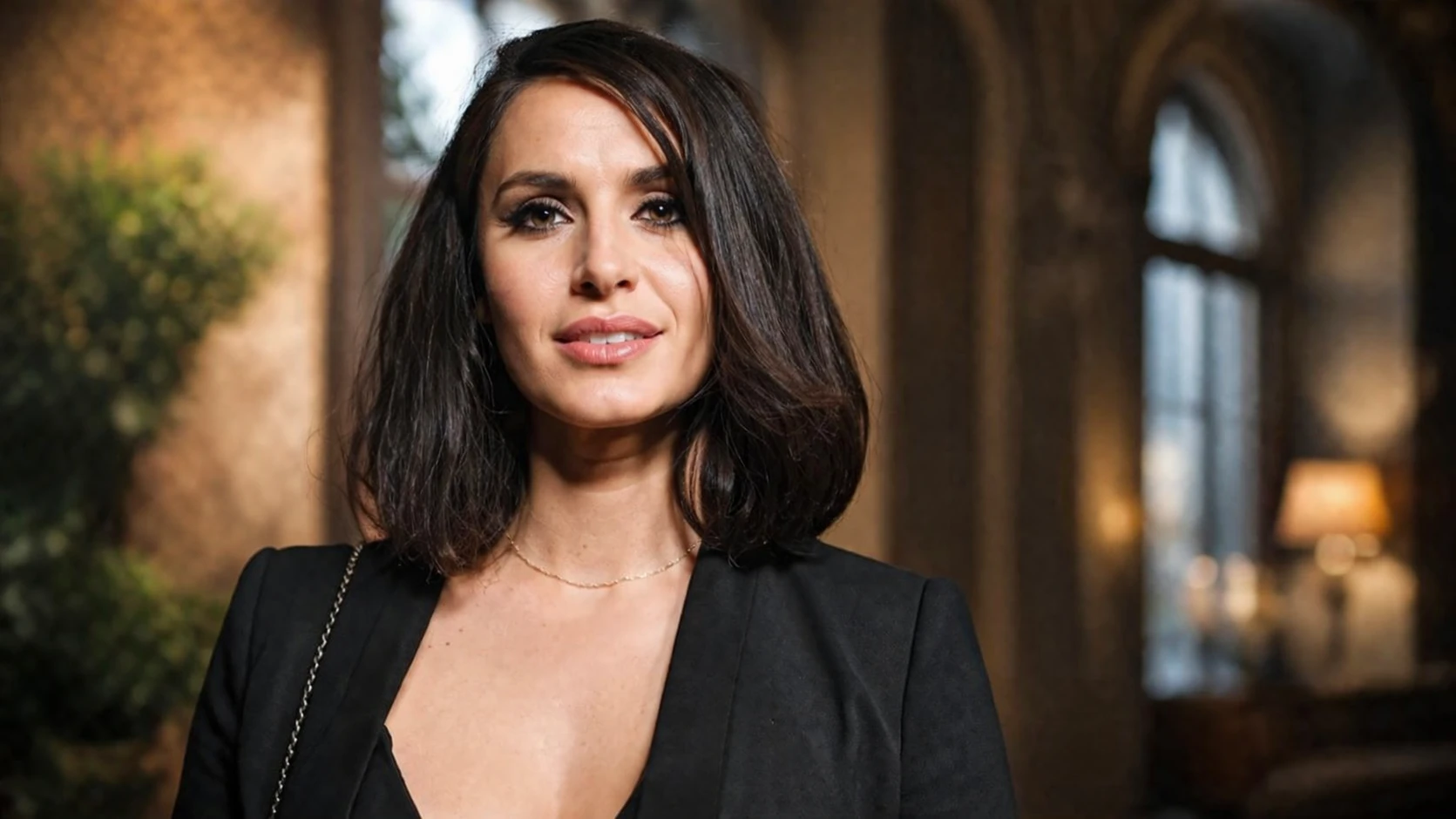
For most people, the name María Elvira Murillo appears suddenly, almost out of nowhere, attached to one of the most notorious figures in modern Mexican history. She is often introduced as the wife of Miguel Ángel Félix Gallardo, the man widely known as “El Jefe de Jefes,” whose influence helped shape the structure of contemporary drug cartels. But while Félix Gallardo’s life has been dissected in courtrooms, books, and television series, Murillo’s story remains largely out of view.
That imbalance is what makes her compelling. In a world where proximity to power often leads to scrutiny, María Elvira Murillo managed something unusual: she stayed mostly out of the public record. What can be said about her comes from fragments—journalistic references, court-era reporting, and later reinterpretations through pop culture. The result is a biography that must be handled with care, separating what is known from what has simply been repeated.
Early Life and Background
There is no widely verified, detailed public record of María Elvira Murillo’s early life. Unlike political figures, celebrities, or business leaders, she did not leave behind a trail of interviews, educational records, or early career milestones that are easily accessible through mainstream reporting. This absence is not uncommon for individuals who were not public figures in their own right before becoming associated with someone of Félix Gallardo’s stature.
Some secondary sources claim she was born in Mexico and raised in a middle- or upper-class environment, but these details are not consistently confirmed across reliable outlets. The truth is that her upbringing remains largely undocumented in public-facing records. That uncertainty is an important part of her story, because it shows how quickly speculation can fill the gaps left by a lack of primary information.
What is clearer is that by the time she entered Félix Gallardo’s life, she was already part of social circles that intersected with business and influence. Whether those connections were formal or informal is difficult to determine, but later accounts often frame her as someone comfortable navigating elite environments. Still, these descriptions should be read cautiously, as they rely heavily on retrospective reporting rather than contemporaneous documentation.
Relationship with Miguel Ángel Félix Gallardo
María Elvira Murillo is most often identified as the second wife of Miguel Ángel Félix Gallardo. This detail appears in multiple Spanish-language reports and has been repeated across biographies and media coverage over the years. Félix Gallardo, a former Mexican federal police officer turned drug trafficker, rose to prominence in the late 1970s and 1980s as a central figure in the Guadalajara cartel.
Their relationship unfolded during a period when Félix Gallardo’s power and influence were expanding rapidly. The cartel he helped lead controlled major drug trafficking routes and maintained connections that extended into political and law enforcement structures. Being married to such a figure inevitably placed Murillo within a high-risk and highly scrutinized environment, even if she herself was not a public actor.
Reports suggest that Murillo had children with Félix Gallardo, though the exact number and details of their lives are not consistently documented in reliable sources. This lack of clarity extends to the timeline of their relationship as well. Some accounts describe a separation or distancing after Félix Gallardo’s arrest in 1989, but again, specifics are sparse and often rely on inference rather than confirmed reporting.
Life During the Rise of the Guadalajara Cartel
To understand María Elvira Murillo’s circumstances, it helps to consider the broader environment in which she lived. The Guadalajara cartel was not simply a criminal organization; it was a network that reshaped how drug trafficking operated in Mexico. During its peak, the cartel coordinated large-scale marijuana and cocaine distribution and maintained influence across regions.
Living alongside a figure like Félix Gallardo meant being close to both wealth and danger. Accounts from the period describe a lifestyle that included luxury properties, social events, and connections to influential figures. Yet this outward appearance coexisted with an underlying reality of violence and instability, particularly as rival groups emerged and law enforcement pressure intensified.
Murillo’s role within this world remains unclear. Some reports suggest she may have had connections to business ventures linked to Félix Gallardo, including real estate interests. One company often mentioned in media coverage is Inmobiliaria Delia, said to have been associated with the family. However, these claims are difficult to verify independently and should be treated as reported rather than definitively established facts.
What can be said with more confidence is that she occupied a position shaped by proximity rather than public authority. She was part of the inner circle of a powerful figure, but not someone who appeared to seek or maintain a visible role in the operations that made him infamous.
The Camarena Case and Its Aftermath
The turning point in Félix Gallardo’s life—and by extension, in Murillo’s—came with the 1985 kidnapping and murder of DEA agent Enrique “Kiki” Camarena. The case drew international attention and led to intense pressure from U.S. authorities on the Mexican government. It remains one of the most significant events in the history of U.S.-Mexico drug enforcement cooperation.
Félix Gallardo was arrested in 1989 and later convicted for his role in the Camarena case. His imprisonment marked the collapse of the Guadalajara cartel’s centralized structure and contributed to the fragmentation of trafficking networks into smaller, competing groups. This shift had long-term consequences for violence and organization within Mexico’s drug trade.
For María Elvira Murillo, this period appears to have marked a withdrawal from public visibility. Reports indicate that she stepped away from the spotlight, and in many accounts, she effectively disappears from the public record after this time. Whether this was a deliberate effort to protect herself and her family or simply a continuation of an already private life is not clearly documented.
Withdrawal from Public Life
One of the most defining aspects of María Elvira Murillo’s story is her absence from public life in the decades that followed Félix Gallardo’s arrest. Unlike some figures connected to high-profile criminal cases, she did not give interviews, publish memoirs, or maintain a visible presence in media or business.
This disappearance has contributed to both her mystique and the spread of unverified claims. When a person leaves so little trace, later writers often attempt to reconstruct a narrative using limited evidence. The result is a patchwork of stories that vary in reliability, with some presenting speculation as fact.
What’s striking is how consistent the theme of privacy is across the more credible sources. They describe a woman who retreated from attention and maintained a low profile despite ongoing public interest in her former husband. In an era where even distant associates of notorious figures often become media personalities, Murillo’s silence stands out.
Portrayal in Popular Culture
Interest in María Elvira Murillo surged again with the release of Narcos: Mexico, a Netflix series that dramatizes the rise of the Guadalajara cartel. In the show, she is portrayed by actress Fernanda Urrejola, who brings a distinct personality and emotional presence to the role.
The series presents Murillo as a complex figure navigating the personal and moral challenges of being married to a powerful drug trafficker. It explores themes of loyalty, fear, and disillusionment, offering viewers a window into the domestic side of cartel life. But as with any dramatization, these portrayals blend fact with fiction.
Here’s where it gets interesting. For many viewers, the television version becomes the default understanding of who Murillo was, even though the historical record does not support that level of detail. The character’s depth on screen contrasts sharply with the limited information available in real-world reporting.
This gap highlights a broader issue in how history is consumed. When entertainment fills in missing details, it can create a sense of certainty that the underlying facts do not justify. Murillo’s case is a clear example of how storytelling can reshape public perception.
Public Image and Media Narratives
Because María Elvira Murillo has not spoken publicly about her life, her image has been shaped almost entirely by others. Media coverage tends to frame her in relation to Félix Gallardo, often emphasizing her role as a spouse within a powerful and dangerous network.
Some narratives portray her as a figure of influence within elite circles, suggesting she may have helped cultivate relationships that benefited her husband. Others depict her more as a private individual who was swept into circumstances beyond her control. The truth likely lies somewhere between these interpretations, but the lack of direct evidence makes definitive conclusions difficult.
What’s important is recognizing how these narratives are constructed. Without primary sources such as interviews or firsthand accounts, journalists and writers rely on secondary information, which can introduce bias or exaggeration. Readers should approach such portrayals with a critical eye, especially when they present a fully formed character without clear sourcing.
Business Interests and Financial Standing
There are recurring claims that María Elvira Murillo was involved in business ventures, particularly in real estate. The most frequently cited example is Inmobiliaria Delia, a company reportedly linked to Félix Gallardo’s financial activities. Some reports suggest she had ownership or managerial involvement in this enterprise.
However, publicly accessible documentation confirming the extent of her role is limited. Without clear records or verified financial disclosures, it is not possible to establish her business activities with precision. Estimates of her net worth, which appear on various biography websites, should be treated with caution, as they are rarely supported by transparent methodologies or primary data.
What can be inferred is that, during the height of Félix Gallardo’s power, his family likely had access to significant financial resources. But translating that into a specific figure for Murillo’s personal wealth is not possible based on reliable evidence. Any numbers circulating online are best understood as speculative estimates rather than confirmed facts.
Where María Elvira Murillo Is Now
The question of María Elvira Murillo’s current life is one of the most common—and most difficult—to answer. There is no widely reported, verifiable information about her present location, occupation, or public activities. This absence has led to a wide range of claims, many of which contradict each other.
The most credible position is the simplest one: she remains a private individual whose life is no longer part of the public record. This does not mean she is inaccessible or unknown to those around her, but it does mean that journalists and researchers do not have confirmed information to share with a broader audience.
In a media environment that often rewards exposure, Murillo’s continued privacy is unusual. It suggests a deliberate choice to remain outside the narratives that continue to surround her former husband and the era he helped define.
Frequently Asked Questions
Who is María Elvira Murillo?
María Elvira Murillo is best known as the second wife of Mexican drug trafficker Miguel Ángel Félix Gallardo. Beyond that connection, there is very little verified public information about her life, background, or independent activities.
Is María Elvira Murillo still alive?
There is no confirmed public record indicating that she has passed away. However, there is also no recent, reliable reporting about her current life, which means her status remains largely private.
Was she involved in the Guadalajara cartel?
There is no strong, verifiable evidence showing that she played a direct operational role in the cartel. Some reports mention possible business or social connections, but these claims are not firmly established.
How many children did she have with Félix Gallardo?
Reports suggest that she had children with Félix Gallardo, but the exact number and details about their lives are not consistently documented in reliable sources.
Why is there so little information about her?
Murillo appears to have lived a private life and withdrew further from public attention after Félix Gallardo’s arrest. This lack of public engagement has limited the amount of verifiable information available.
Is the portrayal in Narcos: Mexico accurate?
The series is a dramatization and should not be treated as a fully accurate biography. While it draws on real events, it also creates character depth and storylines that are not supported by documented evidence.
Conclusion
María Elvira Murillo occupies a rare space in modern biography: she is widely searched yet minimally documented. Her life intersects with one of the most consequential chapters in the history of drug trafficking, but she herself remains largely out of view. That contrast is what keeps her name circulating long after the events that first brought it to public attention.
Her story also raises broader questions about how we understand people who are connected to powerful figures without being public actors themselves. It is easy to project narratives onto them, to assume knowledge where there is little evidence. Murillo’s case reminds us that absence of information is not an invitation to fill in the blanks without care.
What remains is a portrait defined by restraint. She was part of a world that drew global attention, yet she did not step into that spotlight. Whether by choice or circumstance, she has remained on the edges of history, known mostly through association and remembered through fragments.
That may be the most accurate way to understand María Elvira Murillo: not as a fully documented figure, but as a private life glimpsed through the shadow of a very public one.
