

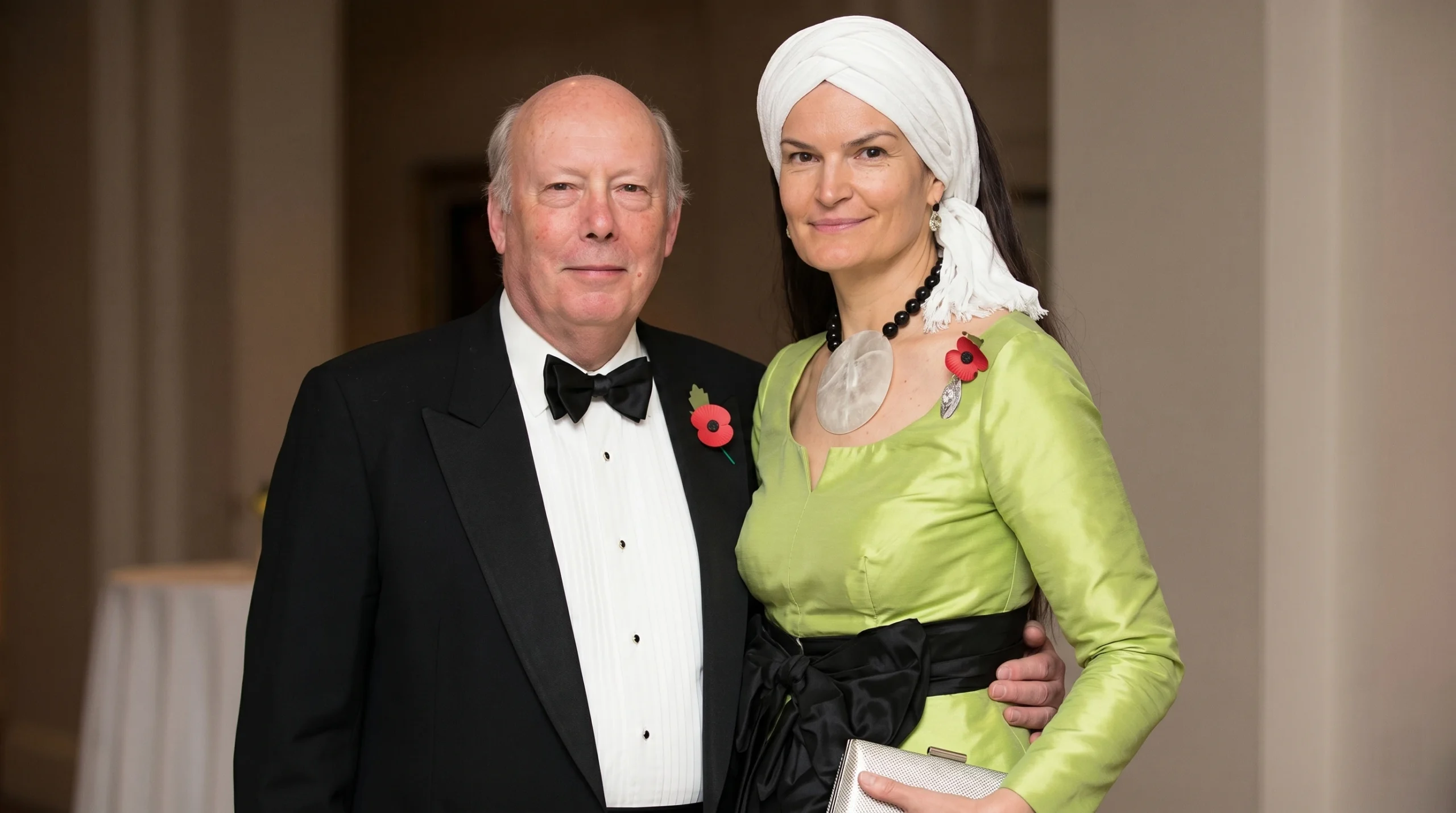
Emma Joy Kitchener is not a celebrity in the usual sense, and that is part of what makes public curiosity about her so persistent. Her name tends to appear beside larger public stories: the Kitchener family, the British aristocracy, royal household service, and the career of Julian Fellowes, the writer who created Downton Abbey. She has lived close to public institutions without turning herself into a public performer. That combination has made her both searchable and, in many respects, carefully private.
Best known publicly as the wife of Julian Fellowes, Emma Joy Kitchener also has her own place in modern British social history. She is a descendant of the Kitchener family, served as a lady-in-waiting to Princess Michael of Kent, and has been recorded as holding the rank of Lieutenant of the Royal Victorian Order. Her life connects family legacy, monarchy, screen culture, and the continuing debate over hereditary titles. To understand her properly, it helps to treat her not as a gossip item, but as a private woman whose name sits at the crossing point of several public worlds.
Early Life and Family Background
Emma Joy Kitchener was born in 1963 into a family whose surname carried deep historical associations in Britain. Her father was Charles Eaton Kitchener, and her mother was Ursula Hope Luck. Public genealogical records identify her as part of the wider Kitchener family connected to Field Marshal Horatio Herbert Kitchener, the 1st Earl Kitchener. That family connection would later become one of the main reasons her name appeared in stories about inheritance, rank, and aristocratic custom.
The Kitchener name is one of those British names that means different things to different readers. To military historians, it calls up the figure of the 1st Earl Kitchener, a major imperial soldier and public icon whose image became famous through First World War recruitment imagery. To students of the peerage, it raises questions about hereditary succession and the way titles pass, or fail to pass, through families. For Emma Joy Kitchener, it was not only a historical label but a family identity.
There is limited public information about Emma’s childhood, schooling, and day-to-day upbringing. That absence should not be filled with invented detail, especially because she has not made a career out of public autobiography. What can be said is that she grew up in a social world where family history, service, and rank still mattered. Those influences later placed her near royal life and, through marriage, near a writer whose work often examined those same codes.
The Kitchener Legacy
The most famous figure in Emma Joy Kitchener’s family line remains Horatio Herbert Kitchener, 1st Earl Kitchener. His name became part of Britain’s military memory through campaigns abroad, government service, and the famous image associated with wartime recruitment. The family title, Earl Kitchener, carried that historical weight into later generations. Emma’s connection to the family made her part of a legacy that was both celebrated and complicated.
The Kitchener title also became important because of what happened when it could not continue through a female line. The earldom was governed by succession rules that favored or required male heirs, as many hereditary peerages did. When the male line failed, the title did not pass to Emma Joy Kitchener. Instead, the earldom became extinct, even though the family name and its living descendants remained.
That outcome made her case part of a wider conversation about women and hereditary titles. Britain changed the rules of royal succession so that sons no longer automatically displaced daughters in the line to the Crown for those covered by modern reforms. Many hereditary peerages, however, have continued under older rules. Emma Joy Kitchener’s family story shows why that difference still matters to people who see titles not only as status symbols, but as family history.
Royal Household Service
One of the clearest public facts about Emma Joy Kitchener is her service as a lady-in-waiting to Princess Michael of Kent. The title may sound antique, but the work is practical and built on trust. A lady-in-waiting helps support a royal woman in official and private duties, often handling arrangements, attendance, and the quiet work that keeps public engagements running smoothly. It is a role that depends on discretion, judgment, and personal reliability.
Her royal service also helps explain why she has never seemed eager to turn her personal life into publicity. The habits of that world are different from the habits of celebrity culture. Royal household service rewards tact, loyalty, and the ability to be present without making oneself the story. Emma Joy Kitchener’s public profile reflects that discipline.
She has also been recorded as a Lieutenant of the Royal Victorian Order, an honour associated with personal service to the monarch or royal family. The Royal Victorian Order is distinct because it is tied directly to royal recognition rather than ordinary political recommendation. For readers trying to understand Emma’s standing, that honour matters. It suggests that her service was not casual or merely social, but formally recognized.
Marriage to Julian Fellowes
Emma Joy Kitchener married Julian Fellowes on 28 April 1990. Fellowes was not yet the global television name he would become, though he had already built a life in acting, writing, and the arts. Their marriage preceded the great public success of Gosford Park, Downton Abbey, and The Gilded Age. In that sense, she was part of his life before the fame around his writing reached its largest audience.
Julian Fellowes has often been described as a writer with a deep feel for class, manners, status, and social performance. Those subjects are not abstract in the world Emma came from. Her family background and royal service placed her close to the habits and assumptions of the British upper classes. It would be too simple to say she is the source of his fictional worlds, but it is fair to see their marriage as one reason his social observations had such a close grain.
The couple later used the surname Kitchener-Fellowes, a choice that preserved the Kitchener name in their immediate family identity. That decision is meaningful because names carry weight in the worlds both of them knew well. In aristocratic and gentry families, names are often attached to inheritance, memory, and duty. For Emma Joy Kitchener, the surname was not merely decorative; it carried a history that had already outlasted the title itself.
Children and Family Life
Emma Joy Kitchener and Julian Fellowes have one son, Peregrine Charles Morant Kitchener-Fellowes, born in 1991. He is sometimes mentioned in public family records, but he has not been the subject of the same level of public attention as his father. The family has generally kept private life private. That restraint is consistent with Emma’s own low-profile public presence.
The fact that relatively little is publicly known about their home life should not be mistaken for mystery. Many people connected to public figures choose not to trade privacy for attention. In Emma’s case, that choice is especially understandable given her background in royal service and her connection to families where discretion is treated as a social expectation. The public record gives the outline, not the full household portrait.
Her marriage has lasted through several major phases of Julian Fellowes’s career. It spans his years as an actor, his rise as an Oscar-winning screenwriter, his international fame after Downton Abbey, and his later work on period dramas and books. Through those decades, Emma remained present in the public background rather than at the center of publicity. That position may be quiet, but it is not insignificant.
Career and Creative Associations
Emma Joy Kitchener has been identified in some public records as a screenwriter. Details of her own screen credits are not widely documented in the way they are for major public film and television figures. That makes it important to avoid overstating the record. She appears to have had an association with writing and creative work, but Julian Fellowes remains the credited creator and principal writer of his best-known television work.
Her most discussed creative link is to Downton Abbey, though the safest way to describe it is through proximity rather than formal credit. As the wife of the creator, and as someone from a family and social world close to the themes of the series, she has often been viewed as part of the private circle around the show’s sensibility. Period drama depends on detail, manners, inherited assumptions, and the small signals by which people understand rank. Emma’s life experience sat close to those subjects.
But here’s the thing. Influence inside a marriage or creative household is not always visible in credits. A spouse may read drafts, test social accuracy, challenge weak scenes, or help a writer hear when something sounds false. Without direct public documentation, those contributions cannot be stated as formal authorship. Still, it is reasonable to understand Emma Joy Kitchener as part of the lived context around Fellowes’s long interest in British class and inheritance.
The Downton Abbey Connection
Downton Abbey became a global success because it made the rules of a vanished world feel emotionally immediate. The show was about servants and aristocrats, but it was also about inheritance, marriage, duty, money, war, and the pressure of social change. Those themes overlap strikingly with the public facts of Emma Joy Kitchener’s background. Her family story involved name, title, succession, and the limits placed on women by older rules.
The comparison should be handled with care. Emma Joy Kitchener is not a character from Downton Abbey, and there is no need to reduce her life to a source note for fiction. Still, the overlap helps explain why readers link her to the show’s deeper interests. She was close to the creator of a drama obsessed with precisely the world that her own family history touched.
The Kitchener succession issue, especially, feels like something a Fellowes drama might understand instinctively. A family name survives, a title fails, and a woman’s position is recognized but not allowed to carry the same legal consequence as a man’s. That is not melodrama; it is the plain fact of many hereditary systems. Emma Joy Kitchener’s story gives real-world shape to the questions Downton Abbey often turned into drama.
Titles, Rank and the Question of Succession
Emma Joy Kitchener did not inherit the Earldom Kitchener. That point matters because some online accounts blur the distinction between family connection, courtesy style, and formal inheritance. The earldom ended because the succession rules did not allow it to pass through her in the relevant way. She remained connected to the family, but she did not become Countess Kitchener.
Queen Elizabeth II later issued a warrant of precedence that gave Lady Fellowes the rank and style of the daughter of an earl. This recognition did not revive the title, but it acknowledged the position she would have had if the title had been inherited differently. For many observers, that distinction captures the contradiction at the heart of the issue. A woman could be recognized socially while still being excluded legally.
The larger debate around female succession to hereditary peerages has continued for years. Supporters of reform argue that old rules should not keep treating daughters as lesser heirs. Opponents or skeptics often raise concerns about rewriting old settlements and disturbing linked questions of property and family law. Emma Joy Kitchener’s case remains a clear example of why the issue continues to draw attention.
Public Image and Privacy
Emma Joy Kitchener’s public image is defined largely by restraint. She does not appear to seek interviews, cultivate celebrity status, or offer regular public comment on her family life. Most people encounter her through records, profiles of Julian Fellowes, or discussions of the Kitchener title. That makes her different from modern public spouses who build separate brands through media exposure.
This privacy has sometimes led to shallow online biographies that try to fill the gaps with speculation. Net worth estimates, personal habits, and detailed career claims often appear without strong sourcing. A careful biography should resist that temptation. The absence of public detail is itself part of the story, because it shows the boundary she has kept between public association and private life.
Her image is best understood as that of a private, socially connected woman with a meaningful public record rather than a conventional public career. She belongs to the world of family history, royal service, and cultural proximity, not constant public performance. That makes her less available to the internet, but not less interesting. In fact, the restraint is one reason her story feels so distinct.
Money, Net Worth and Income Sources
There is no reliable public figure for Emma Joy Kitchener’s personal net worth. Some websites may publish estimated numbers, but those figures are usually not supported by financial filings, direct statements, or serious reporting. For that reason, any specific claim about her wealth should be treated as an estimate at best. A responsible account should not present guesswork as fact.
Her household’s public financial profile is often tied to Julian Fellowes’s career. Fellowes has earned income from acting, novels, screenwriting, television creation, stage work, and related rights. Downton Abbey became a major international property, and his wider career includes acclaimed film and television projects. Even so, his earnings do not automatically translate into a verified personal figure for Emma.
What can be said is that Emma Joy Kitchener’s life has been connected to families and institutions associated with social privilege. That does not provide a precise financial picture. Class position, family history, and wealth are related in public imagination, but they are not the same thing. Without trustworthy records, the honest answer is that her personal net worth is not publicly confirmed.
Awards and Honours
Emma Joy Kitchener’s most clearly recorded honour is her status as a Lieutenant of the Royal Victorian Order. The honour reflects service connected to the royal household and is not the same as a general celebrity award. It belongs to a system of recognition built around loyalty, duty, and personal service to the sovereign. In her case, it aligns with her former role serving Princess Michael of Kent.
That recognition also helps separate her from the many private spouses of famous public figures. She has a record of service independent of Julian Fellowes’s fame. Her public standing does not rest only on marriage or family name. It also rests on a role performed inside one of Britain’s most traditional institutions.
There is no widely established record of Emma receiving entertainment awards in her own name. That is not surprising, given the limited public record of her formal screen credits. Her most visible forms of recognition come from rank, family connection, and royal service rather than the awards circuit. That difference is central to understanding who she is.
Recent Life and Current Status
Emma Joy Kitchener appears to remain a private figure whose public mentions are mostly connected to Julian Fellowes, the Kitchener family, and peerage discussions. She is not known for frequent public statements or an active media profile. Her current activities are not widely reported in detail. That silence should be respected rather than treated as a gap to fill with speculation.
Julian Fellowes has remained professionally active through later projects including The Gilded Age, which continues his interest in status, money, manners, and social change. Emma’s name often resurfaces when readers explore the personal and family background behind that creative world. The attention is indirect, but it is steady. People want to know whether the life behind the writer helped shape the fiction.
The truth is, Emma Joy Kitchener’s current public importance rests less on new headlines than on lasting context. Her family history still matters to debates about women and titles. Her royal service still explains part of her standing. Her marriage still connects her to one of the most successful period-drama writers of the modern television era.
Why Emma Joy Kitchener Still Interests Readers
People search for Emma Joy Kitchener because she represents a kind of public figure who is increasingly rare. She is visible enough to invite curiosity but private enough to resist easy packaging. Her story cannot be reduced to a red-carpet biography or a list of credits. It sits instead in family trees, honours records, marriage notices, and the social history behind popular culture.
Her connection to Downton Abbey also gives readers a way into a wider question. How much of period drama comes from research, and how much comes from lived familiarity with certain social codes? Julian Fellowes has long shown a gift for writing people who understand rank, embarrassment, duty, and inheritance without needing to explain them aloud. Emma Joy Kitchener’s world helps readers understand why that material felt close rather than distant.
Not many people know this, but the most interesting part of her story may be what it reveals about continuity. Titles can disappear, but names remain. Public rank can change, but family memory endures. A private person can still illuminate the public systems around her.
Frequently Asked Questions
Who is Emma Joy Kitchener?
Emma Joy Kitchener is a British figure best known as the wife of Julian Fellowes, the creator of Downton Abbey. She is also connected to the historic Kitchener family and has been identified as a former lady-in-waiting to Princess Michael of Kent. Her public profile comes from family history, royal service, and her connection to British screen culture. She has kept a far lower profile than many people associated with major entertainment figures.
How is Emma Joy Kitchener connected to the Kitchener family?
Emma Joy Kitchener belongs to the wider Kitchener family associated with Field Marshal Horatio Herbert Kitchener, the 1st Earl Kitchener. The family name carries strong historical associations in Britain because of the 1st Earl’s military and public role. Emma’s connection to the family became especially discussed because of the succession issue surrounding the Earldom Kitchener. The title did not pass to her under the rules that applied to it.
Is Emma Joy Kitchener married to Julian Fellowes?
Yes, Emma Joy Kitchener married Julian Fellowes on 28 April 1990. Fellowes later became internationally known as the creator and writer of Downton Abbey. Their marriage began before the height of his global success and has remained part of the background to his public story. The couple have one son, Peregrine Charles Morant Kitchener-Fellowes.
Did Emma Joy Kitchener inherit the title Countess Kitchener?
No, Emma Joy Kitchener did not inherit the title Countess Kitchener. The Earldom Kitchener became extinct because of the succession rules that governed the title. She was later granted the rank and style of the daughter of an earl by royal warrant, but that was not the same as inheriting the earldom. This distinction is one reason her name often appears in discussions about women and hereditary peerages.
Was Emma Joy Kitchener involved in Downton Abbey?
Emma Joy Kitchener was not the credited creator or principal writer of Downton Abbey. That role belongs to Julian Fellowes. She has been publicly associated with writing and with the social world that helped inform some of the themes Fellowes often explores. It is fair to connect her background to the cultural context around the show, but formal creative claims should not be overstated without clear credits.
What is Emma Joy Kitchener’s net worth?
Emma Joy Kitchener’s personal net worth is not publicly confirmed. Online estimates should be treated carefully because many are not based on financial records or direct reporting. Her household is often discussed in relation to Julian Fellowes’s successful writing and television career, but that does not produce a verified figure for her personally. The most accurate answer is that no dependable public number is available.
What is Emma Joy Kitchener doing now?
Emma Joy Kitchener appears to maintain a private life and does not have a highly visible public media presence. Her name continues to appear in relation to Julian Fellowes, the Kitchener family, and the debate over hereditary titles. She is not known for frequent interviews or public commentary. That privacy has remained a consistent feature of her public identity.
Conclusion
Emma Joy Kitchener’s biography is not the story of a person chasing fame. It is the story of someone whose life touches fame, history, royal service, and social debate while remaining largely private. That is why she can seem both familiar and hard to define. The public sees the outlines, but not the full interior life.
Her significance comes from the places where her name appears. The Kitchener family connects her to military history and peerage law. Her service to Princess Michael of Kent places her within the disciplined world of the royal household. Her marriage to Julian Fellowes connects her to the modern revival of public fascination with aristocratic life through television.
What makes Emma Joy Kitchener interesting is not scandal or self-promotion. It is the way her life clarifies a world many people know first through fiction. Behind the drama of titles, estates, and old social rules are real families and real exclusions. Her story reminds readers that history does not always disappear; sometimes it survives quietly in names, marriages, honours, and the rules that still shape lives.
