

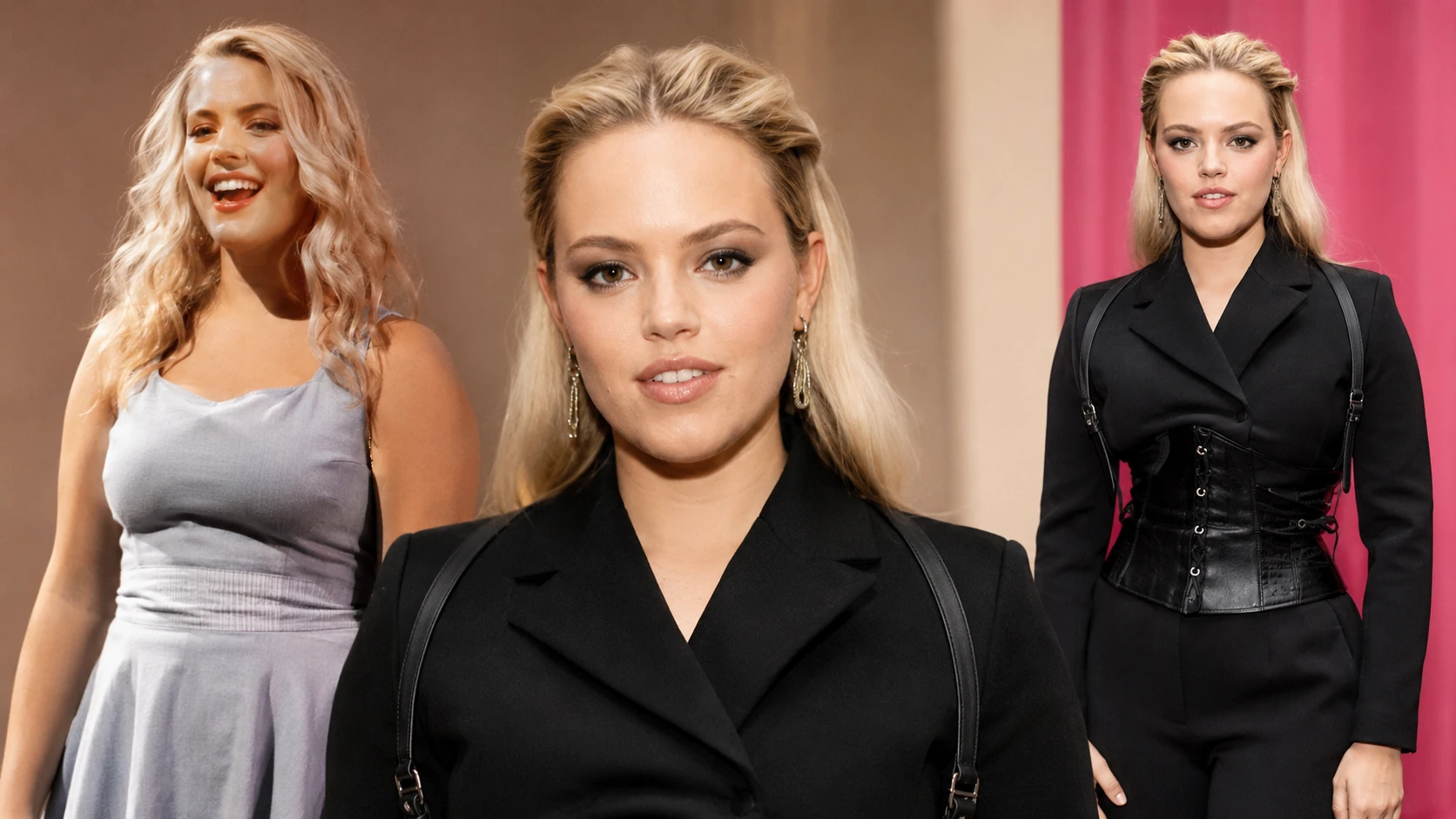
Reneé Rapp has the kind of presence that makes people ask practical questions first. How tall is she? Where did she come from? How did a theater kid from North Carolina become a Broadway Regina George, an HBO actor, a movie-musical star, and one of pop’s most watched young voices? The search for “renee rapp height” usually starts with a simple curiosity, but it leads quickly to a larger truth about her career: Rapp has always seemed bigger than the room she was standing in.
Her height is commonly reported in public sources as either 5 feet 7 inches or 5 feet 9 inches, depending on the listing. That disagreement matters because neither figure should be treated as personally confirmed unless Rapp or her representatives state it directly. What’s clear is that she is taller than average, and her physical presence has become part of how audiences read her on stage, on screen, and in concert. But height alone does not explain her rise.
Rapp’s career has been built on a rare combination of technical vocal power, comic timing, directness, and a public personality that refuses to feel overly managed. She became widely known through Mean Girls on Broadway, reached a broader audience through The Sex Lives of College Girls, and then moved fully into pop music with songs that made her feel less like an actor trying music and more like an artist who had been waiting for the right arena. Her story is still young, but it already shows the shape of a performer who knows how to turn attention into momentum.
Early Life and Family
Reneé Mary Jane Rapp was born on January 10, 2000, in Huntersville, North Carolina. She grew up in the Charlotte area, where her early path looked less like a manufactured entertainment story and more like the familiar route of a talented student who found her place through performance. Her parents, Denise and Charlie Rapp, have been part of the public story mainly as supportive family figures rather than celebrity personalities. Rapp also has a brother, Charles, who has occasionally appeared in biographical references about her life.

Before national audiences knew her name, Rapp was a student performer with a large voice and serious ambition. She attended Hopewell High School before transferring to Northwest School of the Arts in Charlotte, a public arts magnet school known for training young performers. That move mattered because it placed her in a more focused creative setting, surrounded by other students who treated performance as more than an after-school hobby. It also gave her a structure in which her voice, confidence, and stage instincts could sharpen early.
Teachers and theater observers noticed that Rapp did not simply sing well; she commanded attention. That difference is important because musical theater rewards more than range or volume. A young performer has to understand timing, character, breath, movement, and how to make a song feel like a decision rather than a display. Rapp’s later success makes more sense when seen as the result of that early discipline.
Her North Carolina background has remained part of her public identity even as her career has moved through New York, Los Angeles, and major entertainment platforms. She did not emerge from a famous family or a preexisting Hollywood machine. The early story is more grounded than that: a talented teenager, a performing arts education, and a series of opportunities that she met with unusual force. That foundation still shows in the way she talks, performs, and handles rooms.
Education and First Ambitions
Rapp’s first major national recognition came through high school musical theater, not film or pop music. In 2018, she won Best Performance by an Actress at the Jimmy Awards, the National High School Musical Theatre Awards. She won for her performance as Sandra in Big Fish, a role that allowed her to show dramatic feeling and vocal control. That win changed the scale of her future almost immediately.
The Jimmy Awards are watched closely by theater professionals because they gather some of the strongest high school performers in the United States. For Rapp, the award was not just a trophy; it was a public introduction to people who could recognize career-level talent. Her performance circulated among theater fans, and the industry began to see her as a serious young prospect. In a business where many performers spend years trying to be noticed, she had a defining moment before turning twenty.
She briefly attended Texas State University, a school with a respected musical theater program, but her professional path moved quickly. The usual college-to-audition-to-regional-theater route was interrupted by an opportunity too large to ignore. Rapp was cast as Regina George in the Broadway production of Mean Girls, first as a replacement for Taylor Louderman, who had originated the role on Broadway. That casting put her in one of the most visible young female roles in musical theater.
What’s striking about this period is how fast the transition happened. Rapp went from high school recognition to Broadway in a short span, but the move was not casual. Regina George is a demanding role because the performer must sing with power, land comedy, project danger, and still keep the character watchable. Rapp’s height and posture may have helped the visual effect, but her voice and confidence carried the job.
Career Breakthrough on Broadway
Rapp joined Mean Girls on Broadway in 2019, stepping into a role that was already culturally loaded. Regina George was not just any musical theater character; she was one of the most recognizable teen antagonists in American pop culture. The Broadway version demanded a performer who could nod to the film’s legacy while making the role feel alive in a new medium. Rapp did that by leaning into vocal force and a slightly more explosive stage energy.

The role placed her before audiences who already had expectations. Fans of the original 2004 film knew Regina as icy, controlled, and socially lethal. On Broadway, the character had to become larger and more theatrical without turning into a cartoon. Rapp’s version emphasized command, humor, and the unsettling ease of someone used to being obeyed.
Broadway also put Rapp into a physically demanding work rhythm. Eight-show weeks require stamina that casual viewers often underestimate. A performer has to repeat emotional peaks, high notes, choreography, and comic timing again and again while preserving the illusion of spontaneity. That kind of schedule helped shape Rapp into a performer who could handle pressure in public.
Her Broadway run also carried harder lessons. Rapp has spoken in later interviews about the emotional and body-image pressures she faced during that period. Those comments added a more serious dimension to the public’s understanding of her early fame. The role helped make her known, but it also placed her under scrutiny at an age when most people are still forming their sense of self.
Renee Rapp Height: What Is Publicly Known
Reneé Rapp’s height is most often reported as either 5 feet 7 inches or 5 feet 9 inches. Some entertainment and fan sources use the 5-foot-7 figure, while other public database listings have given 5 feet 9 inches. Because the figures conflict, the most accurate phrasing is that public sources vary. A single exact number should not be presented as confirmed unless it comes directly from Rapp or an official representative.
The reason readers search for “renee rapp height” is easy to understand. Rapp often appears tall beside co-stars, on red carpets, and in performance clips. Her styling also adds to that impression, since she frequently wears strong tailoring, boots, heels, or stage looks that lengthen her frame. Camera angles, choreography, and posture can make the difference between 5 feet 7 inches and 5 feet 9 inches look much larger than it is.
Either reported figure places her above the average height for an adult woman in the United States. That context helps explain why her height becomes noticeable in ensemble settings. Still, the fascination with the number can distract from the more relevant point: Rapp knows how to occupy space. Her physical presence is a performance tool, not merely a statistic.
For a biographical article, the responsible answer is simple. Reneé Rapp is commonly reported to be between 5 feet 7 inches and 5 feet 9 inches tall. The exact figure remains disputed across public sources, and the range is more reliable than pretending there is no disagreement. That approach respects both reader curiosity and factual care.
Television and a Wider Audience
Rapp’s next major chapter came through television. In 2021, she appeared as Leighton Murray in The Sex Lives of College Girls, the Max comedy-drama created by Mindy Kaling and Justin Noble. The role introduced her to viewers who may not have followed Broadway. It also gave her a character very different from Regina George, even if both were sharp, privileged, and emotionally guarded.
Leighton could easily have been written and played as a simple rich-girl stereotype. Rapp gave her a mix of arrogance, fear, wit, and vulnerability that made the character feel more human over time. The show followed four roommates at the fictional Essex College, and Leighton’s story included her coming to terms with her sexuality. Rapp’s performance helped turn what could have been a familiar campus archetype into one of the show’s emotional centers.
The role also placed Rapp in a different kind of public conversation. Television audiences engage with actors week by week, through recaps, social media clips, and character debates. Rapp’s direct real-life persona made her even more visible, because interviews often traveled as widely as scenes from the show. She began to seem less like a theater performer crossing over and more like a young star with several possible lanes.
Rapp later left The Sex Lives of College Girls as her music career expanded. That departure drew attention because fans had grown attached to Leighton, but it also made sense within the larger arc of her work. Music was becoming less of a side project and more of the center. For Rapp, the next stage was not simply another acting role; it was authorship.
Music Career and Public Voice
Rapp released her debut EP, Everything to Everyone, in 2022. The project introduced her as a pop singer-songwriter with a voice that could move from theatrical power to conversational hurt. Songs such as “Too Well” helped establish her outside the roles she had played. She was no longer only Regina or Leighton; she was writing and singing as herself.
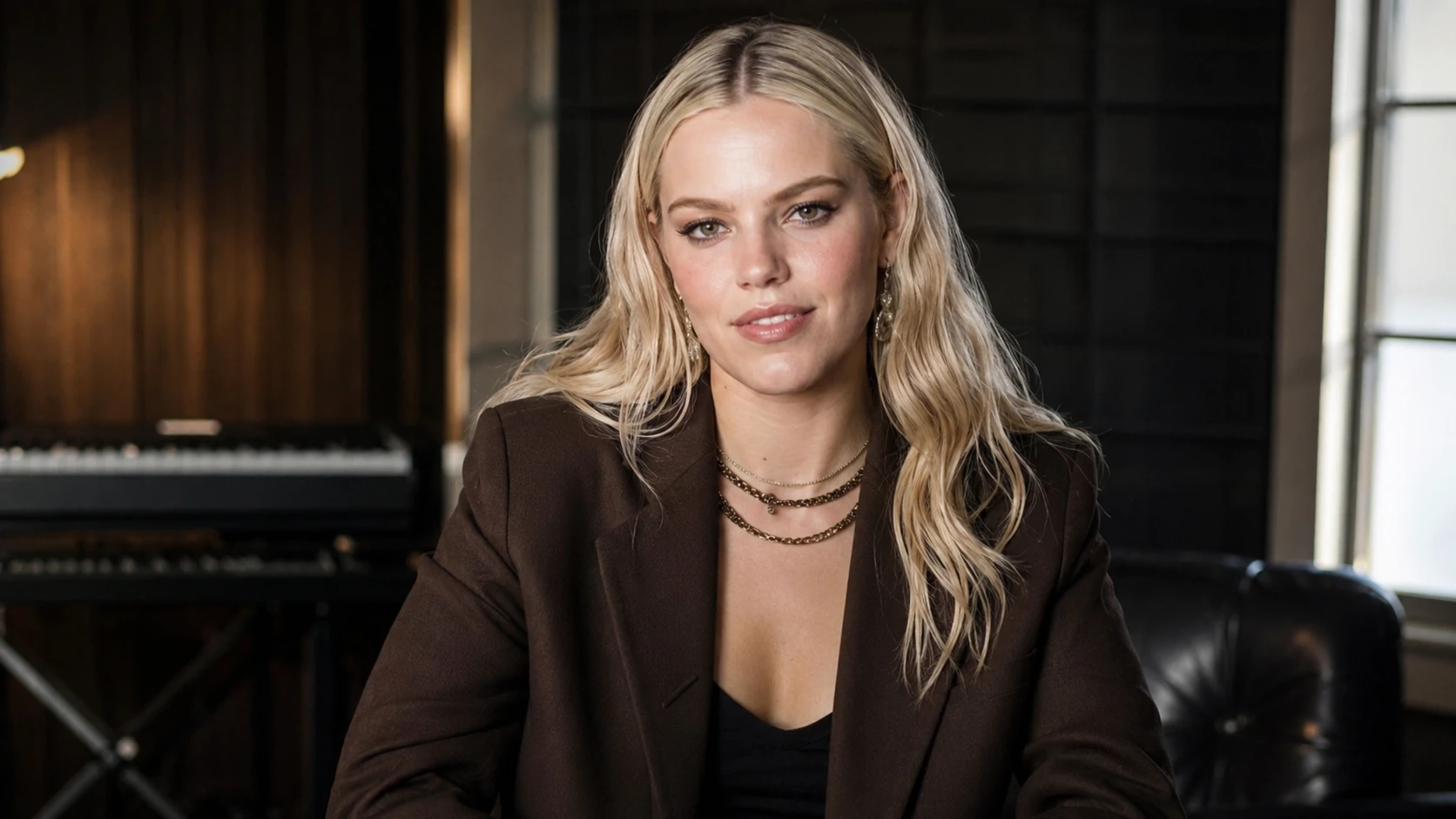
Her debut album, Snow Angel, followed in 2023. The record leaned into heartbreak, insecurity, desire, anger, and self-examination without sanding away her intensity. Rapp’s theater training was still present in her phrasing and dynamics, but the album showed a pop sensibility that did not feel borrowed. The title track, in particular, gave her a dramatic centerpiece that matched the scale people already associated with her voice.
Rapp’s public voice became part of the music, too. She has built a reputation for being funny, blunt, and sometimes startlingly candid in interviews. That directness can create viral moments, but it also makes her feel less distant than many young celebrities. Fans often respond to the sense that she is not trying to sound like a media-trained product.
The truth is, that candor has both power and risk. It makes her memorable, but it also means her words are clipped, shared, judged, and reinterpreted quickly. Rapp has had to grow in public during a period when every interview answer can become a headline. Her appeal rests partly in that tension between polish and refusal to be overly polished.
Mean Girls on Screen
In 2024, Rapp returned to Regina George in the film version of the Mean Girls musical. The project connected several versions of the story: the original 2004 film, the Broadway musical, and a new screen adaptation shaped for a younger audience. For Rapp, it was both a return and a reintroduction. She was no longer the newcomer stepping into a Broadway role; she was a central draw.
Her performance in the film leaned into what audiences already knew she could do. She had the vocal power for Regina’s songs, but she also understood the character’s social menace. On screen, small expressions matter more than they do from the back of a theater, and Rapp had to recalibrate the role for the camera. The result kept the force of her Broadway interpretation while giving film audiences a closer look.
The film also arrived after Rapp had already become known as a musician. That changed the way audiences received her. She was not only an actor in a movie musical; she was a recording artist bringing her own fan base into the project. Her involvement helped bridge theater fans, pop listeners, and younger viewers discovering Mean Girls through a new format.
The renewed attention also brought back familiar questions about her look, height, confidence, and public image. Regina George is a character built around visibility, and Rapp’s real-life visibility made the overlap hard to ignore. Still, the role should not be mistaken for the person. Rapp has spent much of her young career proving she can use a role as a launch point without being trapped by it.
Relationships and Private Life
Rapp has been open about parts of her identity and relationships, but she has also kept meaningful boundaries around her private life. She publicly identifies as queer and has spoken about sexuality in ways that have resonated with many fans. Her openness has become part of why young audiences connect with her. She speaks less like someone issuing statements and more like someone still making sense of herself in real time.
Her dating life has attracted public interest, especially as her fame has grown. She has been linked publicly to musician Towa Bird, and the two have appeared together in ways that drew attention from fans and entertainment outlets. As with many young public figures, some parts of that interest come from genuine support, while other parts can become invasive. The most respectful approach is to stick to what has been publicly shared and avoid treating private details as public property.
There is no public record that Rapp is married, and she does not have children. Most reliable biographical coverage focuses on her career, family background, sexuality, and artistic development rather than domestic milestones. That is appropriate because she is still early in adulthood and has not built her public identity around marriage or parenthood. Her personal life matters, but it should not be forced into categories that do not fit.
Her relationship with fame itself may be the more revealing personal story. Rapp has been open about anxiety, body scrutiny, and the emotional cost of being watched. Those admissions have made her feel more accessible, but they also remind readers that candor is not the same thing as unlimited access. A respectful biography should let her be known without assuming everything must be disclosed.
Money, Work, and Net Worth Estimates
Rapp’s income appears to come from several entertainment streams: acting, theater work, film roles, television, music releases, touring, merchandise, and brand-related opportunities. Because she has worked across Broadway, streaming television, studio film, and pop music, her financial picture is likely more diverse than that of a performer with only one lane. Still, exact earnings are not public. Any online net worth figure should be treated as an estimate, not a verified financial record.
Many celebrity net worth sites publish numbers without showing clear documentation. Those estimates can be useful as broad guesses, but they are often built from assumptions about salaries, touring revenue, streaming income, and contracts that are not publicly available. For Rapp, estimates vary, and none should be treated as confirmed unless supported by financial filings or direct reporting. The more honest statement is that her net worth is not publicly verified.
What can be said confidently is that her earning power has grown sharply since her Broadway breakthrough. A lead role in a recognizable film musical, a major television part, a recording career, and live performances all increase her commercial profile. Brand value also rises when an artist has a distinct voice and a highly engaged fan base. Rapp has both.
Money is not the only measure of her position, though. Industry value also comes from casting power, audience loyalty, and the ability to move between formats. Rapp has already shown that she can carry attention from theater to television to music. That flexibility may matter more over the long term than any single estimated dollar figure.
Public Image, Controversies, and Scrutiny
Rapp’s public image is built on talent, blunt humor, and emotional openness. She often says the kind of thing more cautious celebrities would soften. That has made her a favorite among fans who are tired of bland interviews, but it has also exposed her to harsher scrutiny. The same candor that makes her likable can become a source of headlines when removed from context.
Her comments about body image and the pressures of Mean Girls on Broadway were a major turning point in how some people understood her early career. Rather than presenting Broadway as a simple dream fulfilled, she described parts of the experience as painful. That honesty complicated the usual success story, and it also aligned with broader conversations about how young performers are treated. Rapp’s willingness to talk about those pressures gave fans a clearer sense of the cost behind the achievement.
She has also drawn attention for sharp interview moments, including comments about industry experiences and people connected to past projects. Some viewers find that refreshing, while others see it as risky. Not everyone agrees on where the line sits between honesty and oversharing. What’s clear is that Rapp’s public persona does not depend on being universally agreeable.
The scrutiny around her body, including questions about renee rapp height, belongs within that larger pattern. Fans are curious, but the internet can turn curiosity into inspection very quickly. Rapp’s career shows why the distinction matters. She is a performer with a body, not a body that explains the performer.
Awards, Influence, and Industry Standing
Rapp’s 2018 Jimmy Award remains one of the defining early honors of her career. It marked her as one of the country’s strongest young musical theater performers before she became famous outside theater circles. The award also connects her to a pipeline of performers who have moved from high school theater recognition into professional work. In her case, the transition happened with unusual speed.
Her Broadway casting in Mean Girls gave her credibility in one demanding field, while The Sex Lives of College Girls gave her recognition in another. That combination helped her avoid being seen as only a stage performer. She then used music to claim a more personal form of authorship, which changed the public’s relationship to her. Fans were no longer only watching her interpret characters; they were listening to her process feeling in her own name.
Rapp’s cultural influence is especially strong among younger fans, queer audiences, theater followers, and pop listeners who value emotional directness. She occupies a space where Broadway technique, Gen Z humor, and confessional pop meet. That mix is not common, and it gives her a distinctive place in entertainment. She can be theatrical without feeling old-fashioned and candid without seeming careless all the time.
Her industry standing is still forming, which may be the most interesting part. She has already had enough success to be taken seriously, but she has not been famous long enough for her career to feel settled. The next few years will show whether she becomes mainly a pop artist, keeps acting regularly, or continues moving between both. Based on her first major chapters, limiting her to one category would be premature.
Where Reneé Rapp Is Now
Rapp is now best understood as a singer and actor whose center of gravity has shifted toward music. After building a name through Mean Girls and The Sex Lives of College Girls, she has put more public energy into recording, touring, and developing her identity as an artist. That shift makes sense because music gives her more control over tone, material, and self-presentation. It also lets fans meet her without a character standing between them.
Her current status is that of a young star with a loyal audience and a still-expanding mainstream profile. She has already passed through the most dangerous early test for many performers: proving that a breakout role was not the whole story. Rapp has done that by attaching her name to several different kinds of work. Each one has brought a different audience closer.
The height question remains a small but persistent part of her search profile. It shows how fans try to complete the picture of a public figure through details that feel concrete. But the more meaningful picture is not measured only in inches. It is built through roles, songs, interviews, performances, and the way she handles the pressure of being seen.
What’s surprising is how much of Rapp’s appeal comes from seeming both fully in command and openly unfinished. She can sing like someone who knows exactly what she is doing, then speak like someone still figuring out how to live inside fame. That combination makes her feel current without feeling disposable. It also explains why people keep searching beyond the basic facts.
Frequently Asked Questions
How tall is Reneé Rapp?
Reneé Rapp’s height is commonly reported as either 5 feet 7 inches or 5 feet 9 inches, depending on the public source. Because those listings conflict, the safest answer is that she is reported to be between 5 feet 7 inches and 5 feet 9 inches tall. There does not appear to be a universally confirmed official height from Rapp herself.
The difference is not unusual for celebrity biography pages. Heights can come from old profiles, database entries, agency materials, or user-submitted listings. Unless the performer or a direct representative confirms the measurement, it is better to describe the figure as reported rather than verified.
Why do people search for renee rapp height?
People search for renee rapp height because Rapp often appears tall and commanding in photos, performances, and screen roles. Her red-carpet styling, footwear, posture, and stage background all add to that impression. She also became famous through roles that depend heavily on presence, especially Regina George in Mean Girls.
The search is also part of normal celebrity curiosity. Fans often want quick facts such as age, hometown, height, relationship status, and career background. In Rapp’s case, the height question leads naturally into a wider discussion of how she presents on stage and screen.
Where is Reneé Rapp from?
Reneé Rapp is from Huntersville, North Carolina, in the Charlotte area. She attended schools in North Carolina before gaining national attention as a high school musical theater performer. Her background there remains part of the story of how she moved from student theater to Broadway.
She studied at Northwest School of the Arts in Charlotte, which gave her a focused environment for performance training. That arts education helped prepare her for the Jimmy Awards and later professional work. Her rise was fast, but it was built on serious early preparation.
What made Reneé Rapp famous?
Rapp first gained major attention when she won Best Performance by an Actress at the 2018 Jimmy Awards. That recognition helped lead to her casting as Regina George in Mean Girls on Broadway. The role gave her a national theater profile while she was still very young.
She later reached a wider audience as Leighton Murray in The Sex Lives of College Girls. Her music career expanded her fame further, especially after the release of Everything to Everyone and Snow Angel. By the time she appeared in the 2024 Mean Girls movie musical, she had become known across theater, television, film, and pop music.
Is Reneé Rapp married?
Reneé Rapp is not publicly known to be married. She has not presented marriage or children as part of her public biography. Most reliable coverage of her personal life focuses on her identity, relationships, career, and public comments rather than domestic milestones.
She has been open about being queer and has drawn public attention for her relationship with musician Towa Bird. As with any young public figure, private details should be handled carefully. Public support does not require treating every part of her life as open for inspection.
What is Reneé Rapp’s net worth?
Reneé Rapp’s exact net worth is not publicly verified. Online estimates exist, but they often do not show clear sourcing and should be treated as guesses. Her income likely comes from acting, music, touring, theater work, film, television, merchandise, and related entertainment opportunities.
What is clear is that her earning power has grown since her Broadway breakthrough. She has worked across several profitable parts of the entertainment business, which gives her more than one source of income. Still, no precise number should be presented as fact without reliable financial reporting.
What is Reneé Rapp doing now?
Rapp is currently known mainly as a singer, actor, and performer whose music career has become central to her public identity. After Broadway and television success, she has focused strongly on recording and live performance. That shift has allowed her to speak more directly as herself rather than through characters.
She remains connected to acting through her work in Mean Girls and The Sex Lives of College Girls, but music appears to be the area where she has the most personal control. Her fan base continues to follow both her songs and her unusually candid public persona. That combination keeps her highly visible.
Conclusion
Reneé Rapp’s height may be the search term that brings many readers to her biography, but it is only a small entry point into a larger story. Public sources disagree on the exact number, usually placing her between 5 feet 7 inches and 5 feet 9 inches. The honest answer is to acknowledge that range rather than flatten it into false certainty.
Her real stature comes from a career that has moved quickly across demanding spaces. She went from a North Carolina performing arts student to a Jimmy Award winner, then to Broadway, television, film, and pop music. At each stage, she has carried a mix of discipline and volatility that makes her difficult to ignore.
Rapp matters because she represents a newer kind of multi-platform performer. She has Broadway technique, screen presence, pop ambition, and a public voice that feels unusually direct. That mix can be messy, but it is also the source of her power.
The next chapter of her career will likely define how she is remembered: as an actor who sings, a singer who acts, or something less easily labeled. For now, she remains a young artist with room to grow and enough force to keep people watching. The height question has an imperfect answer, but the larger question of why she commands attention is easier to solve.
