
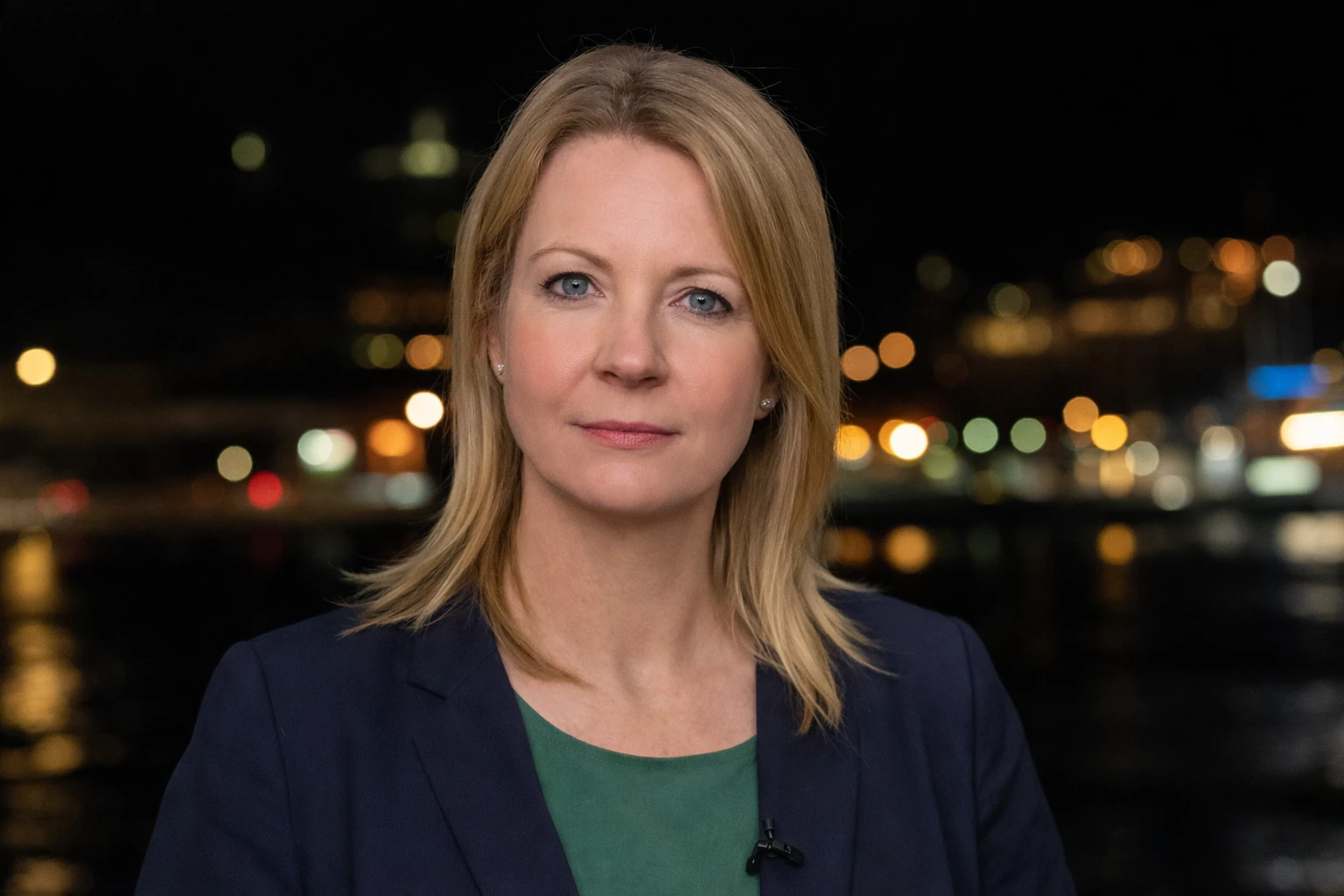
The camera cuts to her mid-sentence, wind catching her hair as she stands somewhere far from home—Beirut, Kyiv, or the edge of Gaza’s skyline. Emma Murphy doesn’t raise her voice. She doesn’t need to. The authority comes from something quieter: years in the field, an understanding of power, and the kind of composure that only shows up when you’ve reported through chaos before. Viewers might not always remember the exact date of a ceasefire or the name of a minister, but they often remember the person who made sense of it. For many watching ITV News, that person has increasingly been Murphy.
Her career didn’t begin with a splash or a viral moment. It built slowly, almost deliberately, through the kind of assignments that don’t trend but do matter. By the time she stepped into the role of International Editor in 2024, she had already spent years mapping Europe’s political machinery and decoding America’s sharpest divisions. The result is a journalist whose work feels grounded, even when the ground itself is shifting beneath her feet.
Early Life and Family Background
Public information about Emma Murphy’s early life is limited, and that’s not unusual for journalists who came up before the era of constant self-disclosure. Unlike influencers or television personalities who build brands around their personal stories, Murphy has kept the focus firmly on her work. What can be said with confidence is that she was raised in the United Kingdom and came of age during a period when broadcast journalism still carried a certain institutional weight.
By all accounts, Murphy belongs to a generation that entered journalism before social media reshaped the profession. That likely meant a more traditional path—education grounded in writing and current affairs, followed by early newsroom roles where learning came through doing rather than broadcasting your progress online. Those environments were demanding, often unforgiving, but they produced reporters who understood the mechanics of storytelling long before they became the face of it.
There’s a reason her early life isn’t heavily documented, and it speaks to a broader culture within serious journalism. Reporters are trained to observe, not to center themselves. Anyone who has spent time in a newsroom would recognize the type: curious, disciplined, and far more interested in asking questions than answering them about their own lives. That instinct still shapes Murphy’s public presence today.
Building a Career in Journalism
Murphy’s professional path becomes clearer once you look at her work rather than her biography. She emerged within ITV News, part of ITN, one of Britain’s most established news producers. These are not organizations that hand out major roles casually. Advancement tends to follow years of consistent reporting, editorial trust, and the ability to handle complex stories without losing clarity.
Her early years likely involved domestic reporting, though specific assignments from that period remain lightly documented. What is recorded, however, is her involvement in ITV News at Ten’s award-winning coverage of the 2010 Cumbria shootings. That reporting, which later earned a BAFTA, required sensitivity, speed, and a steady presence during a national tragedy. Murphy was part of that effort, and it placed her within a newsroom operating at its highest level.
From there, her trajectory began to sharpen. She moved into the role of Europe Correspondent, a position that demands a particular kind of reporting skill. Brussels is not an easy beat. Stories move slowly, often buried in policy language and diplomatic nuance, and the challenge is translating those developments into something viewers can actually understand. Murphy’s work during this period helped establish her as someone who could handle complexity without losing the audience.
The Washington Years and Political Reporting
In early 2021, Murphy took on one of the most demanding foreign postings in journalism: Washington Correspondent for ITV News. The timing alone would have tested any reporter. The United States was navigating the aftermath of the January 6 Capitol attack, a deep political divide, and the ongoing COVID-19 pandemic. Covering Washington at that moment meant more than tracking legislation or election cycles—it required understanding a country wrestling with its identity.
Murphy stepped into that environment with a focus on context rather than spectacle. Her reporting often connected policy decisions to their broader implications, whether that meant examining Joe Biden’s attempts to unify a fractured electorate or exploring how American domestic politics influenced global alliances. That approach resonated with viewers who were trying to make sense of a rapidly changing political landscape.
What’s surprising is how much those years seem to have shaped her later work. Reporting in Washington sharpened her sense that global events rarely exist in isolation. A decision made in the White House can ripple through Europe, the Middle East, and beyond. That awareness became a defining feature of her reporting style, especially as she moved into even larger international roles.
Becoming ITV News International Editor
By July 2024, Murphy had reached a new stage in her career: International Editor for ITV News. It’s a title that carries weight, not just because of the stories involved but because of the editorial responsibility it demands. This is the role where a journalist is no longer just covering events but helping shape how they are understood.
Her reporting from the Middle East shortly after taking on the role offered a clear example of what that means in practice. Traveling alongside UK Foreign Secretary David Lammy, Murphy reported on diplomatic efforts surrounding Gaza, questioning government policy on arms exports and humanitarian aid. These are not easy interviews or simple narratives. They require preparation, confidence, and the ability to press for answers without losing access.
The job also places her at the center of some of the world’s most difficult stories. From Ukraine’s ongoing war to escalating tensions involving Iran and Israel, Murphy’s coverage reflects a beat that is both global and deeply human. She’s often reporting from places where the stakes are immediate and the consequences are real, which adds a layer of urgency to everything she does.
Reporting Style and Public Reputation
Anyone who has followed Murphy’s work over time will notice a consistent approach. She doesn’t rush to conclusions, and she avoids turning complex situations into simplified narratives. That restraint might not always generate headlines, but it builds something more valuable: trust.
Her reporting often balances two competing demands. On one hand, there is the need to convey urgency, especially during breaking news. On the other, there is the responsibility to provide context, helping viewers understand not just what happened but why it matters. That balance is difficult to maintain, and it’s one of the reasons experienced correspondents stand out.
Not everyone agrees with every framing choice she makes, particularly in highly charged areas like Middle East coverage. Criticism comes with the territory, especially for journalists working on international conflicts where perspectives are deeply divided. But here’s the thing: sustained criticism often signals that a reporter is engaging with difficult material rather than avoiding it.
Personal Life and Relationships
Murphy has kept her personal life largely out of the public eye, a decision that aligns with the culture of traditional journalism. There is no confirmed public record detailing her marital status, children, or family structure. While some readers may find that absence frustrating, it reflects a professional boundary that many journalists still maintain.
According to colleagues who have worked in similar environments, that separation is often intentional. Foreign reporting can be demanding, unpredictable, and at times dangerous. Keeping personal details private offers a degree of protection, both for the journalist and for their loved ones. It also ensures that the focus remains on the work rather than the individual.
That said, anyone who has spent time in high-pressure newsrooms will recognize the support systems that exist behind the scenes. Friends, colleagues, and family often play a quiet but crucial role in sustaining careers like Murphy’s. Those relationships may not be visible to the public, but they are almost certainly there, shaping the person behind the reporting.
Net Worth, Awards, and Professional Recognition
Reliable financial information about Murphy is not publicly disclosed, and estimates circulating online should be treated with caution. Unlike celebrities or business figures, journalists rarely publish detailed financial records, and their earnings are typically tied to institutional salaries rather than public endorsements.
What is clear, however, is her professional recognition. ITV News has stated that Murphy has received multiple awards during her career, and her involvement in BAFTA-winning coverage underscores her standing within the industry. Awards in journalism are not handed out lightly, particularly at the national level, and they reflect both individual performance and team collaboration.
Her nomination for the 2026 RTS Television Journalism Awards further reinforces that reputation. These recognitions place her among a group of journalists who are not only visible on screen but also respected within the profession. That kind of recognition tends to accumulate over time, built on consistent work rather than single standout moments.
What Emma Murphy Is Doing Now
As of 2026, Murphy continues to serve as ITV News International Editor, reporting on some of the most significant global events of the moment. Her recent work includes coverage of Ukraine’s ongoing conflict, Middle East diplomacy, and shifting geopolitical alliances involving the United States and Iran.
Her reporting schedule remains intense, reflecting the demands of a role that rarely slows down. International editors are expected to respond quickly to breaking developments while maintaining a broader strategic view of global news. That combination of speed and perspective is what defines the position.
There’s also a sense that her influence within ITV News is growing. As international stories continue to dominate headlines, the role of editors like Murphy becomes even more central. They are not just reporting the news but helping shape how audiences understand a rapidly changing world.
Lesser-Known Facts About Emma Murphy
Not many people know this, but Murphy’s career includes early involvement in award-winning domestic coverage before she became known for international reporting. That foundation likely played a role in shaping her approach to storytelling, particularly her focus on human impact alongside political analysis.
Another detail that stands out is her ability to transition between very different reporting environments. Moving from Brussels to Washington and then into a global editorial role requires adaptability, and it’s a skill that doesn’t always get the attention it deserves. Each of those positions demands a different way of thinking and reporting.
What’s also interesting is how little she engages in personal branding compared to many modern journalists. While others build large social media followings or cultivate public personas, Murphy’s visibility comes primarily through her work. That choice may limit her online presence, but it strengthens her credibility as a reporter.
Frequently Asked Questions
Who is Emma Murphy?
Emma Murphy is a British journalist and the International Editor for ITV News. She has built her career through roles including Europe Correspondent and Washington Correspondent. Her work focuses on global events, including conflicts, diplomacy, and political developments.
What is Emma Murphy known for?
She is known for her international reporting on major global stories such as the Ukraine war and Middle East conflicts. Her work often combines field reporting with political analysis. Viewers recognize her for clear, context-driven coverage.
Does Emma Murphy share details about her personal life?
No, Murphy keeps her personal life private. There is limited verified information about her family or relationships. This approach reflects a professional boundary common among experienced journalists.
Has Emma Murphy won any awards?
Yes, she has received multiple awards during her career. She was part of ITV News at Ten’s BAFTA-winning coverage of the Cumbria shootings. She has also been recognized with industry nominations, including for the RTS Television Journalism Awards.
What is Emma Murphy doing in 2026?
As of 2026, she continues to serve as ITV News International Editor. She reports on global events and appears regularly in coverage of major international stories. Her role includes both reporting and shaping editorial direction.
Conclusion
Emma Murphy’s career is not built on spectacle, and that is exactly what makes it compelling. She represents a form of journalism that still values accuracy over speed and context over noise. In a media environment that often rewards attention-grabbing moments, her work offers something steadier.
Her path from Europe Correspondent to International Editor shows what sustained effort can look like in a demanding field. It is a reminder that credibility is not earned overnight but built through years of consistent reporting. Anyone who has followed her work can see that progression clearly.
There is also something reassuring about her presence on screen. She doesn’t dominate the story or turn it into a performance. Instead, she guides viewers through it, offering clarity when it is most needed. That approach may not always trend, but it lasts.
Looking ahead, Murphy’s role is likely to become even more important as global stories continue to shape everyday life. If her career so far is any indication, she will keep doing what she has always done—reporting with focus, asking the right questions, and helping audiences understand a world that rarely slows down.
