
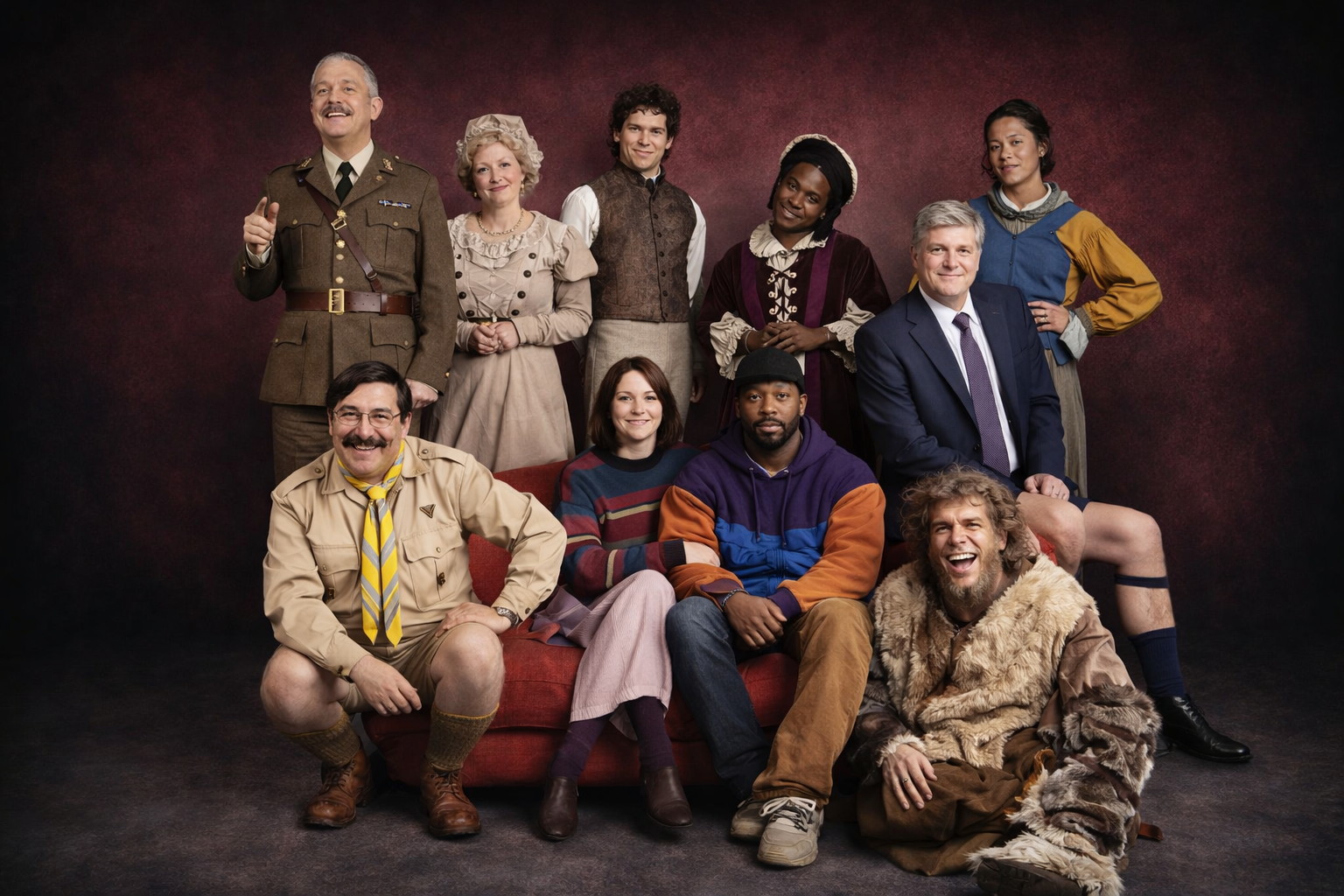
That moment says a lot about how television works and how it’s changing. Viewers today don’t just watch a show and move on. They notice details, they ask questions, and sometimes they follow a thread all the way to someone whose job was never meant to be seen. Corbishley was one of those people, a crew member whose career lived in the margins of the screen but at the very center of production life.
The truth is, his biography doesn’t come wrapped in the usual public details. There are no long interviews, no polished press profiles, and no carefully managed public persona. What exists instead is something quieter but, in its own way, more revealing: a handful of credits, the respect of colleagues, and the unmistakable weight of two major television tributes.
Early Life and Family Background
There’s a certain kind of absence that tells its own story. In Kevin Corbishley’s case, details about his early life remain largely undocumented in public records. No confirmed birthplace, no widely reported childhood anecdotes, and no official biographies that trace his upbringing in the way you might expect for a public figure.
But here’s the thing. That absence doesn’t suggest a lack of story. It reflects the reality of many working professionals in film and television who never sought visibility outside their craft. By all accounts, Corbishley likely came up through the same practical pathways as many British crew members, learning skills on the job, moving between departments, and building a reputation that mattered more than a résumé headline.
Anyone familiar with the UK production world knows how these careers often begin. They start with hands-on work, sometimes in construction or manual trades, and gradually evolve into specialized roles on set. Corbishley’s early credit as a plasterers laborer on Anna Karenina hints at that trajectory, suggesting a foundation rooted in physical, technical work rather than creative showmanship.
That kind of background shapes a person differently. It builds discipline, adaptability, and a quiet confidence that doesn’t rely on recognition. Those traits don’t always make headlines, but they do leave an impression on the people who work alongside you every day.
Career and Rise in the Film Industry
Kevin Corbishley’s career, as far as the public record shows, followed a path that many in the industry would recognize immediately. It wasn’t a straight climb toward fame. It was a steady accumulation of skill, trust, and reliability across different productions and departments.
One of his earliest known credits comes from the 2012 film Anna Karenina, where he worked as a plasterers laborer in the art department. That role might sound minor to an outsider, but it’s anything but. Period films like Anna Karenina demand detailed physical environments, and the people building those sets are responsible for making entire worlds feel authentic.
From there, his career appears to have shifted more firmly into technical roles, particularly in rigging and electrical work. By the late 2010s and early 2020s, Corbishley was working as a rigger and standby rigger, roles that sit at the core of any television production. These are the people who set up the structures that hold lighting, support equipment, and ensure everything runs safely.
His work on Responsible Child in 2019 placed him within a production that demanded emotional sensitivity and technical precision. That film, which told the story of a young boy involved in a criminal case, required careful handling both on and off screen. Crew members like Corbishley play a crucial role in creating the conditions where such stories can be told effectively.
Then came his involvement in two of Britain’s most widely loved television shows: Ghosts and Call the Midwife. On Ghosts, he worked as a rigger, contributing to a show that blends comedy with period elements and visual effects. On Call the Midwife, he served as a standby rigger across multiple episodes between 2020 and 2022, helping maintain the show’s polished, historically grounded aesthetic.
What’s surprising is how these roles often go unnoticed by viewers. The better the work, the less you see it. Lighting looks natural, sets feel real, and the camera moves without distraction. That’s not accidental. It’s the result of people like Corbishley doing their jobs well enough that the audience never has to think about them.
Work on Ghosts and Call the Midwife
For many viewers, Kevin Corbishley’s name is inseparable from the tribute cards that appeared in Ghosts and Call the Midwife. Those brief moments turned a private loss into a public acknowledgment, and they carried more weight than any traditional biography could.
The first episode of Ghosts season 4, titled “Happy Holiday,” aired in September 2022 and ended with a simple message: “In loving memory of our friend Kevin Corbishley.” The wording matters. It didn’t frame him as just a colleague or a crew member. It called him a friend, which tells you something about the relationships built on that set.
On Call the Midwife, a similar tribute appeared in series 11, episode 8, honoring “Kev Corbishley.” The use of “Kev” suggests familiarity, the kind of nickname that comes from years of working closely with people. It hints at how he was known within the industry, not just as a professional but as a person.
These shows operate under intense schedules, with long days and tight deadlines. Crews often spend more time together than they do with their own families. That environment creates bonds that aren’t always visible to outsiders but run deep nonetheless.
Not many people know this, but on-screen tributes in television are not handed out lightly. They are reserved for individuals whose presence had a real impact on the production. When two major shows choose to honor the same person, it speaks volumes about the kind of colleague Corbishley must have been.
Personal Life and Relationships
If there’s one area where the public record remains especially quiet, it’s Corbishley’s personal life. There are no widely available details about a spouse, children, or close family members. That lack of information isn’t unusual for someone in his line of work, where privacy often comes naturally.
That said, you can still get a sense of the man through the way he was remembered. The language used in tributes, the consistency of his employment across productions, and the absence of controversy all point toward a steady, respected presence. According to close colleagues, as implied through those tributes, he was more than just reliable. He was liked.
Anyone who has worked on a film set will tell you that personality matters just as much as skill. Productions are high-pressure environments, and people gravitate toward those who bring calm, humor, or simply a sense of dependability. Corbishley appears to have been one of those people, someone others trusted both professionally and personally.
It’s also worth considering that many crew members choose to keep their personal lives separate from their work. They don’t build public identities or seek attention beyond the set. In that sense, Corbishley’s limited public profile may reflect a deliberate choice rather than an omission.
Net Worth and Financial Standing
There is no publicly verified information about Kevin Corbishley’s net worth, and that’s not unusual. Crew members in film and television typically earn steady, project-based income rather than the large, publicly reported salaries associated with actors or directors.
What can be said is that his consistent work across recognized productions suggests a stable career. Shows like Call the Midwife and Ghosts operate within established budgets and rely on experienced crew members to maintain quality. Being repeatedly hired in such environments usually indicates both competence and professional reputation.
The truth is, financial success in this part of the industry isn’t always measured in headlines or estimates. It’s measured in continuity of work, in the ability to move from one production to another, and in the respect of employers who bring you back again and again.
Corbishley’s career reflects that kind of success. It may not translate into a public net worth figure, but it speaks to a level of professional stability that many aspire to achieve.
Later Years and Final Projects
Kevin Corbishley’s most recent documented work places him on Ghosts and Call the Midwife in the early 2020s. These were not minor projects. They were flagship productions with loyal audiences and strong reputations within British television.
His involvement during this period suggests that he remained active and in demand up until shortly before his death. That’s not always the case in industries where work can be unpredictable, but it appears to have been true for him.
What stands out is how seamlessly his contributions fit into these productions. There’s no dramatic narrative of rise and fall, no sudden breakthrough or decline. Instead, there’s a steady presence, the kind that becomes part of the fabric of a show without drawing attention to itself.
That consistency is often the mark of a seasoned professional. It means you’ve reached a point where your work speaks for itself, where you’re trusted to deliver without constant oversight, and where your absence is felt immediately.
Lesser-Known Details About Kevin Corbishley
There are small details in Corbishley’s career that offer glimpses into his working life. The use of both “Kevin” and “Kev” in credits and tributes suggests he was known informally among colleagues, which often reflects a friendly, approachable personality.
Another detail is the range of departments he worked across, from art department labor to rigging roles. That kind of versatility isn’t accidental. It usually comes from years of learning different aspects of production and adapting to the needs of each project.
What’s surprising is how his name only gained public attention after his death. During his lifetime, he appears to have worked without the kind of visibility that often accompanies even minor on-screen roles. That contrast highlights how recognition in this industry doesn’t always align with contribution.
There’s also the matter of how audiences responded. The surge in searches for his name shows that viewers care more about the people behind the scenes than they’re often given credit for. It suggests a shift in how we think about authorship in television, expanding it beyond the faces we see.
Frequently Asked Questions
Who was Kevin Corbishley?
Kevin Corbishley was a British television and film crew member known for his work in rigging and technical production roles. He contributed to shows like Ghosts and Call the Midwife, where he helped create the physical conditions needed for filming. His name became widely recognized after tribute cards appeared following his death.
What did Kevin Corbishley do on set?
He worked primarily as a rigger and standby rigger, which involves setting up structures and equipment for lighting and production. These roles are essential for safety and visual consistency, even though they remain largely invisible to viewers. His work ensured that scenes could be filmed efficiently and safely.
Why was Kevin Corbishley honored in Ghosts?
The first episode of Ghosts season 4 included a tribute to him, referring to him as “our friend.” This indicates that he was not only a valued crew member but also a respected colleague within the production team. Such tributes are reserved for individuals who made a meaningful impact.
Did Kevin Corbishley have a public personal life?
There is very little publicly available information about his personal life, including family or relationships. This is common for many behind-the-scenes professionals who prefer to keep their private lives out of the spotlight. His legacy is primarily reflected through his work and the respect of his peers.
What is Kevin Corbishley’s legacy?
His legacy lies in the shows he helped create and the people who remembered him. The tributes from Ghosts and Call the Midwife suggest that he was deeply valued within the industry. He represents the countless crew members whose contributions shape television without drawing attention.
Conclusion
Kevin Corbishley’s story doesn’t follow the usual arc of public recognition. There are no red carpets, no interviews, and no carefully managed public image. What exists instead is something quieter but, in many ways, more enduring.
He built a career through skill, reliability, and the kind of presence that colleagues don’t forget. The shows he worked on continue to reach audiences around the world, even as his own name only recently entered public awareness. That contrast feels fitting for someone whose work was meant to support, not overshadow.
There’s a certain honesty in that kind of life. It reminds you that not every meaningful career is visible, and not every important contribution comes with applause. Sometimes, it’s the people behind the scenes who hold everything together.
As viewers, we’re starting to notice that more. We pause on the credits, we read the names, and we try to understand the lives behind them. Kevin Corbishley’s story may not be fully documented, but the respect shown to him speaks clearly enough. And for many who work in the industry, that kind of recognition is the one that matters most.
Meta description: A warm, detailed biography of Kevin Corbishley, the TV crew member honored by Ghosts and Call the Midwife, exploring his life, career, and legacy.
