
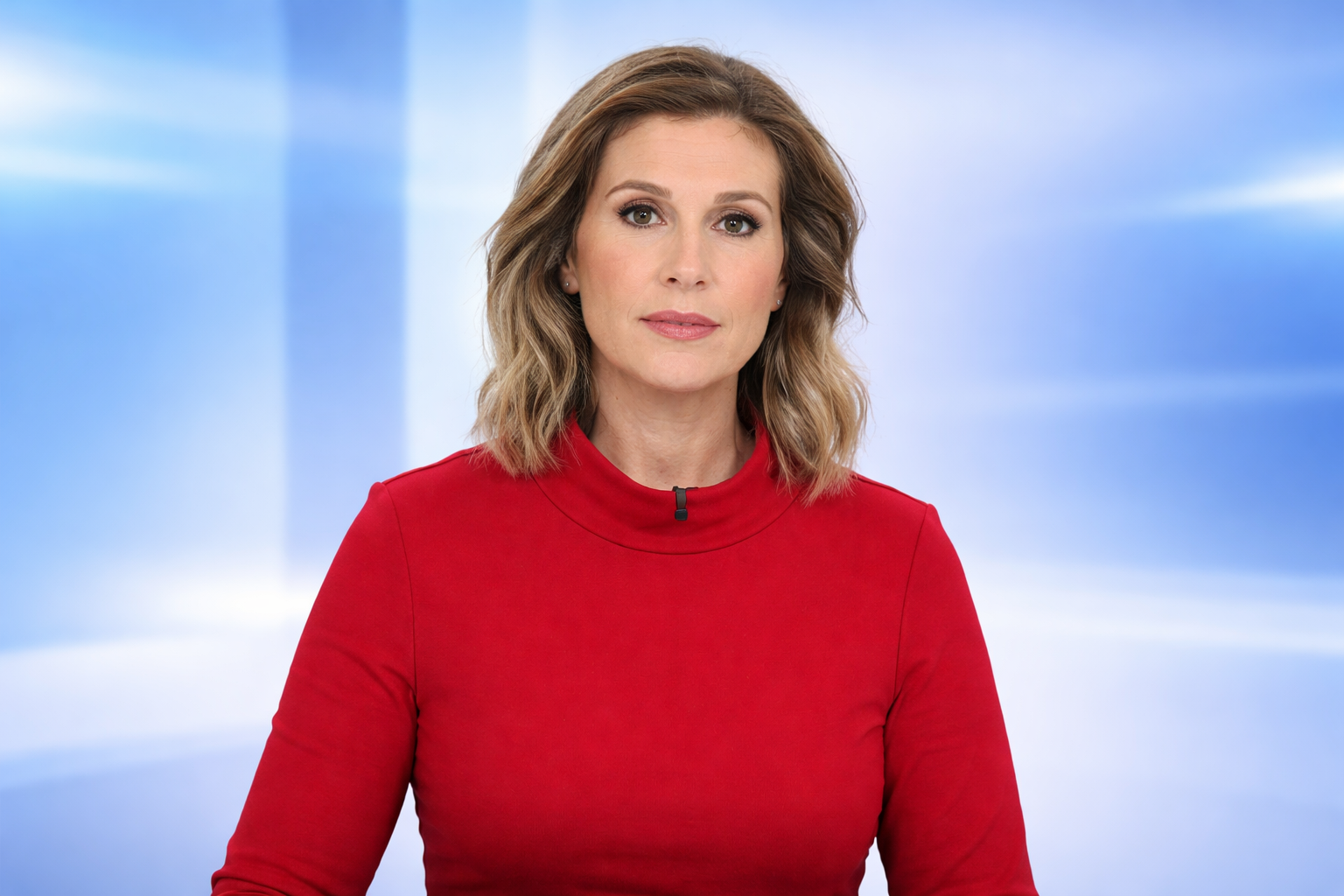
That moment didn’t happen overnight. It was the result of a career built far from the usual paths, stretching from Nairobi to Dubai, from Doha to London. Leonard didn’t rise through a single newsroom or a single country. She moved, adapted, learned, and kept going, long before most viewers knew her name. By the time she appeared on British television screens, she already carried years of experience that shaped how she spoke, how she listened, and how she held space for difficult stories.
Early Life and Family in Nairobi
Kimberley Leonard grew up in Lang’ata, a residential area in Nairobi known for its mix of quiet neighborhoods and proximity to Wilson Airport. That location mattered more than it might seem at first glance. Her childhood unfolded in a world where planes were part of the background, where travel wasn’t abstract but constant, and where people moved between countries as part of everyday life.
Her family life reinforced that sense of motion. Her mother worked as a travel agent at Wilson Airport, helping people map out journeys across continents. Her father was a pilot who later ran aviation companies including Air Kenya and Safari Air. Anyone who knew that environment would tell you it creates a certain mindset early on. You grow up thinking beyond borders, and you learn to see the world as connected rather than distant.
Schooling added another layer to that upbringing. Leonard attended Banda School and later Hillcrest International School, both institutions with diverse student bodies and strong academic reputations. Those years weren’t just about education in the formal sense. They exposed her to different cultures, perspectives, and ambitions, all of which would later surface in her journalism.
By all accounts, she wasn’t someone who grew up dreaming of fame. The truth is, her early life suggests curiosity rather than performance. She has spoken openly about not excelling in mathematics and about finding her strengths elsewhere, which is often how journalists discover their path. It’s less about certainty and more about following what feels natural, even if the route isn’t obvious at first.
Education and the First Steps Into Media
After finishing school in Kenya, Leonard continued her education abroad, including time at the University of Cape Town. That move alone says something about her willingness to step outside familiar environments. Later, she pursued a master’s degree at the University of Westminster in London, placing herself directly in one of the world’s busiest media capitals.
But degrees don’t build a career on their own. Leonard’s first real step into journalism came back home in Nairobi, where she joined the news team at Capital FM. Radio may not have the visual pull of television, but it teaches discipline in a way few other formats can. You learn to write tightly, to think on your feet, and to communicate clearly without relying on visuals.
She has said that while she enjoyed radio, something didn’t quite click. Television, with its blend of storytelling, immediacy, and visual context, felt like the right fit. That realization set her on a path that would take her far beyond Kenya, though at the time, it likely felt like a leap without guarantees.
Not many people know this, but transitions like that rarely happen smoothly. Moving from radio into television, especially across international markets, involves rejection, uncertainty, and constant adjustment. Leonard didn’t bypass those challenges. She worked through them, step by step, building experience that would later define her on-screen presence.
Building a Career Across Dubai and Doha
Dubai became one of the first major turning points in Leonard’s professional life. She moved there without deep familiarity with the city, which, for many people, would have been intimidating. Instead, she treated it as an opportunity, starting again in radio before gradually transitioning into television roles.
Over nearly eight years in the region, she developed a reputation for versatility. She covered aviation stories, interviewed high-profile figures, and reported on topics that ranged from business developments to humanitarian efforts. One assignment took her on a Flydubai launch flight to Juba, while another saw her reporting on a school-feeding initiative in Ghana.
Here’s where it gets interesting. That mix of assignments wasn’t random. It reflected a journalist learning how to shift between subjects, audiences, and tones without losing clarity. In global media hubs like Dubai, that adaptability isn’t optional. It’s the difference between staying in the industry and being left behind.
Her time with Al Jazeera, both in Nairobi and later in Doha, added another layer to her experience. Working in those environments meant dealing with international stories, diverse editorial priorities, and audiences spread across continents. It also meant learning how to navigate newsroom pressures at a high level, something that would later serve her well at Sky News.
Joining Sky News and Becoming a Familiar Face
When Kimberley Leonard joined Sky News in 2016, she wasn’t an unknown quantity within journalism, even if she was new to many UK viewers. She brought with her years of experience from multiple countries, which shaped how she approached the role from the beginning.
Sky News operates differently from traditional scheduled programming. It’s a rolling news channel, which means long hours, constant updates, and little room for error. Leonard often spent extended stretches on air, sometimes presenting for up to six hours at a time. That kind of workload demands not just skill, but endurance.
Viewers responded to her style quickly. She didn’t dominate the screen or try to impose personality over the story. Instead, she created space for the news to unfold, guiding audiences through complex developments without unnecessary dramatics. That approach might seem understated, but it’s surprisingly rare in modern broadcasting.
What’s surprising is how much emotional intelligence that role requires. Leonard wasn’t just reading scripts. She was responding to breaking events, handling live interviews, and navigating moments that demanded sensitivity. One particularly difficult story reportedly brought her to tears on air, a reminder that even seasoned professionals aren’t immune to the human side of journalism.
Personal Life and Relationships
Kimberley Leonard has maintained a relatively private personal life, which stands out in an era where many public figures share almost everything. She has spoken candidly in interviews about her family and her upbringing, but she hasn’t turned her personal relationships into a public narrative.
In one interview, she said she was not married and did not have children at the time, though she expressed a desire for a family if life allowed. That honesty struck a chord with many readers because it felt unfiltered and grounded. It wasn’t framed as a headline or a brand statement, just a reflection of where she was at that point in her life.
Her relationship with her parents, especially her father, appears to have had a deep impact on her. She has shared that he passed away after spending ten days in intensive care, an experience that clearly stayed with her. Moments like that don’t just shape personal life; they influence how a journalist approaches stories about loss, resilience, and human connection.
According to close observers, Leonard’s ability to balance professionalism with genuine feeling may come from those experiences. She doesn’t perform empathy. She understands it, and that difference shows up in subtle ways during live broadcasts.
Financial Standing and Net Worth in 2026
Public information about Kimberley Leonard’s net worth is limited, and estimates vary widely depending on the source. That’s not unusual for journalists, especially those who haven’t built large personal brands outside their professional work. Unlike entertainers or influencers, broadcasters often have fewer publicly disclosed financial details.
What can be said is that her career path suggests steady, well-earned financial growth. Roles in international media hubs like Dubai and Doha, followed by a long tenure at Sky News, would have provided a solid income base. Hosting high-level projects, such as her work on the “Invested in Better” podcast, likely added to that financial stability.
That said, wealth isn’t the most revealing measure of her career. Leonard didn’t build her reputation through endorsements or viral content. She built it through consistent work in demanding environments, which tends to produce a different kind of professional success.
Awards and formal recognitions are not widely documented in public sources, but her longevity and progression across major media organizations serve as their own form of validation. In journalism, staying relevant across different markets often matters more than collecting trophies.
Life After Sky News
After leaving Sky News in August 2023, Leonard didn’t disappear from the media world. Instead, she shifted into a different format, hosting the podcast “Invested in Better,” produced by Reuters Plus for Saudi Arabia’s Public Investment Fund. The show features conversations on topics like sustainability, economic development, and global investment trends.
That move reflects a broader shift happening across journalism. Many experienced broadcasters are stepping into long-form audio, branded content, and moderated discussions. These formats offer more flexibility and often allow for deeper conversations than the rapid pace of rolling news.
The truth is, Leonard’s career has always been about adaptation. Moving into podcast hosting after years of live television fits that pattern. It suggests she’s not tied to a single format or platform, but rather to the core skills of storytelling and communication.
As of 2026, she remains active, though she has not made every aspect of her professional life public. That choice aligns with how she has handled her career from the beginning—focused on the work itself rather than constant visibility.
Lesser-Known Details That Add Depth
There are small details about Kimberley Leonard that don’t always make headlines but help paint a fuller picture. She has mentioned being “terrible at maths,” a comment that humanizes someone often seen in highly controlled, professional settings. It’s a reminder that even accomplished journalists come from ordinary struggles and preferences.
Her career path also includes moments that could easily have gone differently. Moving to Dubai without a clear roadmap, for example, could have led to a very different outcome. Instead, it became a foundation for years of growth, showing how much timing and persistence matter in this field.
Another detail worth noting is her perspective on press freedom. Having worked across regions with different media environments, she has spoken about how people value a free press more when they don’t have one. That insight isn’t theoretical. It comes from lived experience across multiple countries.
Finally, there’s her approach to public identity. Leonard hasn’t built a loud online persona, which means less immediate visibility but also more control over how her story is told. In a media culture driven by constant exposure, that restraint feels almost unusual.
Frequently Asked Questions
Who is Kimberley Leonard?
Kimberley Leonard is a Kenyan-born journalist and television presenter known for her work at Sky News. She built an international career across Nairobi, Dubai, Doha, and London before becoming a familiar face on British television. Her reputation rests on her calm delivery and strong editorial presence.
Where did Kimberley Leonard grow up?
She grew up in Lang’ata, Nairobi, in a family closely connected to aviation. Her mother worked as a travel agent, and her father was a pilot and aviation entrepreneur. That environment exposed her to international travel and diverse perspectives from a young age.
Why did Kimberley Leonard leave Sky News?
Leonard left Sky News in August 2023 to pursue a new chapter in her career. During her final broadcast, she became emotional, which resonated with viewers who had followed her for years. She later described the experience as deeply moving and difficult to navigate on air.
What is Kimberley Leonard doing now?
After leaving Sky, she hosted the podcast “Invested in Better,” produced by Reuters Plus. The show focuses on global development, sustainability, and economic themes, reflecting her shift toward long-form storytelling. She remains active in media, though she keeps her current projects relatively private.
Is Kimberley Leonard married?
As of publicly available information, she is not married and has no children. She has expressed a desire to have a family in the future if circumstances allow. She tends to keep her personal life out of the spotlight.
Conclusion
Kimberley Leonard’s story doesn’t follow the neat arc people often expect from television personalities. There’s no single breakthrough moment or viral turning point. Instead, her career unfolds through steady movement, from Nairobi to Dubai, from Doha to London, each step building on the last.
That kind of path doesn’t always attract headlines, but it builds something more durable. Leonard developed a voice that audiences trusted, not because it was loud or dramatic, but because it felt grounded. She brought a sense of balance to a medium that often leans toward urgency and noise.
What stays with you is not just where she worked, but how she worked. She showed that you can succeed in global media without turning yourself into a spectacle. You can move between cultures, adapt to new environments, and still hold onto a clear sense of purpose.
Looking ahead, her career seems far from finished. If anything, her shift into new formats suggests a willingness to keep evolving. And if her past is any indication, she’ll continue doing what she has always done best—telling stories with clarity, care, and a quiet kind of strength that doesn’t need to announce itself.
