
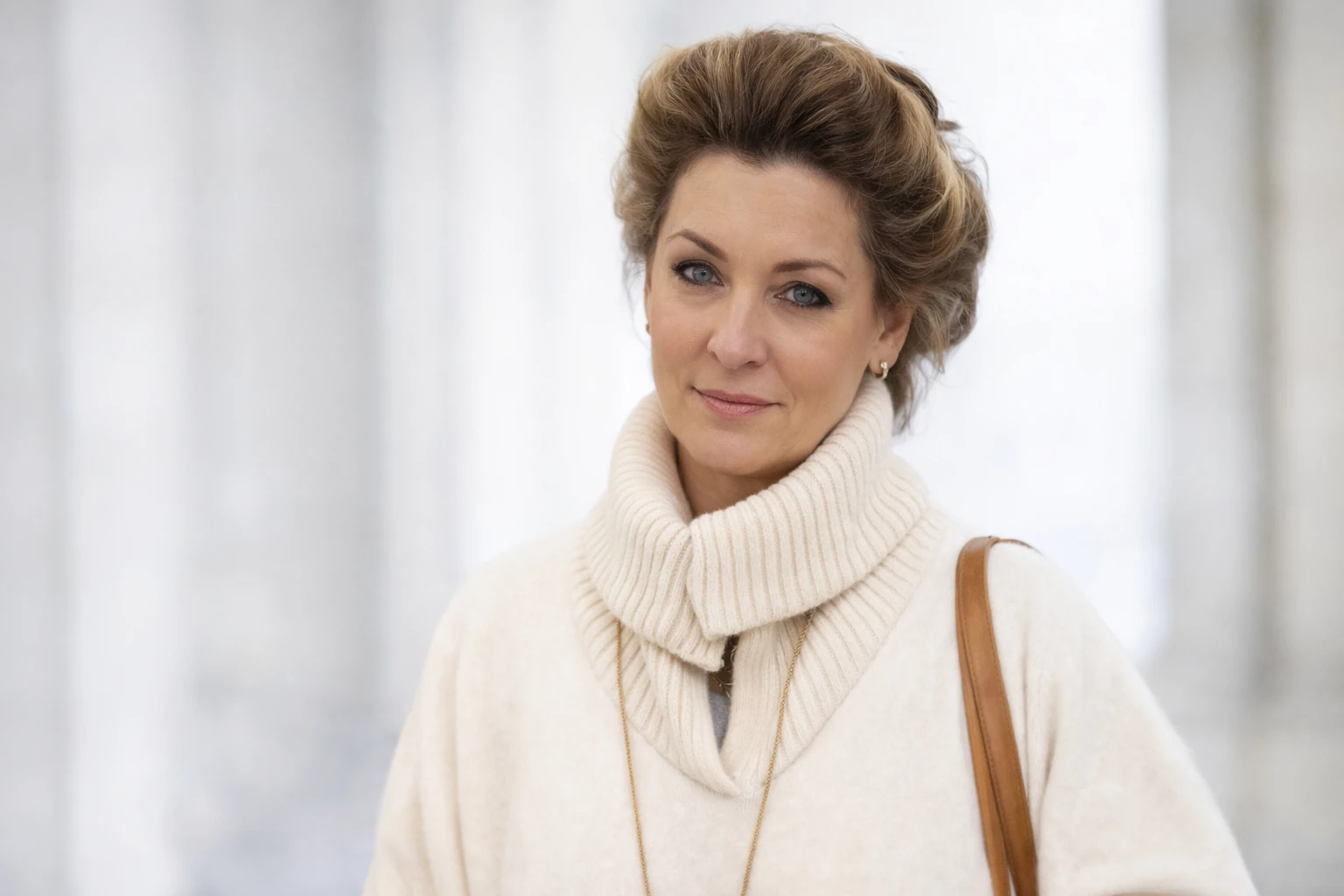
Marlene Knaus is not a conventional public figure. She never built a career on media exposure, never authored a memoir, and rarely gave interviews. Instead, her name persists because of her proximity to one of Formula 1’s most compelling figures, and because of the family she helped shape. For many readers, curiosity about her begins with Niki Lauda. But it doesn’t end there.
Her story is about proximity to fame, but also distance from it. It is about a woman who moved through elite European social circles, married at the peak of a dangerous and glamorous sporting era, and then stepped away while the world kept watching her former husband. Understanding Marlene Knaus requires patience with what is known—and honesty about what is not.
Early Life and Background
The early life of Marlene Knaus is one of the least documented parts of her biography, and that absence has led to a wide range of conflicting claims online. Various sources describe her as Austrian, Chilean-Austrian, or broadly European, but no widely cited primary documentation confirms her birthplace or exact nationality. That lack of clarity is unusual for someone tied to a global sports figure, and it has persisted for decades.
What can be said with more confidence is that Knaus emerged in European social and fashion circles during the early 1970s. Photographic archives from that period show her in the company of well-known figures, including Austrian-born actor Curd Jürgens. These images suggest she was already comfortable in high-profile environments before her association with Lauda brought broader attention.
Descriptions of her as a model are common and likely grounded in reality, given her presence in fashion-oriented imagery and elite social settings. However, the extent of her work in that field is not well documented in major publications. Claims that she worked extensively as a designer or in other creative professions appear frequently but are not consistently supported by verifiable sources.
This ambiguity has shaped how her early life is interpreted. Rather than a clearly charted upbringing with documented milestones, Knaus’s background appears as a series of glimpses—suggestive but incomplete. For a modern reader accustomed to detailed digital records, that can feel unusual, but it reflects the era she came from and the privacy she later maintained.
Meeting Niki Lauda and Entering the Spotlight
By the mid-1970s, Niki Lauda was emerging as one of Formula 1’s most formidable drivers. His disciplined approach, technical insight, and relentless competitiveness set him apart in a sport that often rewarded risk over precision. It was during this period that he met Marlene Knaus, and their relationship quickly became part of the broader narrative surrounding his rise.
They married in 1976, a year that would define Lauda’s career and cement his place in sporting history. That same year, he suffered a near-fatal crash at the Nürburgring, sustaining severe burns and life-threatening injuries. His remarkable recovery and return to racing just weeks later became one of Formula 1’s most enduring stories.
Knaus was present during this intense period, though her role was not publicly documented in detail. As with many partners of drivers at the time, her presence was often visible but her perspective rarely recorded. The culture of motorsport in the 1970s placed the spotlight firmly on the drivers, leaving little space for the voices of those around them.
Still, her position during those years should not be underestimated. Being married to a Formula 1 driver in that era meant living with constant risk, relentless travel, and intense media scrutiny. It was a life shaped by both glamour and uncertainty, and Knaus was at its center during Lauda’s most dramatic years.
Marriage, Family, and Life in the Public Eye
Marlene Knaus and Niki Lauda’s marriage lasted 15 years, from 1976 to 1991. During that time, they had two sons, Lukas and Mathias, both of whom would later maintain ties to motorsport in different ways. Their family life unfolded against the backdrop of Lauda’s continued success, including multiple world championships and a growing public profile.
The couple’s relationship was often framed through the lens of Lauda’s career, which meant that Knaus was frequently seen but seldom heard. Photographs from the period show her accompanying Lauda at races, events, and social gatherings, presenting an image of elegance and composure that aligned with the era’s expectations of a driver’s spouse.
But here’s the thing: the public image of their marriage does not fully capture its complexity. Like many long-term relationships lived under scrutiny, theirs likely involved challenges that were not publicly documented at the time. What is known is that they eventually separated, finalizing their divorce in 1991.
Their separation marked the end of a chapter that had been closely tied to one of Formula 1’s most intense periods. Yet it did not sever all connections. Through their children, Knaus remained linked to the Lauda legacy, even as she stepped further away from public life.
Life After Divorce and Retreat from Public View
After her divorce from Niki Lauda, Marlene Knaus largely disappeared from the public spotlight. Unlike many figures associated with high-profile relationships, she did not seek media attention, publish personal accounts, or maintain a visible public persona. This decision has shaped how she is perceived today.
There are scattered claims about her life after 1991, including suggestions that she relocated to Spain or lived quietly in Ibiza. These reports appear frequently in online biographies but are rarely supported by verifiable evidence. Without strong sourcing, they remain speculative rather than confirmed.
What can be observed is her absence. In an era when many individuals connected to celebrity maintain at least some level of public presence, Knaus chose a different path. That choice has contributed to both her mystique and the difficulty of writing a definitive account of her later years.
Her presence does reappear at key moments, particularly in connection with her family. When Niki Lauda died in May 2019, coverage of his funeral in Vienna included references to his first wife and their children. These moments serve as reminders that, while she stepped away from public life, she remained part of the family’s private story.
Her Sons and Continuing Family Legacy
One of the most tangible aspects of Marlene Knaus’s legacy is her role as a mother. Her sons, Lukas and Mathias Lauda, have both maintained connections to the world of motorsport, though in different ways.
Mathias Lauda followed his father into racing, building a professional career that included success in endurance racing. He became particularly well known for his achievements in the FIA World Endurance Championship, where he competed at a high level and secured a championship title in his class. His career extended the Lauda name into a new generation of racing.
Lukas Lauda took a different path, becoming involved in management and supporting roles within motorsport. He has been publicly associated with his brother’s career and has maintained a presence in the broader racing community. Through him, the family’s connection to the sport has continued in a less visible but still meaningful way.
For Marlene Knaus, these connections represent a continuation of the life she once shared with Niki Lauda. Even as she remained out of the spotlight, her role in shaping that family has had lasting significance.
Public Image and Cultural Memory
Marlene Knaus occupies a distinctive place in cultural memory. She is remembered not through interviews or public statements, but through images and associations. Photographs from the 1970s capture a woman who embodied the elegance and style of the era, often standing alongside one of its most driven figures.
This visual legacy has contributed to her enduring appeal. In an age where personal branding and constant visibility dominate, her relative absence stands out. She represents a different kind of public figure—one whose identity is shaped as much by what is not shared as by what is.
At the same time, her story highlights the limitations of public memory. Without extensive documentation, her life is often reduced to a supporting role in someone else’s narrative. That reduction can obscure the reality that she had her own experiences, relationships, and decisions that extended beyond the frame of Lauda’s career.
The persistence of interest in her life suggests that readers are not only curious about her connection to fame, but also about the person behind it. It is a curiosity that reflects broader questions about privacy, identity, and the ways in which certain figures are remembered.
Where Marlene Knaus Is Now
The question of where Marlene Knaus is now remains one of the most searched aspects of her biography, and also one of the least definitively answered. Public records and major media coverage offer little concrete information about her current residence or daily life.
Some reports suggest she has lived in Spain, particularly in Ibiza, but these claims are not consistently supported by reliable sources. They appear to have been repeated across multiple websites without clear verification. As a result, they should be treated with caution.
What is clear is that she has maintained a high degree of privacy. There are no widely reported recent interviews, public appearances, or confirmed professional activities. In a world where personal information is often readily available, her ability to remain largely out of view is notable.
This absence does not diminish her relevance. If anything, it reinforces the idea that her story is defined not only by what is known, but also by what she has chosen to keep private.
Frequently Asked Questions
Who is Marlene Knaus?
Marlene Knaus is best known as the first wife of Formula 1 champion Niki Lauda. She was part of his life during some of the most important years of his career, including his 1976 crash and recovery. She is also the mother of his two sons, Lukas and Mathias.
Was Marlene Knaus a model?
She is widely described as a former model, and photographic evidence places her in fashion and celebrity circles in the 1970s. However, detailed records of her modeling career are limited, and many claims about her professional work are not fully documented.
How long were Marlene Knaus and Niki Lauda married?
They were married from 1976 to 1991, a period of 15 years. Their marriage coincided with some of the most significant moments in Lauda’s racing career.
Did Marlene Knaus have children?
Yes, she has two sons with Niki Lauda: Lukas Lauda and Mathias Lauda. Both have maintained connections to the world of motorsport in different capacities.
Where is Marlene Knaus now?
Her current location is not publicly confirmed. Some reports suggest she lives in Spain, but these claims are not supported by strong evidence. She has largely remained out of the public eye for many years.
Is Marlene Knaus still alive?
There is no widely reported information indicating her death, and she is generally understood to be alive. However, due to her private lifestyle, recent public updates about her are limited.
Conclusion
Marlene Knaus’s life offers a different perspective on what it means to be connected to fame. She was present during one of the most dramatic periods in Formula 1 history, yet she never sought to define herself through that association. Instead, she stepped away, leaving behind a record that is both visible and incomplete.
Her story is not one of constant reinvention or public reinvention. It is a story of presence followed by absence, of participation followed by privacy. That pattern makes her difficult to categorize, but it also makes her distinctive.
For readers, the enduring interest in Marlene Knaus reflects more than curiosity about a single person. It speaks to a broader fascination with the lives that unfold alongside fame, and with the choices people make when the spotlight fades.
In the end, what remains is a portrait defined by restraint. Marlene Knaus may never offer a full account of her life, and perhaps that is part of why her story continues to resonate. It reminds us that not every life connected to public history is meant to be fully told.
