

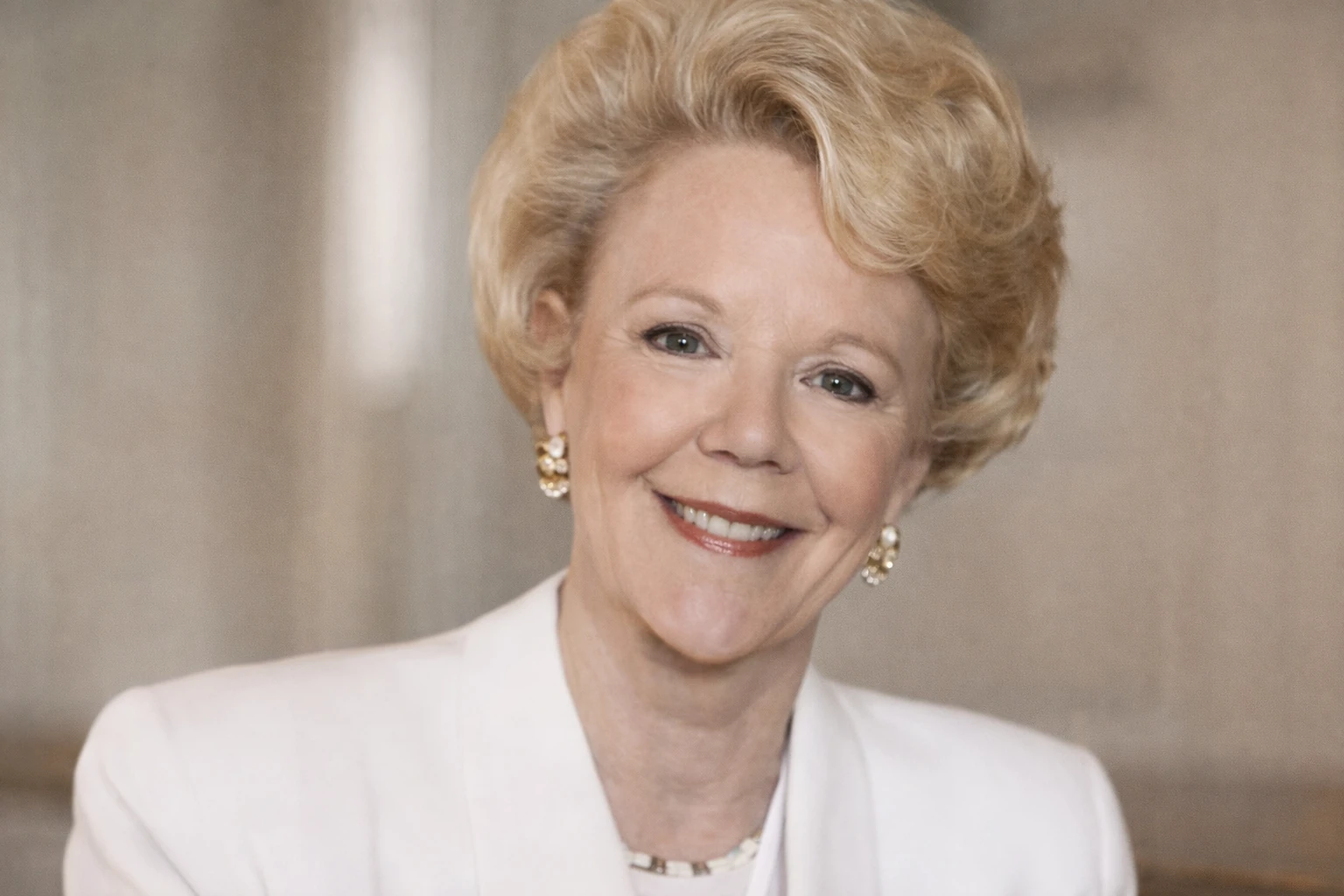
Marilyn Kroc Barg never became a public figure in the way her father did, yet her name continues to surface in searches, family histories, and fragmented online profiles. As the only child of Ray Kroc—the businessman who turned McDonald’s into a global empire—her life sits at a curious intersection of immense wealth, American corporate history, and near-total privacy. For many readers, that contrast is the hook: how can someone so closely tied to one of the most recognizable brands in the world remain so little known?
The answer lies not in a hidden biography waiting to be uncovered, but in the reality of a life that was largely lived outside the spotlight. Marilyn Kroc Barg, often referred to as “Lynn,” did not build a public career, did not dominate headlines, and did not leave behind a widely documented legacy of her own. Instead, what exists is a careful scattering of records—birth, marriage, death, and family ties—that together form a restrained but meaningful portrait. Her story is less about celebrity and more about proximity to it, and what that proximity reveals.
Early Life and Family Background
Marilyn Janet Kroc was born on October 15, 1924, in Chicago, Illinois, into a modest household that would later become historically significant. Her father, Raymond Albert “Ray” Kroc, was at the time a traveling salesman and musician trying to build a stable livelihood. Her mother, Ethel Janet Fleming, came from a working-class background, and the family’s early years were far removed from the wealth that would later define the Kroc name.
Growing up in Chicago during the interwar years, Marilyn experienced a childhood shaped by economic uncertainty and her father’s restless career path. Ray Kroc’s early life was marked by frequent job changes, including selling paper cups and working as a pianist. The family’s financial situation was not secure, and Marilyn’s upbringing reflected that reality. She did not grow up as the daughter of a magnate, but as the child of a man still searching for success.
The family dynamic also carried complexity. Ray and Ethel’s marriage eventually ended in divorce, a development that would influence Marilyn’s relationship with her father over time. While details of her childhood remain limited in public records, it is clear that her early years were grounded in a very different world from the one her father would later inhabit.
Education and Early Adulthood
Public documentation of Marilyn Kroc’s education is sparse, which is consistent with the broader pattern of her life. There are no widely verified records of her attending a particular college or pursuing a public-facing academic path. This absence does not suggest a lack of education, but rather reflects how little of her personal life entered the public domain.
As she moved into adulthood, Marilyn lived through a period of dramatic change in American society, including World War II and the postwar economic boom. During these years, her father’s career began to take a more defined direction, though his most famous achievements were still ahead. Marilyn’s early adulthood unfolded alongside this gradual shift, placing her in a unique position as both witness and participant in a family on the brink of transformation.
Not many people know this, but Marilyn’s life trajectory appears to have leaned toward privacy even before her father’s rise to fame. There is no strong evidence that she sought public recognition or pursued a career that would bring her into the spotlight. Instead, she seemed to build a life centered on personal relationships and family.
Marriages and Personal Life
Marilyn Kroc Barg’s personal life included at least two marriages, though the details are not extensively documented in public sources. She was first married to Sylvester Nordly Nelson, a union that is recorded in genealogical databases but not widely covered in traditional biographical accounts. Like much of her life, this relationship exists more as a factual entry than a narrative.
Later, she married James Walter Barg, whose surname she adopted. At the time of her death, she was known as Lynn J. Barg, reflecting both a preferred name and her marital identity. Her death notice identifies her as the beloved wife of James W. Barg, suggesting a settled domestic life in her later years.
There is limited confirmed information about whether Marilyn had children. Some genealogical entries suggest descendants, but these claims are not consistently supported by primary documentation available to the public. As a result, any discussion of her immediate family beyond her parents and spouses remains uncertain.
What stands out most about Marilyn’s personal life is how little of it was shared publicly. In an era when the families of prominent figures often became subjects of media attention, she maintained a degree of privacy that now feels unusual.
Ray Kroc’s Rise and Its Impact
To understand Marilyn Kroc Barg’s place in history, it is necessary to consider the trajectory of her father’s career. Ray Kroc’s involvement with McDonald’s began in 1954, when he encountered the McDonald brothers’ restaurant in San Bernardino, California. He saw potential in their system and began franchising the concept, eventually buying the company outright in 1961.
By the 1960s, McDonald’s had become a rapidly expanding national chain, and Ray Kroc had transformed into a high-profile businessman. His name became synonymous with American entrepreneurship, and his success reshaped the family’s financial standing. Marilyn, who had grown up in modest circumstances, suddenly found herself connected to extraordinary wealth.
But here’s the thing: there is little evidence that Marilyn stepped into a public role within this growing empire. Unlike some heirs who take on visible positions in family businesses, she does not appear in widely accessible corporate records as a key executive or spokesperson. Her connection to McDonald’s remained primarily familial rather than operational.
This distinction is important because it challenges a common assumption. Being the child of a famous founder does not automatically translate into a public or managerial role, and Marilyn’s life reflects that separation.
Public Presence and Media Silence
Marilyn Kroc Barg’s absence from the public eye is one of the most striking aspects of her story. There are no widely known interviews, no published memoirs, and no substantial media profiles from her lifetime. Even in an age when business leaders were becoming celebrities, she remained largely invisible.
The truth is, this silence may have been intentional. Some individuals connected to powerful families choose to maintain privacy as a way of preserving personal autonomy. Others simply do not attract media attention because they do not engage in public-facing activities. In Marilyn’s case, the available evidence suggests a combination of both.
Her death in 1973 was marked by a brief notice rather than extensive coverage, which further underscores how private her life had been. This stands in contrast to the extensive media attention that would later surround her father and, after his death, his third wife, Joan Kroc.
Death and Unanswered Questions
Marilyn Kroc Barg died on September 11, 1973, in Arlington Heights, Illinois, at the age of 48. The circumstances of her death are not fully detailed in widely accessible public records. Some sources suggest complications related to diabetes, but this claim is not consistently supported by primary documentation such as a publicly available death certificate.
This lack of clarity has contributed to ongoing speculation. When official records are limited, secondary sources often fill the gap, sometimes repeating information without verification. As a result, readers should approach specific claims about her health with caution.
Her burial took place in Memorial Park Cemetery in Skokie, Illinois. The modest documentation surrounding her death mirrors the broader pattern of her life: present in the record, but not elaborated upon.
The Kroc Fortune and Inheritance Questions
One of the most common questions about Marilyn Kroc Barg concerns her connection to the Kroc fortune. Because she died in 1973, more than a decade before Ray Kroc’s death in 1984, she did not play a role in the later distribution of his wealth.
Ray Kroc’s fortune eventually became closely associated with Joan Kroc, who inherited a significant portion and went on to make large philanthropic donations. Joan’s giving included hundreds of millions of dollars to causes such as education, public broadcasting, and disaster relief, making her one of the most prominent philanthropists of her time.
Marilyn’s earlier death means that her financial legacy is less clearly documented. There is no widely available breakdown of what she may have inherited during her lifetime or how her assets were distributed after her death. This gap has led to speculation, but reliable figures are not publicly established.
Legacy and Cultural Context
Marilyn Kroc Barg’s legacy is not defined by public achievements, but by her position within a historically significant family. She represents a different kind of story—one that highlights the limits of public knowledge and the ways in which some lives remain largely undocumented despite their proximity to fame.
What’s surprising is how often her name appears in modern searches. This reflects a broader cultural curiosity about the families behind well-known figures. People want to understand not just the founders and leaders, but also those who lived alongside them.
Her story also offers a reminder that not every life connected to wealth or influence is lived in public. In a media environment that often expects visibility, Marilyn’s quiet presence stands out.
Frequently Asked Questions
Who was Marilyn Kroc Barg?
Marilyn Kroc Barg was the only daughter of Ray Kroc, the businessman associated with McDonald’s expansion. She was born in 1924 in Chicago and died in 1973 in Illinois. She lived most of her life outside the public spotlight.
Was Marilyn Kroc Barg involved in McDonald’s?
There is no strong public evidence that she held a major role within McDonald’s. Her connection to the company appears to have been familial rather than operational.
How did Marilyn Kroc Barg die?
Her death occurred in 1973 at the age of 48. Some sources mention diabetes-related complications, but this has not been conclusively confirmed through widely available primary records.
Did Marilyn Kroc Barg inherit Ray Kroc’s wealth?
She died before Ray Kroc, so she was not part of the final distribution of his estate. The exact details of her financial situation during her lifetime are not clearly documented.
Was Marilyn Kroc Barg married?
Yes, she was married at least twice. Her later marriage was to James Walter Barg, and she was known as Lynn J. Barg at the time of her death.
Did Marilyn Kroc Barg have children?
There is no consistently verified public record confirming whether she had children. Some genealogical sources suggest descendants, but these claims are not fully supported by primary documentation.
Conclusion
Marilyn Kroc Barg’s life resists the kind of narrative that often surrounds figures connected to wealth and fame. There are no dramatic public achievements to recount, no extensive interviews to analyze, and no clear arc of influence to trace. What remains is a quieter story, built from confirmed facts and careful inference.
Her place in history comes from her relationship to Ray Kroc and the transformation of McDonald’s into a global institution. Yet her own life unfolded on a different track, one that stayed largely out of view. That contrast is what continues to draw interest.
There is a certain honesty in acknowledging how much is unknown. Rather than filling the gaps with speculation, Marilyn Kroc Barg’s biography invites readers to accept the limits of the record. In doing so, it offers a more grounded understanding of both her life and the ways history remembers people who choose, or happen, to remain private.
