

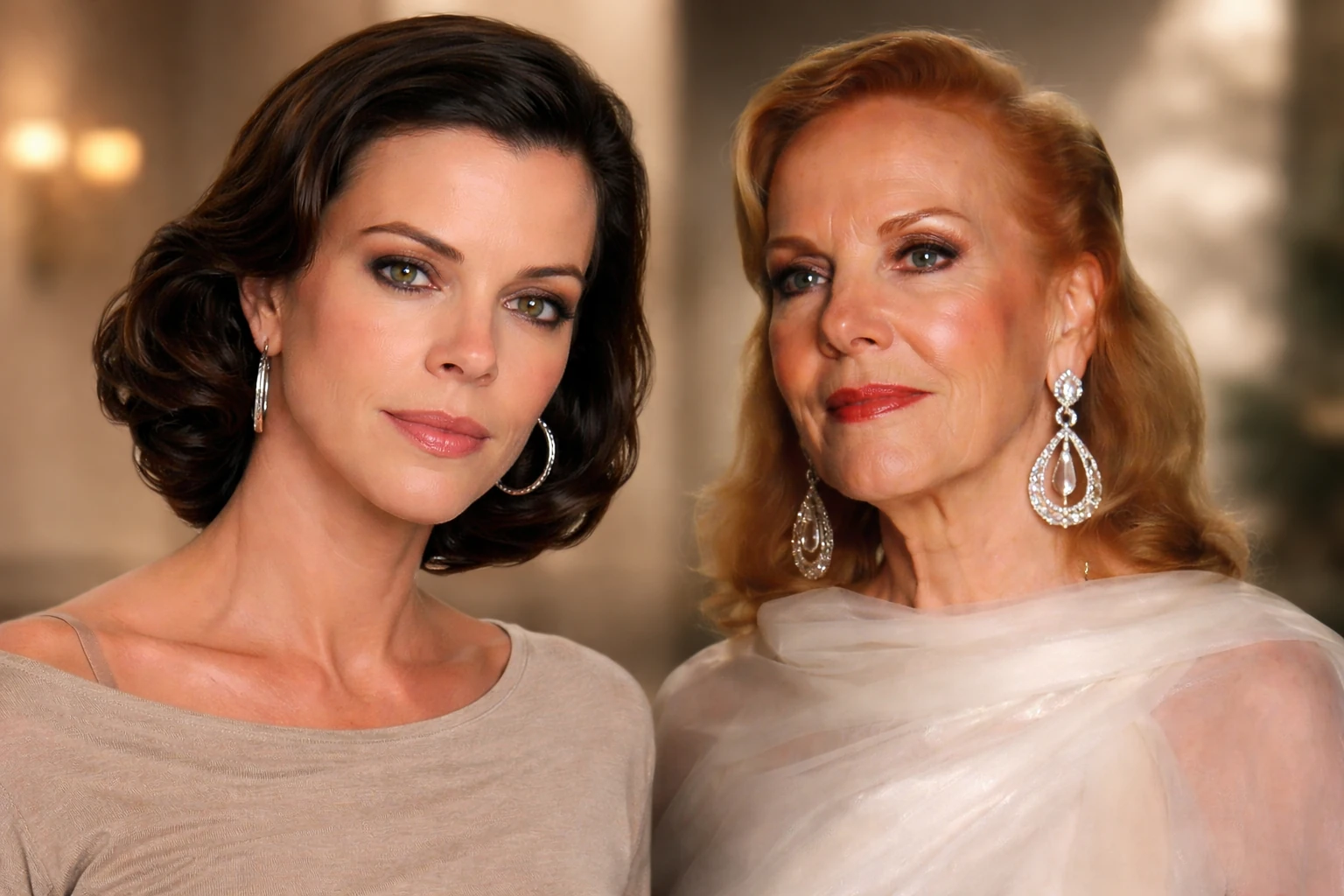
Charlene Gail Heffner entered public view not through fame she pursued, but through a relationship that reshaped the final chapter of one of America’s richest women. In 1988, at the age of 35, she was legally adopted by tobacco heiress Doris Duke, a move that startled observers and later became central to one of the most closely watched inheritance disputes of the late 20th century. For years afterward, Heffner’s name—often appearing as Chandi Duke Heffner—circulated in court filings, news reports, and society coverage, tied to questions of loyalty, money, and legal identity.
The fascination with her life comes from that unusual arc. She was not born into the Duke fortune, nor did she remain fully within it. Instead, her story sits in the uneasy space between private companionship and public litigation, where personal bonds are tested under the scrutiny of courts and headlines. Even today, decades after Doris Duke’s death, interest in Charlene Gail Heffner persists, fueled by curiosity about who she was before the adoption, what she became afterward, and how her life unfolded once the legal battles ended.
Early Life and Background
Public information about Charlene Gail Heffner’s early life is limited, and that scarcity has shaped how her story is told. Unlike traditional public figures, she did not emerge from a career in entertainment, politics, or business that would leave a clear paper trail. Most verified records about her begin only once she entered Doris Duke’s life, leaving her upbringing, family background, and early ambitions largely undocumented in authoritative sources.
That absence has not stopped speculation. Various online profiles offer detailed accounts of her childhood, education, and family, but many of these claims cannot be traced back to primary documents or credible reporting. A careful reading of the available record suggests that while Heffner may have lived an ordinary American life before meeting Duke, the specifics remain private or unverified. For a biography grounded in fact, acknowledging those limits is essential.
What can be said with confidence is that by the mid-1980s, Heffner had become closely connected to Doris Duke. Contemporary reporting described her as a companion who lived with Duke, suggesting a relationship that had moved beyond casual acquaintance into something more sustained and personal. That connection would soon alter the course of her life in ways few could have predicted.
A Relationship with Doris Duke
Doris Duke was, by the time she met Heffner, one of the most recognizable heiresses in the United States. Born in 1912, Duke inherited vast wealth from her father, James Buchanan Duke, a tobacco and energy magnate whose fortune shaped American industry. She lived a life marked by travel, art collecting, philanthropy, and a fierce commitment to privacy, even as her wealth made her a subject of constant public interest.
Heffner entered Duke’s life during its later years, a period often described as complex and, at times, isolating. Reports from the late 1980s suggest that Duke relied increasingly on a small circle of companions and staff. Within that circle, Heffner appears to have occupied a significant role, though the precise nature of their bond has been described differently depending on the source.
Here’s where it gets interesting. In November 1988, Doris Duke formally adopted Charlene Gail Heffner as her daughter under New Jersey’s adult-adoption statute. Adult adoption is legal but uncommon, and in this case it raised immediate questions about motive. Some observers saw it as an expression of personal affection, while others viewed it through the lens of estate planning. The truth likely involved elements of both, though Duke herself left little public explanation.
The adoption changed Heffner’s legal status overnight. She became, in the eyes of the law, Doris Duke’s daughter, a position that carried both emotional symbolism and potential financial implications. At the time, many assumed that this new status would place her in line to inherit a significant portion of Duke’s fortune. That assumption would later prove far more complicated than it seemed.
The Shock of Doris Duke’s Death
Doris Duke died on October 28, 1993, at the age of 80, in Beverly Hills. Her passing marked the end of an era for one of America’s most storied fortunes, and it quickly set off a wave of scrutiny over her estate. For Charlene Gail Heffner, the moment was both personal and profoundly public, as her relationship with Duke became a central point of discussion.
Initial expectations that Heffner would play a major role in Duke’s estate were upended almost immediately. Duke’s final will did not leave control of her fortune to her adopted daughter. Instead, it placed significant authority in the hands of her butler, Bernard Lafferty, a decision that surprised many and raised questions about Duke’s state of mind in her final years.
The will’s structure shifted the narrative around Heffner from presumed heir to sidelined figure. Media coverage at the time often framed the situation as a dramatic reversal, emphasizing the contrast between the adoption and the will’s provisions. For Heffner, it was not just a personal loss but the beginning of a prolonged legal battle.
Legal Battles and the Fight Over the Estate
The years following Duke’s death were defined by litigation, much of it centered on competing interpretations of Duke’s intentions. Charlene Gail Heffner challenged aspects of the estate, arguing that she had been promised financial security and that the will did not reflect the true nature of her relationship with Duke.
One of the most significant legal disputes involved a trust established decades earlier by James B. Duke. The trust provided for income to Doris Duke during her lifetime and then to her “lineal descendants.” Heffner sought recognition as such a descendant, arguing that her legal adoption should qualify her under the trust’s terms.
The courts ultimately disagreed. In a New Jersey appellate decision, judges concluded that the trust’s language did not extend to an adult adoptee in this context. The ruling highlighted a key tension in inheritance law: the difference between a legal relationship created later in life and the original intent behind a long-standing family trust. For Heffner, it was a major setback, limiting her ability to claim a share of the trust’s assets.
At the same time, Heffner pursued other claims related to Duke’s estate. These included allegations that Duke had promised to provide for her financially. The legal process was complex and, at times, highly public, drawing attention not only to the financial stakes but also to the personal dynamics at play.
Settlement and Financial Outcome
In 1995, after years of legal maneuvering, Charlene Gail Heffner reached a settlement that brought part of the dispute to a close. She agreed to drop her claims to the larger estate in exchange for a payment reported at $65 million. While substantial by any measure, the settlement represented only a fraction of Doris Duke’s overall fortune, which was estimated at more than $1 billion at the time of her death.
The settlement provided Heffner with financial independence, but it also marked the end of her effort to assert a central role in Duke’s legacy. The outcome reflected the limits of her legal position, even as it acknowledged the significance of her relationship with Duke.
For many observers, the resolution felt incomplete. The questions raised by the adoption, the will, and the shifting alliances around Duke in her final years were never fully answered. The settlement closed the legal case, but it did not resolve the broader curiosity about what had really happened behind the scenes.
Life After the Lawsuits
After the settlement, Charlene Gail Heffner largely withdrew from the kind of public attention that had defined the earlier chapter of her life. Unlike many figures connected to high-profile legal battles, she did not cultivate a media presence or pursue a public career built on her notoriety. Instead, she appears to have chosen a quieter path.
What’s surprising is that her post-litigation life has included involvement in charitable work, particularly through organizations linked to her name. Public-facing materials describe her as associated with the CDH International Foundation, which focuses on providing medical and veterinary services in underserved communities, including in India. These descriptions come primarily from the organization itself and related profiles, rather than independent investigative reporting.
That distinction matters. While the foundation’s activities are presented in detail on its own platforms, there is limited external verification of the scope and impact of its work. Still, the existence of these efforts suggests that Heffner has sought to build a different kind of legacy, one centered on philanthropy rather than inheritance.
Public Image and Media Portrayal
Charlene Gail Heffner’s public image has been shaped less by her own statements than by how others have written about her. During the height of the estate controversy, she was often portrayed through a narrow lens, defined by her relationship to Doris Duke and the legal disputes that followed. Headlines focused on the drama of the situation, sometimes at the expense of nuance.
Over time, that portrayal has softened, though it has not entirely disappeared. Modern references to her name often appear in retrospective accounts of Doris Duke’s life, where she is described as an important but contested figure in the heiress’s final years. The emphasis tends to be on the unusual nature of the adoption and the subsequent legal battles.
At the same time, the growth of online biography sites has introduced a different kind of distortion. Many of these pages present detailed narratives that go beyond what can be confirmed, blending fact with speculation in ways that can mislead readers. Sorting through those accounts requires a careful eye and a willingness to prioritize primary sources over repetition.
Where Charlene Gail Heffner Is Now
Determining Charlene Gail Heffner’s current status is not straightforward, largely because she has maintained a low public profile. There are no widely reported recent interviews, major public appearances, or verified updates that would place her clearly in the public eye today. This absence has contributed to the sense of mystery that continues to surround her.
Available information suggests that she has spent time in Hawaii and remained connected to charitable activities through organizations bearing her name. Beyond that, details about her daily life, personal relationships, and current priorities remain private. For someone whose life once unfolded so publicly, that privacy may be both intentional and hard-won.
The truth is, not every figure tied to a major public story continues to seek attention. In Heffner’s case, the decision to step back has left fewer clues for those trying to trace her path. What remains is a record shaped by a specific period, rather than an ongoing public narrative.
Frequently Asked Questions
Who is Charlene Gail Heffner?
Charlene Gail Heffner, also known as Chandi Duke Heffner, is best known as the adult adoptee of American heiress Doris Duke. Her name became widely recognized during legal disputes over Duke’s estate following the heiress’s death in 1993. Outside that context, there is limited verified public information about her life.
Was Charlene Gail Heffner Doris Duke’s biological daughter?
No, she was not Doris Duke’s biological child. Duke legally adopted her in 1988 when Heffner was an adult. The adoption created a formal parent-child relationship under the law but did not automatically guarantee inheritance rights under all existing trusts.
How much money did she receive from Doris Duke’s estate?
Charlene Gail Heffner reached a settlement in 1995 that reportedly gave her $65 million. This amount was part of an agreement to drop her claims to the larger estate, which was valued at more than $1 billion at the time.
Why didn’t she inherit Doris Duke’s fortune?
Doris Duke’s final will did not place Heffner in control of her fortune. Legal challenges also failed to establish Heffner as a “lineal descendant” under a key family trust. As a result, most of Duke’s wealth was directed toward charitable foundations rather than a single heir.
Is Charlene Gail Heffner still alive?
There is no widely reported, confirmed public record detailing her current status in recent years. The absence of reliable updates reflects her low public profile rather than a definitive statement about her life today.
What does she do now?
Publicly available information links her to charitable work through organizations such as the CDH International Foundation. However, independent verification of her current activities is limited, and much of the available detail comes from self-published sources.
Conclusion
Charlene Gail Heffner’s life resists easy categorization. She is neither a traditional heiress nor a conventional public figure, but someone whose story is tied to a moment when private relationships collided with immense wealth and legal scrutiny. That moment defined how she is remembered, even as much of her life remains outside the public record.
Her experience also highlights the limits of law in capturing human intention. The adoption that brought her into Doris Duke’s family carried meaning that went beyond legal language, yet it was ultimately legal language that determined her place in the estate. The gap between those two realities continues to shape how her story is understood.
Years later, the fascination persists, but the answers remain partial. Charlene Gail Heffner stands as a figure shaped by circumstance, her life illuminated in fragments rather than in full. For readers, that may be part of what keeps her story compelling: not just what is known, but what remains quietly out of reach.
