

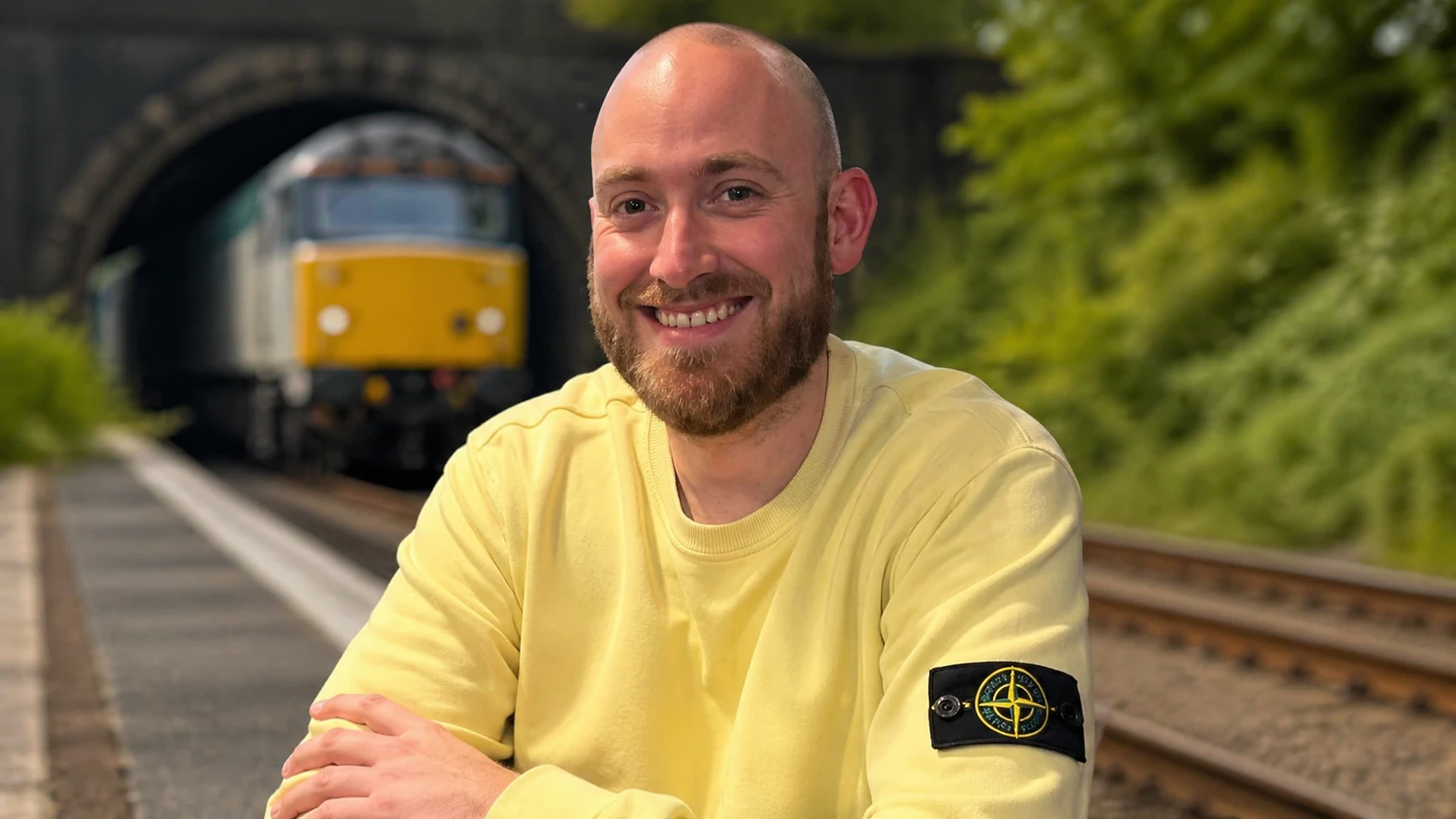
Ryan Windridge built his public identity around something simple: a love of trains, a phone camera, and a personality that did not feel polished by committee. To many viewers, he is the British trainspotter whose enthusiasm turned ordinary railway crossings into short videos with real emotional charge. To others, he is a familiar face from TikTok, YouTube, Cameo, and fan clips that have spread well beyond the railway community.
His story sits in a new corner of public life, where someone can become widely recognized without television, sport, music, or traditional celebrity machinery. Windridge’s fame has been shaped by short videos, fan requests, platform algorithms, personal vulnerability, and the intense closeness that social media can create between creators and audiences. That closeness has brought support, income, opportunity, criticism, and scrutiny.
A responsible biography of Ryan Windridge has to be careful with the record. Much of what is publicly known comes from his own platform profiles, social media listings, creator pages, and secondary entertainment bios. Some details are clear, while others remain private, disputed, or inconsistently reported, and that distinction matters if the goal is to understand the person rather than repeat internet noise.
Early Life and Family Background
Ryan Windridge is publicly associated with Gloucester, England, a city with deep railway history and a strong connection to transport, commuting, and regional movement. Public profiles describe him as being from Gloucester, and railway content has become central to the way audiences recognize him. His hometown matters because his online identity has always felt rooted in local observation rather than a manufactured influencer setting.
Reliable public information about his parents, siblings, and wider family is limited. Some biographical pages discuss his childhood interest in trains, including accounts that his mother introduced him to railway crossings when he was young. Those details help explain the emotional connection behind his trainspotting videos, but they should still be treated as public-profile claims rather than a full family history.
Windridge has also been publicly described as autistic or as having Asperger’s syndrome, a term many people still use even though it is no longer a separate diagnosis in current clinical language. In his case, public references to neurodivergence have become part of how some fans understand his direct manner, intense interests, and openness online. It would be unfair, though, to reduce his personality or career to a diagnosis.
What is clearer is that trains became more than a passing childhood hobby. They became a structure, a source of excitement, and later a public subject through which he could connect with thousands of strangers. For many viewers, that sincerity is the first thing they notice about him.
Education and Early Work
There is no detailed, verified public record of Ryan Windridge’s schooling, qualifications, or formal training. That absence is not unusual for social-media figures whose public lives begin outside traditional entertainment or professional institutions. Unlike actors, athletes, or politicians, creators often become known before anyone has documented their early résumé.
One widely repeated detail is that Windridge worked at a Morrisons supermarket in Gloucester before becoming better known online. If accurate, that background places him in the everyday working life that many of his viewers recognize. It also helps explain why his later creator career has often been framed less as celebrity ascent and more as a personal shift from ordinary employment into internet visibility.
His early ambitions appear to have formed around trains, video, and public communication rather than a conventional media career. He did not emerge from drama school, broadcasting, or a managed creator house. His rise came through accessible tools: filming what interested him, speaking to camera, posting regularly, and letting audiences respond.
That kind of path is now familiar, but it still changes the meaning of biography. A person like Windridge does not have a neat career ladder with official appointments and awards. His public life is built from uploads, reactions, paid messages, followers, jokes, criticism, and the daily work of remaining visible.
The Trainspotting Passion That Defined Him
Trainspotting is the heart of Ryan Windridge’s public image. His videos often center on the anticipation of a train’s arrival, the excitement of seeing a particular service, and the pleasure of documenting something that many people might overlook. For train enthusiasts, the subject is not random; it connects to engineering, routine, memory, movement, and place.
Windridge’s enthusiasm has often been described as deeply personal. Public profiles have linked his interest in trains to comfort, mental health, and emotional regulation. One widely repeated description says he once called trains a kind of natural medication, a phrase that captures how strongly the hobby appears to matter to him.
His favorite train references and freight interests have also helped make his content recognizable. Mentions of the Tesco liner and other freight services connect him to a specific part of British railway fandom. Freight trains, unlike passenger services, often carry a sense of rarity and timing that makes them especially exciting for spotters.
The train content worked because it did not feel distant or overproduced. Windridge’s reactions were part of the entertainment, and the viewer was not only watching a train pass by. They were watching someone care about it in a way that felt unguarded, loud, and sincere.
Rise on TikTok and Short-Form Video
Ryan Windridge became widely known through short-form video, especially the kind of TikTok content that rewards repetition, instantly recognizable personality, and emotional clarity. His clips did not need elaborate editing or scripted setups to travel. A train, a reaction, a catchphrase, and a direct address to the audience could be enough.
His rise seems to have accelerated around the period after 2020, when many people were spending more time online and short-form platforms were turning niche creators into recognizable figures. Public profiles and creator listings place his video activity in that broad timeline. The lockdown period also appears in accounts of his trainspotting routine, with cycling and outdoor observation becoming part of the story.
Short-form platforms often favor creators who can be understood in seconds. Windridge had that quality because viewers could quickly grasp who he was and what he loved. Even if someone did not share his interest in trains, they could understand the intensity of the feeling.
That visibility brought him outside the railway community. People began sharing clips because they found him funny, charming, unusual, vulnerable, or memorable. As his name moved through TikTok, YouTube, Facebook, and repost pages, Ryan Windridge became less a private hobbyist and more a public internet character.
YouTube, Cameo, and a Wider Online Presence
Windridge’s public presence expanded beyond TikTok into YouTube, Cameo, and other platforms. His YouTube channel has carried a large archive of videos, including trainspotting clips, truckspotting, travel moments, food content, personal updates, and short-form entertainment. The channel functions less like a polished show and more like a running public diary of interests and reactions.
Cameo became another major part of his public profile. On the platform, Windridge has offered personalized videos for fans, including birthday messages, greetings, and paid shoutouts. His Cameo page has described him as a British TikTok influencer and has shown a large number of positive reviews from buyers.
That matters because Cameo turns attention into a direct relationship. A viewer does not only watch a creator; they can pay for a message from them. For Windridge, whose appeal depends heavily on personality and recognition, Cameo was a natural fit.
His wider online footprint has also included references to streaming, merchandise, Facebook videos, and fan communities. Some of those pages are easier to verify than others, and not every listing using his name should automatically be assumed official. Still, the range of results shows how far his identity has spread across the internet.
Public Image and Fan Appeal
The appeal of Ryan Windridge is tied to directness. He does not present himself like a heavily managed entertainer, and that is part of why viewers remember him. His style can feel spontaneous, repetitive, loud, and personal, which are all traits that short-form audiences often reward.
Fans often respond to the warmth in his content. A train video can become more than transport footage when the person filming it is visibly delighted. That kind of joy is easy to mock, but it is also easy to understand.
There is also a protective element in parts of his audience. Because Windridge has been publicly linked with autism and disability, some supporters see him not only as a creator but as someone who has found confidence through online attention. They view his platform as a space where a person with an intense interest can be seen and encouraged.
But here’s the thing: public affection can become complicated fast. The same closeness that makes fans feel invested can also lead to overfamiliarity, arguments, and attempts to control the narrative around a creator. Windridge’s public image has therefore been shaped by both genuine support and the harsher habits of internet attention.
Money, Income Sources, and Net Worth Claims
Ryan Windridge appears to earn or have earned money from several creator-related sources, including Cameo, social media content, possible platform monetization, merchandise, and business inquiries. Cameo is the clearest public income channel because buyers pay directly for personalized videos. His review count on that platform suggests that many people have purchased messages from him over time.
Exact income figures are not publicly confirmed. Some analytics sites estimate earnings for creators based on followers, views, engagement, and platform assumptions, but those numbers are only estimates. They should not be treated as bank records, tax data, or proof of personal wealth.
The same caution applies to net worth claims. Online biography sites often assign creators rough net worth figures without explaining their methods. For Ryan Windridge, there is no reliable public financial record that allows a precise net worth to be stated with confidence.
A fair assessment is that Windridge has turned his online recognition into commercial opportunities. Cameo, merch, content, and fan engagement can all produce income, but the scale remains uncertain. Any exact figure should be labeled as speculation unless it comes from Windridge himself or documented financial reporting.
Relationships and Private Life
Public information about Ryan Windridge’s romantic relationships, marriage, or children is limited and should be handled carefully. There is no widely verified record confirming that he is married or has children. Because he is a social-media personality rather than a public official, private family details should not be treated as public property without reliable sourcing.
Like many creators, Windridge has sometimes shared personal material online, but sharing parts of one’s life does not erase the boundary around private relationships. Fans may feel they know a creator intimately after watching hundreds of clips. That feeling can be powerful, but it is not the same as verified knowledge.
His close relationships are best understood through what he has chosen to make public and what reputable sources have confirmed. Family influence appears in accounts of his early interest in trains, especially references to childhood railway visits. Beyond that, much of his personal life remains outside the confirmed public record.
That privacy deserves respect. A biography can explain why Windridge matters without inventing relationship history or filling silence with rumor. In fact, the absence of confirmed detail is itself part of writing honestly about internet figures.
Controversy and Online Scrutiny
Ryan Windridge has faced public criticism and online allegations, including petitions and commentary videos calling for action against his accounts. The existence of those campaigns is part of his public record, but the claims inside them should not be repeated as proven fact without official findings or strong independent reporting. This distinction is especially important because accusations can spread faster than verification.
Some criticism appears to concern alleged behavior in online interactions, boundaries with fans, and platform safety. Public petitions and commentary posts have used strong language, but those sources are not the same as court documents, police statements, or platform enforcement notices. A careful account should acknowledge the controversy while making clear what has and has not been established.
Internet scrutiny can be especially intense for creators whose audiences include young people, fans, critics, and casual viewers all in the same comment spaces. A creator may be praised in one thread, mocked in another, and accused in a third. That environment can make it difficult for readers to separate documented behavior from repeated claims.
That said, public concern should not be dismissed simply because it begins online. Platforms do have rules around harassment, sexual content, youth safety, and abusive behavior, and users have the right to report conduct they believe violates those rules. The fairest position is to take safety concerns seriously while avoiding claims that go beyond the confirmed record.
Disability, Dignity, and How People Talk About Him
The way people talk about Ryan Windridge often reveals as much about internet culture as it does about him. Supporters sometimes frame him as inspiring because he has built a following around his interests while being open about difference or disability. Critics, on the other hand, sometimes slide from criticism of behavior into ridicule of speech, mannerisms, or social presentation.
That distinction matters. It is fair to discuss a public creator’s actions, commercial activity, and audience boundaries. It is not fair to use disability, perceived awkwardness, or neurodivergent traits as entertainment.
Public references to Asperger’s syndrome also require care because language has changed. Many people still use the term because it reflects an earlier diagnosis or personal identity, while current medical language generally places it within autism spectrum disorder. A respectful biography should reflect that reality without correcting someone’s self-description in a scolding way.
Windridge’s public life shows how exposed neurodivergent creators can become online. Their openness may attract support, but it can also attract imitation, mockery, and obsessive scrutiny. The best coverage keeps the focus on facts and treats the person as a full adult, not as a symbol or spectacle.
A Creator Built by Repetition and Recognition
One reason Ryan Windridge became memorable is that his content is easy to identify. Trains, shoutouts, food clips, direct reactions, and repeated phrases create a pattern viewers can remember. In internet culture, recognizability often matters more than polish.
Repetition can turn a niche creator into a shared reference. People do not need to follow every video to understand the general idea of Ryan Windridge content. They may know the tone, the settings, the enthusiasm, or the way other users imitate and discuss him.
This can be a strength because it builds a brand without requiring expensive production. It can also be limiting because a person becomes trapped inside what the audience expects. If viewers only want the catchphrase or the exaggerated reaction, they may forget that a real person is behind it.
Windridge’s public persona therefore lives between authenticity and performance. He appears genuine, but repeated online behavior also becomes a kind of act over time. That tension is common among creators who begin casually and then discover that thousands of people expect them to keep being the same version of themselves.
Where Ryan Windridge Is Now
Ryan Windridge remains a public online personality with a presence across creator platforms, especially through video and fan-message services. His current status is best described as active but dependent on platform visibility, which can change quickly. Social-media fame is rarely stable, and creators often shift between TikTok, YouTube, Cameo, streaming platforms, and other outlets as audiences move.
His core identity still appears tied to trains and personality-led content. Even when he posts about other subjects, the trainspotting background remains the anchor that makes him recognizable. That connection has carried him into railway-adjacent attention, fan discussion, and creator opportunities.
The commercial side of his work also continues to shape how people find him. Search users often want to know whether his Cameo is real, whether merchandise is official, how many followers he has, and whether he is still posting. Those questions reflect the practical nature of modern fame, where biography, shopping, fandom, and controversy all appear on the same search page.
What remains uncertain is the long-term direction of his career. He could remain a niche creator, move deeper into rail content, continue paid fan videos, or see his public image reshaped by platform changes and audience sentiment. For now, Ryan Windridge is best understood as a creator whose fame grew from a specific passion and spread through the unpredictable machinery of social media.
Frequently Asked Questions
Who is Ryan Windridge?
Ryan Windridge is a British social-media personality best known for trainspotting videos, short-form content, and personalized fan messages. He is publicly associated with Gloucester, England, and has built an audience through TikTok-style videos, YouTube uploads, Cameo, and related online activity. His public image combines railway enthusiasm, direct personal presentation, and a strong connection with fans who enjoy his unpolished style.
What is Ryan Windridge famous for?
Ryan Windridge is most famous for his trainspotting content and his personality-led videos. His clips often focus on trains, travel, food, shoutouts, and everyday reactions rather than highly produced entertainment. The combination of a specific hobby and a memorable delivery helped him become recognizable beyond the railway community.
Is Ryan Windridge on Cameo?
Yes, Ryan Windridge has had a public Cameo profile offering personalized videos for fans. Cameo has been one of the clearest ways his online following has turned into paid creator work. Buyers have used the platform for birthday messages, greetings, jokes, and fan shoutouts.
Where is Ryan Windridge from?
Ryan Windridge is publicly associated with Gloucester in England. Several public profiles and articles connect him with the city, and his railway content fits naturally with a local, place-based creator identity. Detailed private information about his home or family should not be assumed beyond what he has made public.
Is Ryan Windridge autistic?
Public profiles have described Ryan Windridge as having Asperger’s syndrome or as being neurodivergent. The term Asperger’s is still used by some people, although current clinical language generally places it within autism spectrum disorder. It is best to describe this carefully and avoid using diagnosis as an explanation for everything about his life or behavior.
What is Ryan Windridge’s net worth?
There is no reliable public record confirming Ryan Windridge’s exact net worth. He may earn money from Cameo, social platforms, merchandise, and business inquiries, but exact figures are not verified. Online estimates should be treated as guesses unless supported by direct financial evidence.
Has Ryan Windridge been involved in controversy?
Ryan Windridge has faced online criticism, petitions, and allegations discussed by commentators and social-media users. Those claims form part of the public conversation around him, but they should not be treated as proven unless supported by official findings or reliable independent reporting. A fair account acknowledges the controversy while avoiding rumor as fact.
Conclusion
Ryan Windridge’s biography is the story of a person who became known by sharing a specific passion in a very public way. His love of trains gave him a subject, but his personality gave the subject reach. Viewers responded not only to what he filmed, but to how openly he seemed to care.
His career also shows how modern fame can grow outside traditional routes. A supermarket worker, trainspotter, or hobbyist can become a paid creator through enough recognition and fan loyalty. That opportunity can be powerful, but it also brings pressure, criticism, and a level of attention few people are prepared for.
The most honest way to understand Ryan Windridge is to hold several truths at once. He is a niche creator with a real audience, a train enthusiast whose passion became public, and an online figure whose name now carries both affection and scrutiny. His life cannot be reduced to fan praise, controversy, or follower counts alone.
What makes him matter is not that he fits an old model of fame. It is that he represents a newer one, where personality, vulnerability, routine, and platform culture can turn an ordinary interest into a public identity. For better and worse, Ryan Windridge’s story belongs to that age.
