

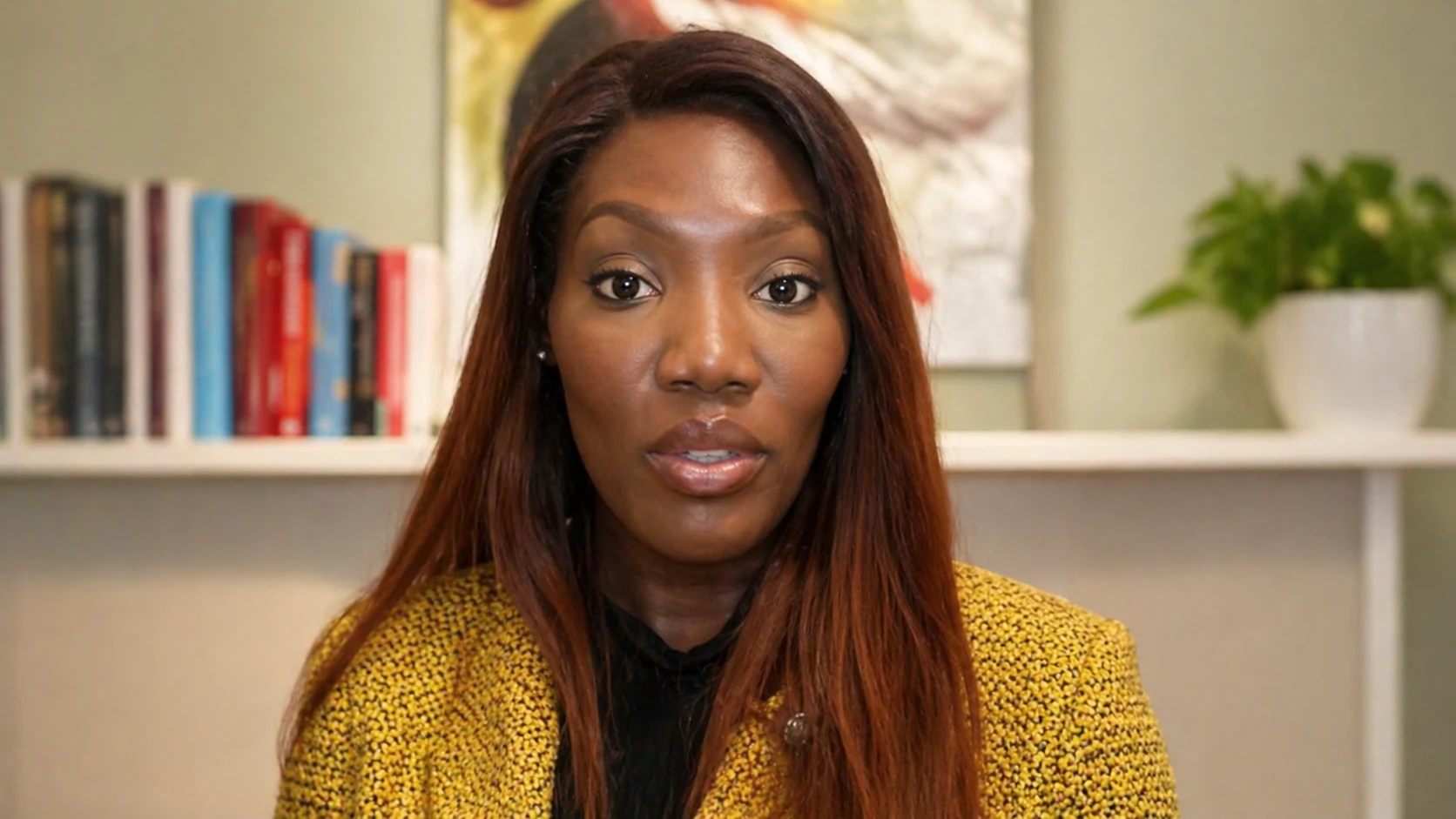
Anita Boateng has built the kind of career that rarely fits into one neat label. She has been a BBC political producer, a government special adviser, a Conservative councillor, a parliamentary candidate, a public affairs executive, and a political commentator. She is not a celebrity politician in the ordinary sense, yet her work has placed her close to some of the institutions that shape British public life. For readers searching her name, the central question is usually simple: who is Anita Boateng, and why does she matter?
The answer begins with power, but not the loudest kind. Boateng’s career has unfolded in the spaces where politics is prepared before it reaches the public: briefing rooms, television studios, ministerial offices, council chambers, campaign trails, and communications firms. She has worked both behind the scenes and in public, moving between analysis, strategy, representation, and argument. That mix makes her a useful figure through which to understand modern British politics itself.
Early Life and Family Background
Anita Boateng has spoken publicly about growing up on a council estate in Hackney in east London. In her own account, her upbringing was shaped by values she associated with family, faith, education, aspiration, hard work, personal responsibility, and community. Those themes later became central to how she explained her Conservative politics. Her background also gave her a personal lens on class, race, opportunity, and political identity in Britain.
Public information about Boateng’s private family life is limited, and that should be respected. She has referred to her parents and upbringing in political writing, but she has not made her family life a public brand. Reliable profiles focus on her career rather than naming spouses, children, or extended family members. Claims about her marital status, children, or private relationships should be treated as unconfirmed unless they come from a direct and reliable source.
That restraint matters because Boateng is the sort of public figure who often becomes the subject of thin online biographies. Some pages try to fill gaps with unsupported details about age, net worth, or family ties. A serious biography should resist that temptation. What can be said with confidence is that her early life in London helped shape the political worldview she later brought to Westminster and public debate.
Education and First Ambitions
Boateng studied Politics, Philosophy and Economics at the University of Oxford. PPE has long been associated with British politics because it trains students to think across public policy, moral argument, and economic decision-making. For Boateng, the degree fits the path she later took through media, government, party politics, and public affairs. It gave her the academic grounding for a career built around judgment, persuasion, and political analysis.
Oxford also placed her in a network often connected to Westminster and public life. That does not mean her career was automatic, but it did put her in the orbit of people and institutions where public policy is debated seriously. Her later roles suggest that she was interested not only in political ideas but in how those ideas survive contact with voters, journalists, ministers, and party pressure. That practical instinct became one of the clearest patterns in her working life.
What stands out is that Boateng did not follow a single straight path into elected politics. She first built experience in media and advisory work before stepping into local office and later parliamentary candidacy. That sequence gave her a view of politics from several angles before she asked voters to back her directly. It also explains why she is often described less as a traditional politician and more as a political strategist and communicator.
From BBC Question Time to Political Communications
One of Boateng’s important early roles was as a political producer on BBC Question Time. The programme is one of Britain’s best-known political discussion shows, built around live debate, party conflict, public questions, and rapid shifts in national mood. Working on a programme like that requires a sharp sense of what matters in the week’s news and what will land with an audience. It also trains people to think about politics as performance, argument, and public accountability.
That experience likely sharpened Boateng’s understanding of media pressure. Politicians may think in policy lines and party positions, but broadcasters think in exchanges, moments, questions, and clarity. A producer has to know what a viewer needs to understand, where tension sits, and why a debate might suddenly change direction. Those skills later made sense in her government and consultancy work.
The move from political television to political advising was natural in one sense. Both fields reward speed, discipline, and the ability to separate a strong argument from a weak one. Both also require emotional steadiness, because political media can turn quickly and public mistakes are rarely allowed to fade quietly. Boateng’s time at the BBC gave her an early education in how public politics actually sounds once it leaves private meetings.
Special Adviser Years in Government
Boateng served as a UK government special adviser between 2016 and 2019. That period was one of the most demanding in recent British political history, shaped by the aftermath of the Brexit referendum, party division, leadership pressure, and tense parliamentary arithmetic. Special advisers, often called SpAds, are political appointees who help ministers with policy, communications, party management, parliamentary handling, and political judgment. They are different from permanent civil servants because their role includes the political dimension of government.
Public profiles state that Boateng advised three Cabinet ministers during those years. Her work covered senior government settings including the Cabinet Office, justice, and work and pensions. Those are not light departments, and each carries a different type of political risk. The Cabinet Office sits close to the centre of government, justice brings legal and constitutional pressure, and welfare policy often touches voters’ lives in direct and emotional ways.
A special adviser’s work is rarely visible in full. The public may see the minister giving an interview, defending a policy, or announcing a decision, but advisers are often involved in the preparation around those moments. They may test arguments, manage media lines, spot political danger, or help connect a department’s work to the wider government agenda. Boateng’s years in that environment placed her close to the machinery of decision-making without making her a household name.
The timing also matters. From 2016 to 2019, British politics was unstable and unforgiving, especially for Conservatives in government. Brexit placed heavy pressure on ministers, advisers, civil servants, party managers, and MPs. Anyone working near Cabinet ministers during that period needed stamina and discipline. Boateng’s continued movement into senior public affairs work after leaving government suggests that her experience there became a core asset.
Conservative Politics and Public Identity
Boateng is associated with the Conservative Party, but her public writing shows that she understands the relationship between race, class, and party politics as more complex than a slogan. She has written about being a Black Conservative and about the need to avoid treating Black and ethnic minority communities as politically uniform. Her argument has been that aspiration, family, faith, education, responsibility, and community can lead people from minority backgrounds toward conservative politics as well as toward Labour or other parties. Whether readers agree with that view or not, it is a serious political argument.
Her position also sits inside a wider debate about representation in British politics. The Conservative Party has, at different points, sought to show that it can speak for a broader range of voters than older stereotypes suggested. Boateng has been one of the figures making that case from within the party’s orbit. At the same time, she has acknowledged that history, migration, racism, and party reputation cannot be ignored.
That balance is part of what makes her public identity interesting. She is not simply presented as a communications professional who happens to be Black, nor only as a Black Conservative voice in a party debate. Her career crosses both. She has used personal background, policy experience, and party loyalty to argue for a broader reading of conservatism in Britain.
Redbridge Council and Local Politics
In 2018, Boateng was elected as a Conservative councillor in Bridge ward in the London Borough of Redbridge. The official local election results show that she won one of the ward’s three Conservative seats. Local government is often less glamorous than national politics, but it is where public service becomes concrete. Councillors deal with residents, planning, housing pressures, roads, local services, party disputes, and the daily frustrations of civic life.
For Boateng, local office added a new layer to a career already shaped by media and government. Advisers can help craft policy and messages, but councillors must answer to residents in a more direct way. They meet people whose concerns are not abstract: a street problem, a council response, a school issue, a planning dispute, or a feeling that public services are not listening. That kind of work tests political communication in a different way.
Her election in Redbridge also placed her within the story of Black and British-Ghanaian participation in UK politics. Boateng has been identified in public coverage as part of a broader generation of British-Ghanaian figures active in public life. That identity should not be used to reduce her career to background alone. Still, it matters because representation in councils, Parliament, media, and senior advisory work shapes who is seen as belonging in British politics.
Public Affairs and Senior Consultancy Work
After government, Boateng moved further into public affairs and corporate communications. She has held senior roles in consulting, including work at FTI Consulting and later Portland, where she has been listed as a Managing Partner. Public affairs is often misunderstood, partly because it sits between politics, business, law, regulation, reputation, and media. At its best, it helps organisations understand government and communicate honestly under scrutiny.
Boateng’s profile fits that world. Her experience at the BBC helps with media judgment, her time in government helps with policy and ministerial process, and her elected experience helps with voter-facing politics. Those combined skills are valuable to companies, charities, trade bodies, and organisations dealing with regulation or public pressure. The work may include advising on political risk, preparing communications strategies, and helping clients understand how decisions are made.
There is also an accountability question around public affairs. Former advisers who move into consultancy bring knowledge of government systems, and that can be useful or controversial depending on how it is used. The ethical standard should be transparency, accurate advice, and respect for public trust. Boateng’s career shows why the line between politics and communications deserves public attention without assuming bad faith.
The 2024 Bridgend Campaign
Boateng stood as the Conservative candidate for Bridgend at the 2024 UK general election. The seat was won by Labour’s Chris Elmore, with Reform UK also finishing ahead of the Conservatives in the final result. Boateng’s campaign came during a very difficult national election for her party. The Conservatives suffered heavy losses across the country, and many candidates faced strong anti-government feeling before local factors were even considered.
Her decision to stand still matters. Becoming a parliamentary candidate is different from advising ministers or commenting on politics. It requires personal exposure, local campaigning, public scrutiny, and the willingness to be judged by voters. A candidate carries the national party record while also trying to make a local case. That is a hard balance in any election, and harder still when a party is deeply unpopular.
The Bridgend contest also showed the changing shape of British politics. Labour regained ground, Reform UK drew right-leaning votes, and Conservatives in many areas found themselves squeezed. Boateng’s result should be read in that wider national setting rather than as a simple personal verdict. It marked a serious attempt to move from political operator to national elected representative, even though voters did not send her to Westminster.
Public Image and Media Presence
Boateng’s public image is measured rather than loud. She appears in political commentary, writes about party politics, and speaks from professional experience, but she does not seem to court celebrity attention. That may be why readers often search for basic facts about her after seeing her name or face in a political setting. She is visible enough to prompt curiosity, but private enough that not every personal detail is readily available.
Her credibility rests on experience rather than fame. She has worked in broadcast politics, advised ministers, held elected local office, run for Parliament, and taken senior roles in public affairs. Those are practical credentials in the world she comments on. They also mean her views are likely to be read as coming from inside the political system, not from outside observation alone.
That proximity can cut both ways. It gives her insight into how Westminster and communications work, but it also places her within networks that some voters distrust. Modern politics has made people wary of advisers, consultants, lobbyists, and media strategists. Boateng’s career sits directly in that tension, which is one reason her biography is more than a simple career profile.
Marriage, Children, and Private Life
There is no reliable public record confirming Anita Boateng’s marriage, spouse, or children. That absence should not be treated as a mystery to solve with guesswork. Many public figures choose to keep family life separate from professional life, especially when their work attracts political attention. In Boateng’s case, the available record is strongest on education, career, public office, and political writing.
Search users often want to know whether she is married because biography pages tend to frame public people through private relationships. But a lack of verified information is not the same as a hidden story. It simply means that those details have not been confirmed in reliable public sources. A responsible profile should say that clearly and move on.
Her public identity has been shaped much more by work than by domestic narrative. She has discussed her upbringing and values, but she has not turned her private life into a public platform. That choice is part of her public presentation. It keeps attention on politics, career, and ideas rather than on speculation.
Net Worth and Income Sources
There is no credible, verified public estimate of Anita Boateng’s net worth. Some online biography sites may publish figures for public figures without explaining how they were calculated, but those numbers should not be treated as fact. Boateng’s known income sources would likely have included media production, government advisory work, local council allowances, consultancy roles, public affairs leadership, and political commentary. That does not allow anyone to calculate her wealth reliably.
Her current senior position in public affairs suggests a successful professional career. Managing Partner roles at major communications firms are senior posts, and people in those jobs often earn more than ordinary political staffers or councillors. Still, salary assumptions are not the same as a verified financial profile. Without company pay disclosure, assets, investments, or direct reporting, any precise number would be speculation.
The more useful point is not a guessed fortune but the kind of career capital she has built. Boateng’s value in professional circles comes from her combined knowledge of government, media, elections, party politics, and corporate reputation. That mix is rare enough to make her a senior adviser to organisations navigating public risk. Her financial standing, whatever it may be, is less publicly documented than her professional influence.
Setbacks, Pressure, and Criticism
Boateng’s public career has not been free from pressure. Anyone working as a Conservative adviser during the Brexit period operated in a highly charged environment. Ministers faced constant scrutiny, and advisers were often part of the unseen work needed to hold policy, media, and party lines together. That kind of role can bring influence, but it also brings risk because political blame often travels quickly.
Her 2024 parliamentary campaign was another difficult test. Standing for the Conservatives in that election meant defending a party that many voters had already decided to punish. Losing a seat is not unusual in politics, but public defeat can be a sharp experience for someone whose earlier work often happened behind the scenes. It showed the difference between shaping strategy and facing voters directly.
There is also the broader pressure of being a Black Conservative in public debate. People may challenge her politics in ordinary partisan ways, but they may also make assumptions about what her politics should be because of her race or background. Boateng’s writing has pushed back against that kind of expectation. That public position invites debate, and sometimes criticism, but it is central to why her voice has drawn attention.
What Anita Boateng Is Doing Now
Anita Boateng is currently known primarily as a senior public affairs and communications professional. Her role at Portland places her in a field where organisations seek advice on government, policy, reputation, regulation, and public pressure. She also remains connected to political commentary and Conservative debate. That combination means she is still part of the public conversation even without holding national office.
Her future path could move in more than one direction. She may remain in consultancy, where her government and media experience has clear value. She may return to electoral politics if the right opportunity appears. She may also continue to shape debate as a commentator and adviser rather than as a candidate.
What makes Boateng worth watching is the range of her experience. She understands television politics, internal government pressure, local campaigning, national candidacy, and corporate public affairs. Few careers bring those worlds together so directly. That is why her name continues to appear in discussions of British political communication, Conservative renewal, and representation in public life.
Frequently Asked Questions
Who is Anita Boateng?
Anita Boateng is a British political adviser, public affairs executive, former BBC political producer, former Conservative councillor, and former parliamentary candidate. She has worked close to government and media while also holding elected local office. Her career is best understood as a bridge between politics, communications, public service, and public debate.
What is Anita Boateng known for?
She is known for serving as a government special adviser, working on BBC Question Time, being elected as a Conservative councillor in Redbridge, and standing as the Conservative candidate for Bridgend in the 2024 general election. She is also known for her work in public affairs and corporate communications. Her public writing has addressed race, conservatism, aspiration, and political representation.
Where is Anita Boateng from?
Boateng has written about growing up on a council estate in Hackney, east London. That background shaped how she has described her values and political outlook. Public sources do not provide a full private family biography, so the most reliable account focuses on her own references to upbringing, education, and career.
Is Anita Boateng married?
There is no reliable public confirmation of Anita Boateng’s marital status. Some online pages may speculate about personal details, but those claims should not be treated as fact without strong sourcing. Her public profile is centred on politics, media, advisory work, and public affairs rather than family publicity.
What did Anita Boateng study?
Anita Boateng studied Politics, Philosophy and Economics at the University of Oxford. That subject is closely associated with British politics and public policy. Her later career in media, government, and communications reflects the kind of cross-disciplinary thinking that PPE is often designed to develop.
Did Anita Boateng become an MP?
No, Anita Boateng did not become an MP at the 2024 general election. She stood as the Conservative candidate for Bridgend, but Labour’s Chris Elmore won the seat. Her candidacy still marked an important step from advisory and local politics into a national parliamentary contest.
What is Anita Boateng’s net worth?
There is no credible verified public figure for Anita Boateng’s net worth. Her known income sources have likely come from professional roles in media, government advisory work, local politics, consultancy, and public affairs. Any precise online figure should be treated as an estimate unless it is backed by reliable financial reporting.
Conclusion
Anita Boateng’s story is not the story of a conventional celebrity politician. It is the story of someone who has moved through the rooms where politics is produced, explained, defended, and contested. From Hackney to Oxford, from BBC studios to ministerial offices, from Redbridge to Bridgend, her career has followed the routes through which influence often travels in modern Britain.
She matters because she helps reveal how public life actually works. Politics is not shaped only by party leaders and election winners. It is also shaped by advisers, producers, councillors, candidates, consultants, and commentators who understand how decisions become messages and how messages meet the public.
The most honest profile of Boateng avoids both hype and gossip. It recognises a serious political communicator with a clear public record, a distinctive personal background, and a career still in motion. Whether she remains in public affairs or returns to electoral politics, her place in British political life has already been shaped by an unusual combination of proximity, discipline, and public argument.
