

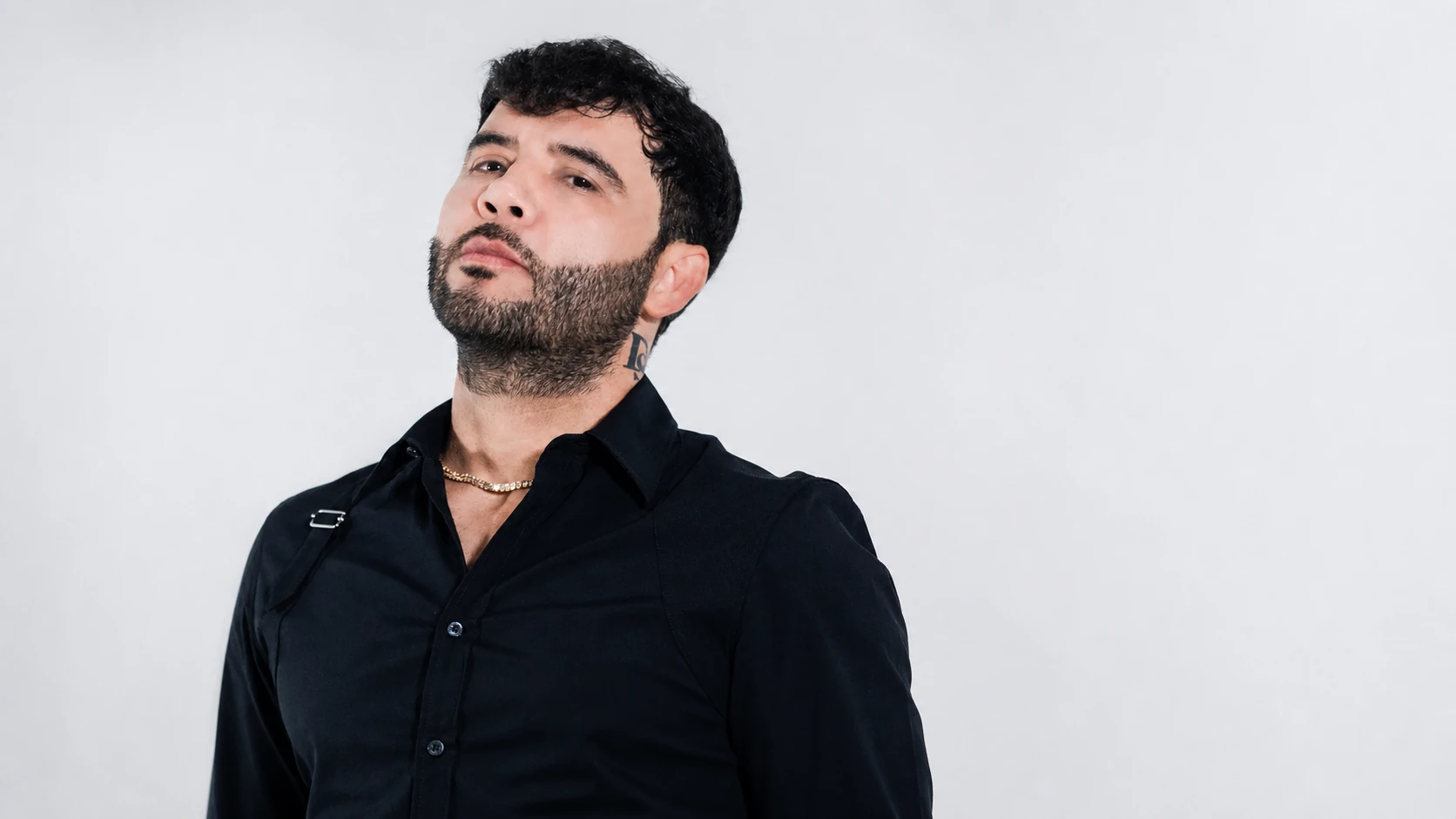
Darey Castro rebuilt his musical career after surviving an attack that ended the original run of Los Alteños de la Sierra, then returned years later with a new generation of regional Mexican stars. Best known as the singer, accordionist and creative force behind Los Dareyes de la Sierra, the Sonora-born musician has moved from traditional sierreño and norteño music to banda recordings and current corridos without losing the rough vocal style that made him recognizable.
His career includes the long-running hit “Hasta el Día de Hoy,” a Latin Grammy nomination, collaborations with Peso Pluma, Tito Double P, Xavi and Luis R Conriquez, and a major commercial return through the 2025 album Redención. He followed that project with SABIA in April 2026, showing that his resurgence was not built around one song or one famous guest.
Castro’s public story is well documented in music, but many personal details remain private. His exact date of birth, age, education and net worth have not been reliably confirmed. What is clear is that he has carried one musical identity through loss, changing trends and two separate periods of chart success.
Early Life and Family
José Darey Castro, professionally known as Darey Castro, is from Navojoa, Sonora, Mexico. Navojoa lies in the southern part of the state, an area connected to the musical traditions of northwestern Mexico, including norteño, sierreño and corrido styles. Those influences became central to Castro’s early work and remained present even as his recordings adopted larger banda arrangements.
Little verified information is available about his childhood, parents or siblings. Public artist biographies focus almost entirely on his professional history rather than his upbringing, and no dependable source has established where he attended school or whether he received formal musical training.
His exact birth date and birth year are also not publicly confirmed. Some entertainment pages list April 16 as his birthday, but they do not provide a reliable record for the year. Because of that, Castro’s precise age in 2026 should not be stated as fact.
Early Musical Career
Castro began performing professionally during the late 1990s. Accounts differ slightly on the names and dates connected to his first groups, but he is closely associated with Los Alteños de la Sierra, where he worked as lead singer and bandleader before establishing the Los Dareyes de la Sierra identity.
His early sound was built around accordion, guitar and direct storytelling. The music drew from the sierreño and norteño traditions common in Sonora and neighboring states, while his voice carried a rough, mature quality that helped distinguish him from smoother regional Mexican singers.
Castro’s role extended beyond singing. He also played accordion and contributed to the creative direction of his recordings, making him the consistent figure even as musicians around him changed. That continuity later allowed Los Dareyes de la Sierra to function both as a band name and as Castro’s professional identity.
The 2004 Attack and Career Turning Point
In April 2004, members of Los Alteños de la Sierra were attacked by armed men in Chihuahua. A contemporary report placed the assault near the community of Las Estrellas and recorded three deaths and three injuries. Later music biographies have sometimes reported four deaths, so the exact casualty total remains disputed in public accounts.
Castro survived the attack, but the event brought the original group’s run to an abrupt end. It was not simply a difficult moment in his career; it forced him to decide whether he could continue performing after losing colleagues in an act of violence.
He eventually returned under the Los Dareyes de la Sierra name. The new identity placed him more clearly at the center of the project and allowed him to rebuild with a different lineup. His survival became an important part of his public story, though he did not build his entire career around the tragedy.
The episode also gave added meaning to the title Redención when he released the album more than two decades later. By then, Castro had rebuilt not once but twice: first after the attack, and later after a quieter commercial period in which regional Mexican music changed around him.
Rebuilding as Los Dareyes de la Sierra
The 2005 album El Águila Real helped establish Los Dareyes de la Sierra as Castro’s lasting musical vehicle. The project included songs such as “El Jabalí,” “Quisiera Ser una Lágrima” and the title track, showing his ability to move between corridos and romantic material.
“El Jabalí” became one of the act’s first documented radio successes, reaching the Regional Mexican Airplay chart. It did not yet match the scale of his later breakthrough, but it showed that Castro’s rebuilt group could compete beyond local audiences.
His willingness to shift arrangements also became important. Although his roots were strongly tied to accordion-led music, he began recording with fuller banda instrumentation. That allowed him to reach listeners who preferred brass-heavy regional Mexican production while preserving the vocal character of his earlier work.
Over time, Los Dareyes de la Sierra became less dependent on a fixed lineup. Castro’s voice, accordion and name provided the continuity, while the musicians and production styles could change between albums and tours.
“Hasta el Día de Hoy” and National Recognition
Castro’s biggest early breakthrough came with “Hasta el Día de Hoy.” Released in 2008 during the period surrounding the album Con Banda, the heartbreak song paired his weathered voice with a polished banda arrangement.
The recording spent 11 weeks at No. 1 on Billboard’s Regional Mexican Airplay chart and reached No. 3 on Hot Latin Songs. It also ranked among the leading Latin songs of 2008, giving Los Dareyes de la Sierra a level of mainstream radio exposure that the group had not previously achieved.
The song succeeded because it reached beyond the corrido audience. Its subject was emotional rather than criminal or biographical, and Castro delivered the lyrics with enough strain to make the breakup feel personal without becoming theatrical.
“Hasta el Día de Hoy” remained part of his identity long after its initial chart run. It became the song many older fans associated most strongly with Los Dareyes de la Sierra and later served as a bridge between his first period of success and his 2020s return.
Latin Grammy Nomination and Other Recognition
Los Dareyes de la Sierra received a Latin Grammy nomination for Una Copa Más in the Best Banda Album category at the 2009 ceremony. The official Latin Recording Academy record lists one nomination and no wins.
That distinction matters because some online profiles incorrectly describe Castro as a Latin Grammy winner. He earned industry recognition through the nomination, but there is no official record of a victory.
The late-2000s period also brought attention through regional Mexican and Latin music award nominations connected to “Hasta el Día de Hoy.” Although Castro did not become a regular presence at major awards shows, the nominations confirmed that his work had crossed from a regional following into the broader Latin music market.
Continued Recording and a Quieter Period
Castro continued releasing music after his first commercial peak. His catalog grew through studio albums, live recordings, corrido collections and regional projects, including titles connected to Chihuahua, Parral and tribute material.
Still, remaining active did not mean staying at the center of the market. During the 2010s and early 2020s, regional Mexican music changed rapidly as streaming platforms, social media and corridos tumbados created new paths to success. Younger artists began reaching global audiences without depending on traditional radio.
Castro’s earlier achievements kept his name familiar, but he did not have another crossover hit on the scale of “Hasta el Día de Hoy” for many years. That quieter period made his later return more striking because it was not based only on nostalgia.
He had continued working long enough to participate in the new era rather than simply being rediscovered by it. His collaborations with younger performers showed that he could adjust to current production without abandoning the voice and accordion style that had defined him.
Collaborations With a New Generation
Castro’s connection to a younger audience became clear in 2023 when Los Dareyes de la Sierra appeared with Peso Pluma and Edgardo Nuñez on “VVS.” The song was included on Peso Pluma’s album GÉNESIS and reached the Billboard Hot 100.
The collaboration placed Castro inside one of the most commercially successful regional Mexican album cycles of the period. For younger listeners, “VVS” may have been their first introduction to his voice, while longtime fans recognized the contrast between his rough delivery and the newer corrido style around him.
He also worked with Xavi on “Poco a Poco.” The recording used Castro’s vocals and accordion alongside guitar-driven production, creating a direct link between older sierreño traditions and the romantic sound that helped Xavi reach a large streaming audience.
These songs prepared the ground for Castro’s 2025 return. They showed that he could collaborate naturally with younger artists rather than appearing as a guest chosen only for historical prestige.
Redención and the 2025 Comeback
Castro released Redención in May 2025 through Double P Records. The album marked his first major studio project in several years and brought together many of the leading figures in current música mexicana.
The guest list included Tito Double P, Peso Pluma, Neton Vega, Gabito Ballesteros, Luis R Conriquez, Alfredo Olivas, Santa Fe Klan, Grupo Firme, LEGADO 7 and Edgardo Nuñez. Each collaboration connected Castro to a different part of the regional Mexican audience, from hard-edged corridos to more melodic and commercial styles.
The album debuted strongly on Spotify’s global and Mexican album rankings. Its performance showed that listeners were not responding only to Castro’s older catalog; they were engaging with a new full-length project.
The title Redención suited the moment. Castro had survived an attack, rebuilt his band, experienced a major radio peak and then spent years outside the center of popular attention. The album presented his return without pretending that the earlier chapters had never happened.
“Vita Fer” and “Frecuencia”
“Vita Fer,” recorded with Tito Double P, became one of the project’s leading songs. It reached No. 1 on Billboard’s Mexico Songs chart in 2025, placing Castro at the center of a market dominated by younger stars.
“Frecuencia” became even more important to his individual comeback. The song entered the Billboard Hot 100 without another featured artist in the title and also performed strongly on Hot Latin Songs and Mexico Songs.
That result answered a practical question raised by the collaboration-heavy album. Castro could benefit from famous guests, but he could also carry a current hit under the Dareyes name alone.
The success of both songs helped turn Redención into a genuine second commercial peak. It was not a tribute project or a one-time reunion with an old audience; it created measurable new demand.
Touring and Live Performances
In 2025, Castro announced the Redención Tour, described as his first full United States headline tour. The run included 20 cities and opened in Los Angeles before traveling through markets such as Las Vegas, Phoenix, Chicago, New York, Atlanta, Houston, Dallas, Sacramento and Seattle.
The tour allowed him to place songs from different periods in the same set. Older fans could hear material such as “Hasta el Día de Hoy,” while newer listeners came for “Vita Fer,” “Frecuencia” and the collaborations that introduced them to his work.
Live performance also strengthened Castro’s position as more than a streaming revival. Touring required him to convert online attention into ticket sales across multiple regions with large Mexican and Latino populations.
His concerts presented Los Dareyes de la Sierra as a continuing act rather than a name from the past. The changing musicians around him remained secondary to the voice and personality that audiences associated with Castro.
SABIA and His 2026 Work
Castro released SABIA in April 2026 through Double P Records. The 21-track album followed Redención less than a year later, giving his renewed career a sense of momentum rather than a long pause after one successful project.
Unlike the guest-heavy structure of Redención, SABIA placed more emphasis on Castro himself. Songs such as “MATCHA,” “MAHOMA,” “RAM PAM PAM,” “NI SUMA NI RESTA,” “DESCONTROL,” “MALDITO INFIERNO” and “KAMIKAZE” continued the harder corrido direction of his recent work.
The change was important because it tested whether audiences had returned for Castro rather than only for the artists featured beside him. Releasing a long album under his own established identity suggested confidence in the audience built during 2023, 2024 and 2025.
As of July 2026, Castro remained active as a recording and performing artist. His recent catalog positioned him as both a veteran of regional Mexican music and a current participant in its streaming era.
Marriage, Daughter and Private Life
Castro kept much of his family life outside his music career. Public records do not provide a detailed account of his marriage, home life or previous relationships.
In May 2026, Sara Sánchez publicly announced that their relationship had ended. She described the separation as the end of their marriage and made allegations of infidelity. Castro had not publicly addressed those claims in the reporting available at the time, so they should be treated as Sánchez’s allegations rather than established facts.
A completed legal divorce was not publicly confirmed. The identity of any alleged new partner was also not established through dependable reporting.
Sánchez said that she and Castro share a daughter named Aislinn and that both parents would remain involved in raising her. Because their daughter is not a public entertainer, further personal details about her should remain private unless the family chooses to share them.
Net Worth and Income Sources
Darey Castro’s exact net worth is not publicly known. Online estimates do not appear to be based on audited accounts, tax records or verified disclosures, so they should not be treated as reliable financial facts.
His likely income sources include recording royalties, songwriting and publishing payments, concert fees, touring revenue, streaming, merchandise and business arrangements connected to Los Dareyes de la Sierra. His work with Double P Records and his recent chart success may have increased his earnings, but contract terms have not been made public.
Gross music revenue also does not equal personal wealth. Touring expenses, management fees, label agreements, taxes, musicians’ salaries and production costs can reduce what an artist retains.
The most accurate description is that Castro has sustained a long professional music career and enjoyed renewed commercial success in 2025 and 2026. Any precise claim about his fortune remains unverified.
Public Image and Musical Legacy
Castro’s public image rests on endurance. He survived a violent attack, rebuilt under a new band identity and later adjusted to a music business shaped by streaming and younger performers.
He is also respected for maintaining a recognizable voice while changing his production. The accordion, direct lyrics and rough vocal tone connect his current work to his Sonoran roots, even when the arrangements reflect modern corridos.
His collaboration strategy helped him reach a generation that may not have known “Hasta el Día de Hoy.” But his later solo chart success and the release of SABIA showed that his value was not limited to giving younger stars a connection to the past.
Castro’s story matters because it demonstrates that a regional Mexican artist can experience more than one meaningful career period. His first success came through radio and banda; his second developed through streaming, collaborations and a new label network.
Frequently Asked Questions
What is Darey Castro’s real name?
His publicly used full name is José Darey Castro. He performs under the Darey Castro name and is the central figure behind Los Dareyes de la Sierra.
Where is Darey Castro from?
He is from Navojoa, Sonora, Mexico. His music reflects the sierreño, norteño and corrido traditions associated with northwestern Mexico.
How old is Darey Castro?
His exact age is not publicly confirmed. April 16 is sometimes listed as his birthday, but a verified birth year has not been established.
Is Darey Castro the singer of Los Dareyes de la Sierra?
Yes. He is the lead singer, accordionist and enduring creative figure behind the act. The supporting lineup has changed, but Castro has remained the central identity.
What is Darey Castro’s most famous song?
“Hasta el Día de Hoy” is his defining early hit. It spent 11 weeks at No. 1 on Billboard’s Regional Mexican Airplay chart and reached No. 3 on Hot Latin Songs.
Did Darey Castro win a Latin Grammy?
No. Los Dareyes de la Sierra received a Latin Grammy nomination for Una Copa Más, but the official record lists no win.
Is Darey Castro married?
Sara Sánchez announced their separation in May 2026. A completed legal divorce was not publicly confirmed at the time, and Castro had not publicly addressed her allegations.
Conclusion
Darey Castro’s career carries the weight of survival without being defined only by tragedy. He rebuilt after the 2004 attack, created one of regional Mexican radio’s major late-2000s hits and remained active long enough to find a second audience.
His return through Redención worked because he did not imitate younger artists or retreat into nostalgia. He brought his established voice into current production and allowed the contrast between generations to become part of the music.
SABIA strengthened that return by placing more attention on Castro himself. It suggested that his new audience was prepared to follow him beyond high-profile collaborations.
Many details of his personal life remain private, including his age, education and finances. His public record is strongest where it matters most: a long music career, a distinct voice and an ability to keep moving after events that could have ended his story.
