

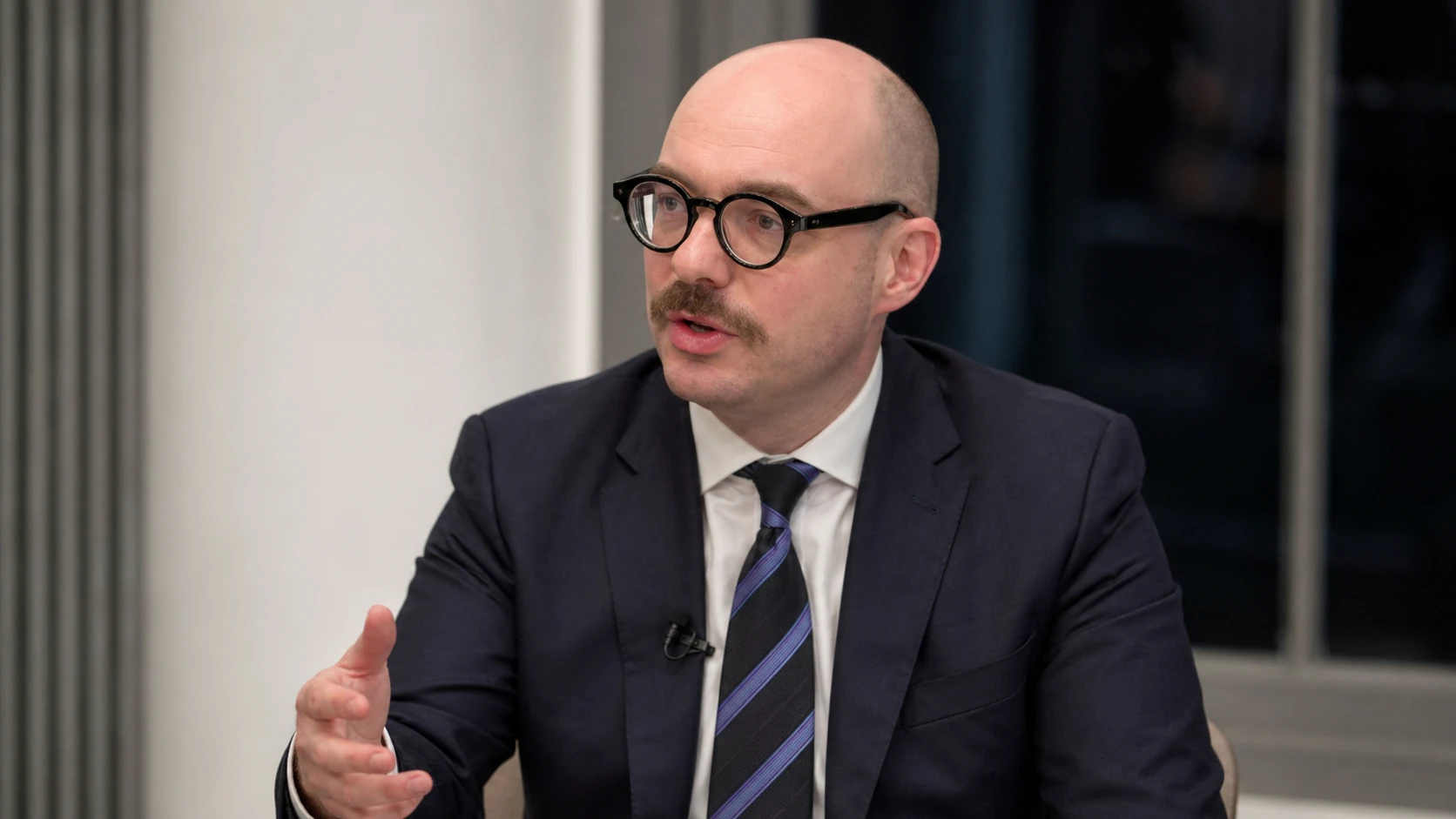
Matthew Laza is the kind of public figure whose influence is easier to trace through institutions than through celebrity headlines. He has worked in British current affairs television, advised a Labour Party leader, helped shape centre-left policy debate, and appeared as a political commentator in broadcast media. For readers who come across his name in a panel discussion or a political article, the question is usually direct: who is Matthew Laza, and why does he matter?
The answer sits at the crossing point of media and politics. Laza is not known as an elected politician, nor does he present himself as a public celebrity. His reputation comes from work that often happens just outside the spotlight: preparing political leaders for broadcast, thinking about how progressive parties speak to voters, and explaining British politics from the perspective of someone who has seen both television production and party strategy from the inside.
Early Life and Family Background
Publicly confirmed information about Matthew Laza’s early life is limited. Company records identify him as Matthew Richard Laza, born in June 1975, British, and resident in England. Beyond those official details, there is little reliable public material about his parents, siblings, hometown, childhood, or school years.
That lack of personal information should not be treated as a mystery to be filled with guesswork. Laza has built a public identity around professional work rather than private exposure, and most credible records reflect that boundary. Unlike actors, athletes, or elected MPs, he has not had the kind of public career that produces a detailed archive of family interviews and childhood profiles.
What can be said is that his later career suggests an early interest in public argument, storytelling, politics, and media. Those themes run through his work as a BBC current affairs producer, his role in Labour communications, and his later policy writing. The available record presents him as someone drawn less to personal fame than to the machinery that shapes public debate.
Education and Early Ambitions
There is no widely confirmed public record of Matthew Laza’s schools, university, or formal academic training. Some public figures leave a clear trail through university societies, student journalism, or early political activism, but Laza’s available biography is much more professional than personal. The first strong public picture of him comes through his work in broadcasting and political communication.
That said, his career path points to skills usually developed through both education and newsroom experience. Current affairs production requires research judgment, editorial discipline, knowledge of public institutions, and the ability to turn complex issues into television that ordinary viewers can follow. Those skills later made sense in politics, where the challenge is often to make a policy sound clear, credible, and human under pressure.
The truth is, Laza’s early ambitions can only be inferred from the work he chose. He moved toward subjects that sit close to public life: politics, accountability, social change, consumer issues, and democratic debate. That choice would later make his transition from programme-making to Labour advising feel less like a career detour and more like a shift from one side of public communication to another.
Career in BBC Current Affairs
Matthew Laza spent more than a dozen years as a BBC current affairs programme maker, according to biographical material attached to his later policy work. That period is central to understanding his public reputation. Before he became known in Labour circles, he had already learned how British television frames stories, questions leaders, and turns public issues into moments that can shape opinion.
His BBC work included production roles connected to current affairs and factual programming. Public credits and profiles have linked him with programmes including Rip Off Britain, The One Show, The Politics Show, The Heaven and Earth Show, and the documentary Posh and Posher: Why Public School Boys Run Britain. Those credits place him in a broad part of British broadcasting, from consumer affairs to political analysis.
The range matters because it shows Laza was not simply a political operative who later learned media technique. He came from television first, where timing, tone, framing, and evidence all matter. A current affairs producer has to know what makes a story understandable without flattening it into slogan or spectacle.
That background would become especially relevant in Labour politics. By the 2010s, party leaders were being judged constantly through short clips, panel reactions, debate performances, and interview missteps. Someone who understood the grammar of television could be valuable not only as a media handler but as a translator between political intention and public reception.
The Move Into Labour Politics
Laza became more widely visible in 2014, when Ed Miliband appointed him head of broadcasting. Miliband was then leader of the Labour Party and preparing for the 2015 general election. The appointment placed Laza inside one of the most scrutinized communications operations in British politics.
The job mattered because Miliband’s public image had become a major political story of its own. His policies were debated, but so were his manner, delivery, interview style, and relationship with television. A head of broadcasting had to think about more than camera angles; the role involved helping a leader communicate with clarity under hostile, fast-moving conditions.
Reports at the time described Laza as a BBC producer brought in to improve Miliband’s television presence. PinkNews also reported that he was the first openly LGBT person appointed to Miliband’s advisory team. That detail became part of the public account of the appointment, though Laza’s professional role remained the main reason his name entered national political coverage.
The Labour campaign that followed did not end well for Miliband. In May 2015, Labour lost the general election, Miliband resigned as leader, and the party entered a period of internal upheaval. Laza’s role should not be exaggerated into responsibility for that outcome, but his presence in the campaign gives him a place in a defining period of recent Labour history.
Working Behind a Party Leader
Political advisers are often misunderstood because their work is both visible and hidden. The public sees the candidate on stage, in the studio, or at a campaign stop. Behind that appearance is a team shaping the message, preparing for interviews, anticipating attacks, and trying to make sure the leader sounds like a person rather than a briefing document.
Laza’s broadcast background made him well suited to that world. Television rewards clarity, but it punishes hesitation, awkward phrasing, and visible over-rehearsal. A skilled adviser has to help a politician make the case without making the preparation show.
Ed Miliband’s leadership years were especially challenging because British politics was unsettled by austerity, Scottish nationalism, Europe, immigration, and distrust of Westminster. Labour was trying to hold together voters with very different instincts and anxieties. In that environment, communication was not cosmetic; it was part of the political task itself.
But here’s the thing. A communications adviser can sharpen presentation, but no adviser can fully solve a party’s strategic tensions. Laza’s time with Miliband is best understood as one part of a wider Labour story, not as a simple tale of image management.
Policy Network and the Centre-Left Debate
After his work with Miliband, Laza became associated with Policy Network, a centre-left think tank and international political network. He served as director and contributed to its work on progressive politics, public policy, and the future of social democracy. That move shifted him from the speed of campaign communications into a more reflective policy environment.
Policy Network occupied a particular place in Labour and European centre-left debate. It was connected to the tradition of modernising social democracy and to discussions about how progressive parties could win in societies changed by globalisation, technology, migration, and declining trust. Laza’s work there placed him among people asking not just how Labour should speak, but what it should be trying to say.
His policy work included contributions to reports on subjects such as autonomous vehicles and financial fraud. Those topics may seem distant from the drama of Labour leadership contests, but they fit a broader concern with how governments respond to modern social and economic change. Politics, in that frame, is not only about elections; it is about whether public institutions can keep pace with risks that voters already feel in daily life.
The move also showed a different side of Laza’s career. He was not only a media technician or political handler. He was part of a network trying to think through the practical problems facing centre-left parties after the financial crisis, Brexit, and the weakening of old political loyalties.
Writing, Commentary, and Public Voice
Laza has written and commented on British politics with the perspective of someone who knows both campaign operations and television culture. His articles and interviews have often focused on Labour’s ability to connect with voters, the role of leadership, and the difficulty of turning policy into persuasion. He has written about Ed Miliband, Jeremy Corbyn, Brexit, Keir Starmer, and international centre-left politics.
His writing tends to return to a simple but demanding question: how do progressive parties sound believable to people who are not already convinced? That question became urgent after the Brexit referendum and during Labour’s long argument over its direction. Laza’s public comments often suggest that political content and political communication cannot be separated as neatly as party insiders sometimes wish.
He has also appeared as a broadcast commentator, identified in media settings as a former Labour adviser. That label gives viewers a quick way to place him, but it also narrows the picture. His authority in such settings comes not only from having worked for Labour, but from having worked in television before he worked in party politics.
What’s surprising is how consistent the thread has been. From BBC current affairs to Labour broadcasting, from Policy Network to panel commentary, Laza has stayed close to the problem of public persuasion. He has built a career around the question of how serious ideas survive the formats through which most people encounter politics.
Public Image and Media Presence
Matthew Laza’s public image is quieter than that of the politicians and presenters around whom his career has often moved. He does not appear to have sought celebrity status, and much of his profile comes from being introduced as a former Labour adviser during political discussions. That makes him recognizable to a politically attentive audience without making him widely known outside that world.
This kind of profile can be difficult for readers to interpret. Search engines may produce scattered results: an old article about Ed Miliband, a think-tank report, a company filing, a broadcast clip, and a short author biography. Taken separately, those fragments can feel incomplete. Taken together, they show a coherent career in political media and centre-left public life.
The public image that emerges is of a professional insider rather than a partisan performer. He is associated with Labour, but he is not best understood as a loud factional figure. His work has been more about interpretation, presentation, and strategy than mass campaigning under his own name.
That distinction matters because it helps explain why there are gaps in the public record. Laza has had influence in professional settings where the work is real but not always publicly documented. He belongs to the category of people whose careers shape politics without turning them into household names.
Personal Life, Relationships, and Privacy
Matthew Laza’s personal life is not heavily documented in reliable public sources. There is no widely confirmed public information about a spouse, partner, children, or close family structure. For a biography, that absence should be handled carefully rather than treated as an invitation to speculate.
What is publicly reported is that Laza is openly gay. That fact entered public coverage in 2014 when his appointment to Ed Miliband’s advisory team was reported in the context of LGBT representation in Labour’s senior operation. It is a relevant part of his public biography because it was connected to a professional milestone and political representation.
Beyond that, responsible writing has to stop where the evidence stops. Many public figures who work behind the scenes choose to keep their relationships and home life private. Laza appears to be one of them, and that privacy is compatible with a public career in media and politics.
The result is a biography with a clear professional spine but a limited private chapter. That may feel unsatisfying to readers looking for family details, but it is also more honest. A person’s public significance does not require the public ownership of every part of their personal life.
Business Interests and Net Worth
There is no credible public estimate of Matthew Laza’s net worth. Any precise figure attached to his name should be treated cautiously unless backed by reliable financial reporting, company accounts, or clear disclosure. As of the public record available, his income sources appear to have come from television production, political advisory work, think-tank leadership, commentary, and consultancy-related activity.
Company records show that he became a director of LAZAM Limited in February 2025. The company is listed under management consultancy activities other than financial management. That suggests a business vehicle connected to advisory or consultancy work, although the public filing alone does not reveal clients, revenue, contracts, or profits.
He was also connected as a director to Global Progress (London) Ltd, a company that has since been dissolved. That record fits his association with international progressive politics and policy networks, but it should not be read as proof of personal wealth. Company appointments can reflect many forms of professional activity, from active trading to administrative vehicles.
A careful estimate of his wealth would require data that is not publicly established. Compared with celebrities or listed-company executives, Laza’s finances are not part of a transparent public market record. The honest answer is that his net worth is unknown, and claims beyond that are usually weaker than they appear.
Setbacks, Scrutiny, and Political Turning Points
The main public turning point in Laza’s career was Labour’s 2015 general election defeat. Because he served as head of broadcasting for Ed Miliband, his name is connected to that campaign period. The defeat reshaped Labour politics and placed everyone associated with Miliband’s operation in the shadow of a painful result.
It would be unfair, though, to reduce Laza’s career to that election. Campaigns are collective efforts shaped by leadership, policy, party divisions, media narratives, voter mood, and events outside any adviser’s control. Communications staff can affect how a leader is presented, but they cannot single-handedly solve structural political problems.
The years after 2015 may have been professionally clarifying. Laza moved into policy and commentary as Labour debated whether it needed centrist renewal, left-wing insurgency, or some new synthesis. His writing during the Corbyn and Brexit years reflected concern about Labour’s ability to speak to a wider public without losing its moral purpose.
That period also sharpened the importance of his central expertise. British politics became more volatile, more visual, and more emotionally charged. The ability to understand both message and medium became more valuable, not less.
Where Matthew Laza Is Now
Matthew Laza’s current public status appears to combine consultancy, commentary, and continuing engagement with British politics. His 2025 company directorship points toward management consultancy activity. His appearances in political media show that broadcasters still treat him as a useful Labour-linked voice.
He is not currently best known for holding a formal party office. Instead, he occupies the familiar role of the experienced former insider: someone who can discuss campaigns, media strategy, Labour’s internal choices, and the way political arguments land with voters. That role can be influential because public interpretation often shapes how political events are understood.
The present phase of his career also reflects a wider trend. Former advisers and producers now move fluidly between consultancy, think tanks, media appearances, writing, and strategic communications. Laza’s career is a strong example of that modern professional pattern.
For readers, the key is to place him accurately. Matthew Laza is not a frontbench politician, not a celebrity presenter, and not a purely private consultant. He is a media-trained political strategist and commentator whose work has sat near important conversations in Labour and the wider centre-left.
Why Matthew Laza Matters
Matthew Laza matters because he represents a part of public life that is easy to overlook. Politics is not only made by elected officials speaking in Parliament. It is also shaped by producers, advisers, researchers, think-tank directors, and commentators who influence how arguments are framed and heard.
His career shows how closely British politics and broadcasting now interact. A party leader’s ideas may begin in policy documents, but most voters encounter them through interviews, news packages, debate clips, and commentary. Someone with Laza’s background understands that the route from policy to public trust is rarely straightforward.
He also matters as a figure in Labour’s post-2010 history. His work with Ed Miliband places him in one major chapter of the party’s modern story, while his later writing and policy activity connect him to debates that followed. Those debates, from Brexit to Labour’s relationship with aspiration and national identity, continue to shape the party.
There is no need to inflate his fame to see his relevance. Laza’s importance lies in the professional craft of political communication and the lessons his career offers about modern public life. He is a reminder that the people behind the camera can understand the stage as well as anyone standing on it.
Frequently Asked Questions
Who is Matthew Laza?
Matthew Laza is a British media and political communications figure. He is known for his work as a BBC current affairs programme maker, his role as head of broadcasting for Labour leader Ed Miliband, and his later work in centre-left policy and political commentary. He has also been associated with Policy Network and public debate about Labour’s future.
Was Matthew Laza a BBC producer?
Yes, Matthew Laza worked for many years in BBC current affairs and factual television. Public profiles have described him as a BBC current affairs programme maker, and credits have linked him to programmes including Rip Off Britain, The One Show, The Politics Show, and other factual or political productions. That broadcast background is central to his later work in political communication.
What did Matthew Laza do for Ed Miliband?
Matthew Laza was appointed head of broadcasting for Ed Miliband before the 2015 general election. His role involved helping with Miliband’s television presence and broadcast communication during a period of intense media scrutiny. The job placed him inside Labour’s senior communications operation, though it did not make him an elected politician or campaign leader.
Is Matthew Laza married?
There is no widely confirmed public information about whether Matthew Laza is married. Reliable public sources do not provide a clear account of a spouse, partner, or children. Because of that, any claim about his relationship status should be treated with caution unless supported by credible evidence.
What is Matthew Laza’s net worth?
Matthew Laza’s net worth is not publicly confirmed. He has worked in broadcasting, political advising, policy leadership, commentary, and consultancy-related roles, but there is no reliable public financial estimate. Claims giving a specific net worth figure should be treated as estimates at best unless backed by strong documentation.
Is Matthew Laza a politician?
Matthew Laza is not best described as an elected politician. He is better understood as a political adviser, media professional, policy figure, and commentator. His public influence has come through communications and analysis rather than through holding elected office.
What is Matthew Laza doing now?
The most recent public record indicates that Matthew Laza has been involved in consultancy through LAZAM Limited, incorporated in 2025. He also continues to appear in political media discussions as a former Labour adviser. His current public profile is tied to commentary, strategic communications, and continuing interest in British politics.
Conclusion
Matthew Laza’s biography is not the story of a celebrity life lived in public. It is the story of a professional who has worked near the center of British political communication without turning himself into the main event. That makes his career quieter, but not less revealing.
The shape of his life in public tells us something about modern politics. Television production taught him how stories are built, Labour politics showed him how leaders are tested, and policy work gave him a place in the argument over what the centre-left should become. Those experiences make him a useful figure for understanding the link between message, media, and power.
What remains private should remain private unless better evidence appears. The confirmed record is strong enough on its own: BBC producer, Labour adviser, Policy Network director, writer, commentator, and consultant. Matthew Laza matters because he has spent much of his career in the space where political ideas are prepared for the public to judge.
