

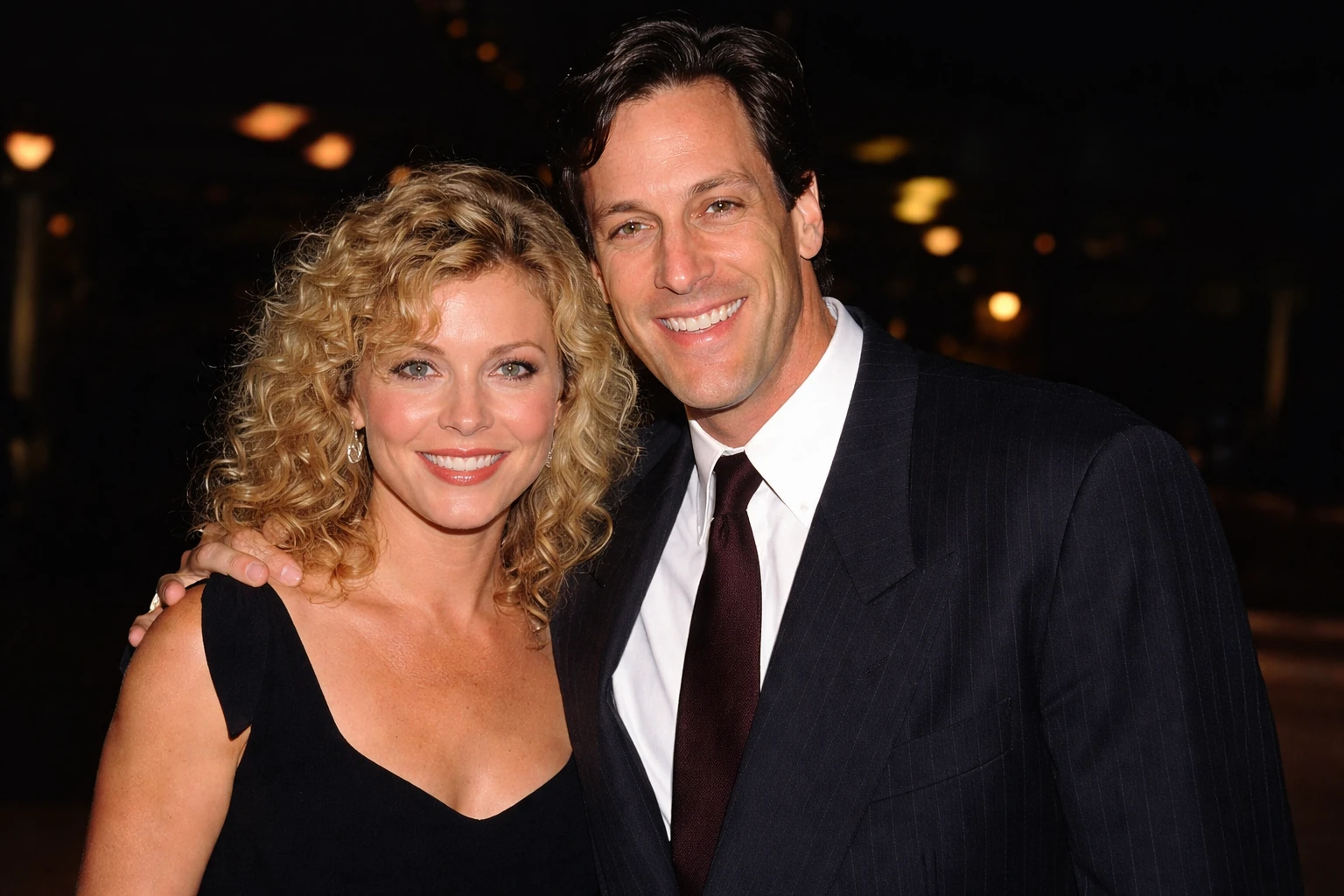
Paul DeRobbio has spent much of his life in a position most people never experience and few would choose: close enough to fame to be searchable, but private enough that the public record never fully catches up. His name surfaces not because he built a media persona of his own, but because of his long marriage to actress Sheree J. Wilson, known to millions for her roles on Dallas and Walker, Texas Ranger. For years, DeRobbio stood just outside that spotlight, part of a family that briefly intersected with Hollywood while remaining largely grounded elsewhere.
That contrast—visibility without exposure—defines nearly everything known about him. Unlike many figures tied to celebrity, DeRobbio did not turn that proximity into interviews, endorsements, or a public-facing brand. Instead, what survives in the public domain is a thinner, more restrained outline: a marriage, a family, a handful of appearances, and a life that appears to have been built deliberately away from sustained media attention.
Early Life and Background
Reliable information about Paul DeRobbio’s early life is limited, and that scarcity has shaped how his story is told. There is no widely verified, primary-source-backed account of his childhood, schooling, or upbringing. Various online profiles claim he was born in the United States, often citing New York as a birthplace and placing his birth year around 1960, but these details are repeated across secondary sites without clear sourcing.
That said, the consistency of those claims suggests a possibility rather than a confirmed fact. What can be said more confidently is that DeRobbio belongs to a generation that came of age in the late 1970s and early 1980s, a period that would have shaped his early career decisions and personal trajectory. Still, without direct records or interviews, those early influences remain largely uncharted.
This absence of detail is not unusual for someone who has never actively sought public attention. Unlike actors, politicians, or corporate executives with a visible footprint, DeRobbio appears to have maintained a private life from the beginning, leaving few official markers for biographers to follow.
Meeting Sheree J. Wilson
The defining turning point in Paul DeRobbio’s public identity came through his relationship with Sheree J. Wilson. By the early 1990s, Wilson was already an established television actress, best known for her role as April Stevens Ewing on the long-running series Dallas. Their relationship placed DeRobbio in proximity to a high-profile entertainment career, even as he remained largely outside it.
Public records indicate that DeRobbio and Wilson married in the early 1990s. The exact year varies depending on the source, with some citing 1991 while others suggest a later date. The broader timeline, however, is consistent: the couple married during the peak of Wilson’s television career and remained together for more than a decade.
Their relationship unfolded largely away from tabloid scrutiny, especially compared to other Hollywood marriages of the time. There are no widely reported controversies, no headline-making disputes, and no extended public commentary from either side during the marriage. That relative quiet speaks both to the couple’s approach and to DeRobbio’s preference for staying out of the public eye.
Marriage and Family Life
During their marriage, Paul DeRobbio and Sheree J. Wilson had two sons, forming the central and most verifiable part of his public biography. Their children, Luke and Nicolas DeRobbio, represent the clearest link between DeRobbio and the limited documentation that exists about his life.
Nicolas DeRobbio, born in 1997 in Dallas, Texas, is the more publicly visible of the two. He has an IMDb credit for the film Easy Rider: The Ride Back, a project connected to his mother’s career. His appearance in that film briefly brought the DeRobbio name into entertainment records, creating a tangible point of reference for researchers.
Luke DeRobbio, the couple’s older son, has maintained an even lower profile. While some online sources attribute educational and professional accomplishments to him, those claims are not consistently supported by verifiable public records. As a result, most careful accounts treat his life as largely private.
Family life appears to have been centered in Texas during much of the marriage, aligning with Wilson’s career and residence at the time. The choice of location suggests a balance between professional obligations in entertainment and a more stable, less public environment for raising children.
Life on the Edges of Hollywood
Paul DeRobbio’s connection to Hollywood came almost entirely through his wife’s career. While he was occasionally present at industry events, including awards ceremonies, he was not a regular figure in entertainment media. Photographic archives show him attending events alongside Wilson, offering brief glimpses into a life that otherwise remained largely undocumented.
One such instance places the couple at the 2006 TV Land Awards in Santa Monica. Appearances like this confirm that DeRobbio was not entirely removed from the public sphere, but they also underscore how limited that visibility was. He attended as a partner, not as a subject of coverage.
What’s striking is how little those appearances translated into broader public recognition. In an era when many individuals connected to celebrities leveraged that exposure into business ventures or media profiles, DeRobbio did not follow that path. His presence remained situational rather than sustained.
Divorce and Life After Marriage
Paul DeRobbio and Sheree J. Wilson divorced in 2004, ending a marriage that had lasted more than a decade. The separation appears to have been handled privately, with minimal public discussion from either party. Unlike many celebrity divorces, it did not generate significant media coverage or prolonged public disputes.
The reasons behind the divorce have not been extensively documented, and neither DeRobbio nor Wilson has publicly detailed the circumstances. This lack of commentary has left the event as a simple factual marker rather than a narrative turning point filled with speculation or controversy.
After the divorce, DeRobbio largely disappeared from public-facing records. There are no widely reported subsequent marriages, high-profile relationships, or major public ventures associated with his name. His post-divorce life appears to have returned to the same level of privacy that characterized his years before and during his marriage.
Career and Business Interests
Perhaps the most debated aspect of Paul DeRobbio’s biography is his professional life. Many online profiles describe him as a businessman, often linking him to finance, investment, or real estate. Some sources mention specific companies or roles, suggesting involvement in private investment firms or financial management.
The challenge is that these claims rarely come with verifiable documentation. There are no widely cited corporate filings, major business interviews, or industry recognitions that clearly establish his professional standing. As a result, while it is plausible that DeRobbio worked in business, the specifics remain uncertain.
This ambiguity has led to a pattern where repeated claims gain the appearance of credibility without strong evidence. Estimates of his net worth, often placed in the multi-million-dollar range, fall into the same category. They are presented as facts in many profiles but lack clear sourcing, making them best understood as unverified estimates rather than confirmed figures.
Public Image and Privacy
If there is a defining characteristic of Paul DeRobbio’s public image, it is restraint. He has not cultivated a media presence, does not appear to have given interviews, and has not used his association with a well-known actress to build a personal brand. In a media environment that rewards visibility, that choice stands out.
This approach has shaped how he is perceived. For some, it creates an air of mystery, inviting speculation and guesswork. For others, it signals a deliberate commitment to privacy, a decision to keep personal and professional life separate from public curiosity.
The truth likely lies somewhere in between. DeRobbio’s limited public footprint reflects both circumstance and choice. His connection to a public figure made him visible enough to be searchable, but his own decisions kept that visibility from expanding into something more substantial.
The Digital Biography Effect
Paul DeRobbio’s story also highlights a broader issue in the digital age: the way online content can fill gaps in public knowledge with repetition rather than verification. Search results for his name are dominated by recent biography-style articles that often mirror each other, repeating similar details with minor variations.
These pages frequently include precise birth dates, career summaries, and financial estimates, presented with confidence but without clear sourcing. Over time, repetition can make these details appear more credible than they are, even when they originate from the same limited pool of information.
This phenomenon is not unique to DeRobbio, but his case makes it particularly visible. The gap between what is known and what is claimed becomes easier to see when the documented record is so small. For readers, it serves as a reminder to approach such profiles with a critical eye.
Where Paul DeRobbio Is Now
As of recent years, there is little publicly available information about Paul DeRobbio’s current activities. He does not maintain a visible presence on social media, does not appear regularly in public events, and has not been the subject of recent news coverage.
What can be inferred is that he continues to live a private life, likely focused on personal and professional pursuits outside the public eye. His children, now adults, have largely followed a similar path, with only occasional appearances in public records.
This absence of current information is consistent with the broader pattern of his life. Rather than fading from public view after a period of visibility, DeRobbio appears to have remained consistently private throughout, with only brief intersections with media attention.
Frequently Asked Questions
Who is Paul DeRobbio?
Paul DeRobbio is best known as the former husband of actress Sheree J. Wilson. His public identity is largely tied to that relationship and to their two sons. Beyond these connections, he has maintained a private life with limited publicly verified details.
Was Paul DeRobbio married to Sheree J. Wilson?
Yes, Paul DeRobbio and Sheree J. Wilson were married for more than a decade, beginning in the early 1990s and ending in divorce in 2004. While the exact wedding year varies across sources, the overall timeline of their relationship is widely accepted.
Does Paul DeRobbio have children?
Yes, he has two sons with Sheree J. Wilson: Luke and Nicolas DeRobbio. Nicolas has a small public profile through an acting credit, while Luke has largely remained out of the public eye.
What does Paul DeRobbio do for a living?
Many online sources describe him as a businessman or investor, but these claims are not consistently supported by verifiable public records. His exact professional background remains unclear in reliable, widely accessible documentation.
What is Paul DeRobbio’s net worth?
Estimates of his net worth appear in various online profiles, often suggesting a figure in the millions. However, these estimates are not backed by clearly documented sources and should be treated as unverified.
Where is Paul DeRobbio now?
There is little publicly available information about his current life. He appears to have maintained a private lifestyle, staying out of media coverage and public-facing platforms.
Conclusion
Paul DeRobbio’s biography is defined as much by what is not known as by what is. His life intersects with public history through his marriage to Sheree J. Wilson and through his family, but beyond that, it remains largely outside the reach of documented narrative.
That absence is not a gap to be filled with speculation. It is a reflection of a life lived without the need for public validation or media attention. In a culture that often rewards exposure, DeRobbio’s story offers a quieter counterpoint.
What remains is a portrait shaped by restraint: a man connected to fame but not consumed by it, visible but not exposed, and remembered primarily through the relationships that briefly brought him into the public eye.
For readers, that may feel incomplete. But it is also, in its own way, a more honest account—one that respects the limits of what can be known and leaves space for a life that continues largely unseen.
