

Renate Blauel became internationally known through her 1984 marriage to Elton John, but she had already built a serious technical career in the recording industry before their relationship entered the headlines. A German sound engineer, tape operator and studio assistant, she contributed to recordings associated with Paul McCartney, Marvin Gaye, Mike Oldfield, the Human League and other established artists.
Her marriage to John lasted four years and ended in 1988. Unlike many people connected to major celebrities, Blauel didn’t turn that experience into a public career. She largely disappeared from view, declined to tell her story through interviews or memoirs, and later took legal action when renewed attention threatened the privacy she had worked to preserve.
That choice shapes any responsible account of her life. Her professional credits, wedding, divorce and 2020 legal case are documented, but her exact birth date, family background, current residence and personal finances remain uncertain or private.
Early Life and Background
Renate Blauel was born in Germany, though reliable public sources don’t agree on the exact date or place. March 1, 1953, is widely repeated as her birth date, often with Berlin named as her birthplace. Yet contemporary reporting from her February 1984 wedding described her as 28 years old, which would place her birth around 1955 or early 1956.
Some later profiles have identified Munich as her birthplace instead of Berlin. Blauel has never publicly confirmed these details, and no widely available authoritative biography has resolved the conflicting accounts. Her exact age and birthplace should therefore be treated as not publicly confirmed.
Little is known about her parents, siblings or childhood. Claims about her family circumstances and early education often appear without dependable documentation. She kept those parts of her life private before marrying John and continued to do so afterward.
Retrospective accounts have said Blauel worked as a flight attendant before moving into audio engineering. That career change is plausible and has been repeated in established reporting, but the dates, employer and training program connected to her alleged airline work haven’t been clearly documented.
What is certain is that she eventually entered the British recording business and worked in professional studios during a period when relatively few women held technical production roles.
Building a Career in Recording Studios
Blauel worked as a recording engineer, assistant engineer, second engineer and tape operator. These were demanding positions in the analog recording era, when music was captured on multitrack tape and studio teams had to manage complex equipment, detailed session records and expensive recording time.
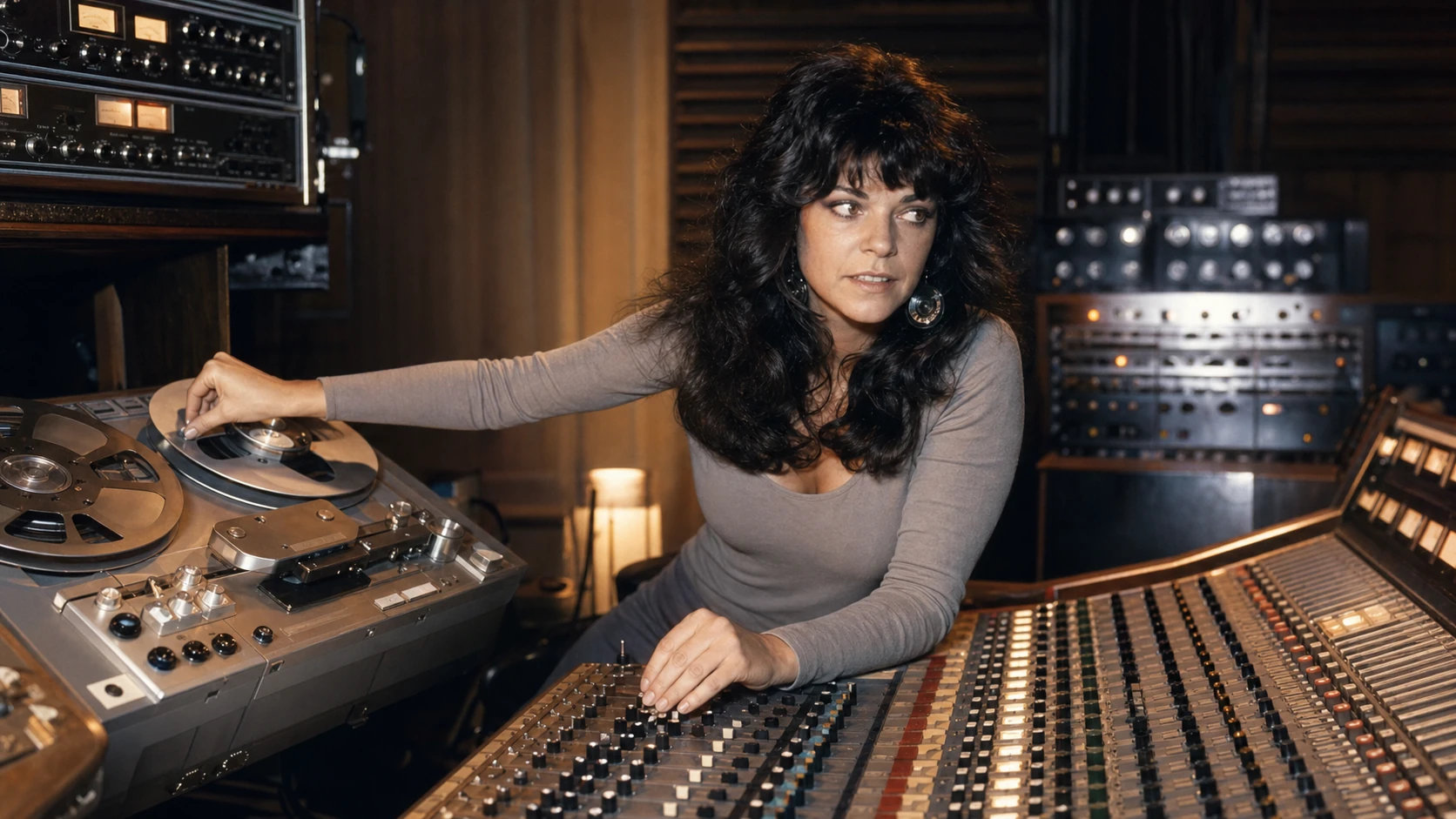
A tape operator prepared machines, handled reels, labeled recordings and helped prevent technical mistakes that could damage or erase a performance. Assistant and second engineers supported the lead engineer, adjusted studio equipment, documented takes and responded to instructions from artists and producers.
Blauel worked at AIR Studios, the recording company founded by Beatles producer George Martin and several business partners. AIR was associated with high-profile artists and carefully run sessions, making it an important workplace for engineers seeking experience at the upper end of the British music industry.
Her early credits included work connected with Mike Oldfield’s 1979 album Platinum. She was also credited on Marvin Gaye’s In Our Lifetime, released in 1981, and contributed to projects involving Japanese singer Akiko Yano and the National Theatre cast recording of Guys and Dolls.
One of her best-known credits came through Paul McCartney’s 1982 album Tug of War. Blauel served as second engineer on “Here Today,” McCartney’s tribute to John Lennon. The song was recorded at AIR Studios in London in November 1981 and produced by George Martin.
Working on such a session placed Blauel alongside respected musicians, producers and engineers. Although a second engineer doesn’t control the artistic direction of a recording, the job requires technical skill, concentration and the confidence of senior studio staff.
Her later credits included recordings associated with the Human League, Pete Townshend, Kiki Dee, Chris Rea and the Blues Band. Some modern compilations also carry her name because they reuse older tracks on which she worked. Those listings preserve her original contribution but don’t prove that she returned to active studio work in recent years.
Blauel’s career is significant partly because women were heavily underrepresented in recording technology during the late 1970s and early 1980s. She didn’t publicly present herself as a campaigner or industry trailblazer, but her credits show that she earned places in professional rooms where women were uncommon.
Meeting Elton John
Blauel met Elton John through her work in music production. Their introduction is generally linked to the recording of John’s 1983 album Too Low for Zero, which included the hit songs “I’m Still Standing” and “I Guess That’s Why They Call It the Blues.”
John was already an international star with more than a decade of major records behind him. Blauel, by contrast, worked mostly behind the scenes and had no public celebrity identity. Their professional contact developed into a personal relationship, though the exact beginning of their courtship hasn’t been described consistently.
They became engaged while John was touring Australia in early 1984. The engagement surprised the public, and the couple arranged their wedding within days.
John had described himself as bisexual in a 1976 interview with Rolling Stone. As a result, much of the press treated his decision to marry a woman as a public statement about his sexuality. Blauel’s identity as an experienced recording professional was frequently pushed aside in favor of speculation about what the marriage meant for John.
There is no reliable evidence that the relationship was invented for publicity. John later said he loved Blauel but had wrongly believed that marriage could repair his unhappiness and help him create a different life. His later comments describe his own state of mind, not Blauel’s private motives or expectations.
Marriage in Sydney
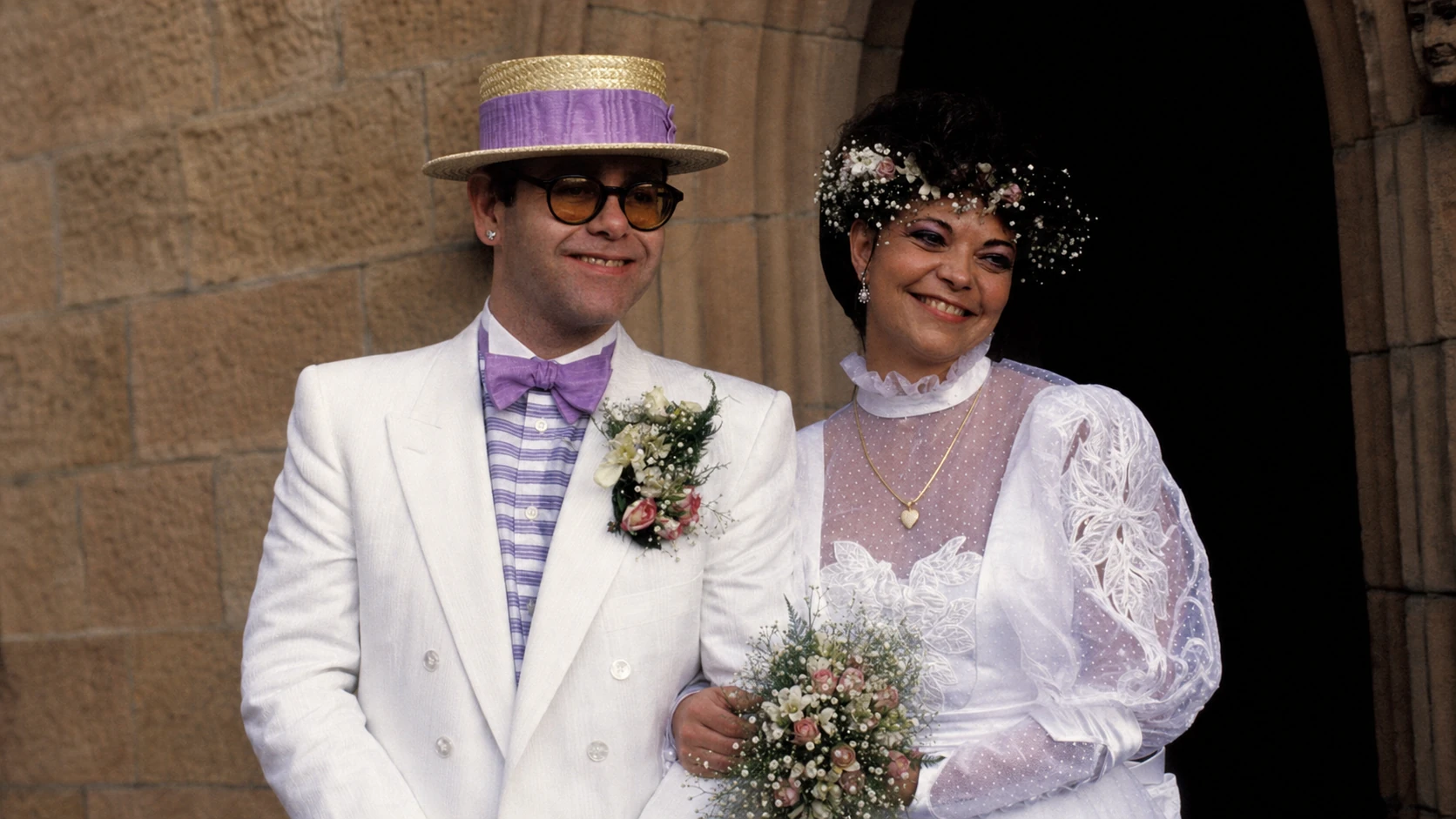
Renate Blauel and Elton John married on February 14, 1984, at St Mark’s Anglican Church in Darling Point, Sydney. The Valentine’s Day ceremony became an international news event, with photographers and television crews gathering outside the church.
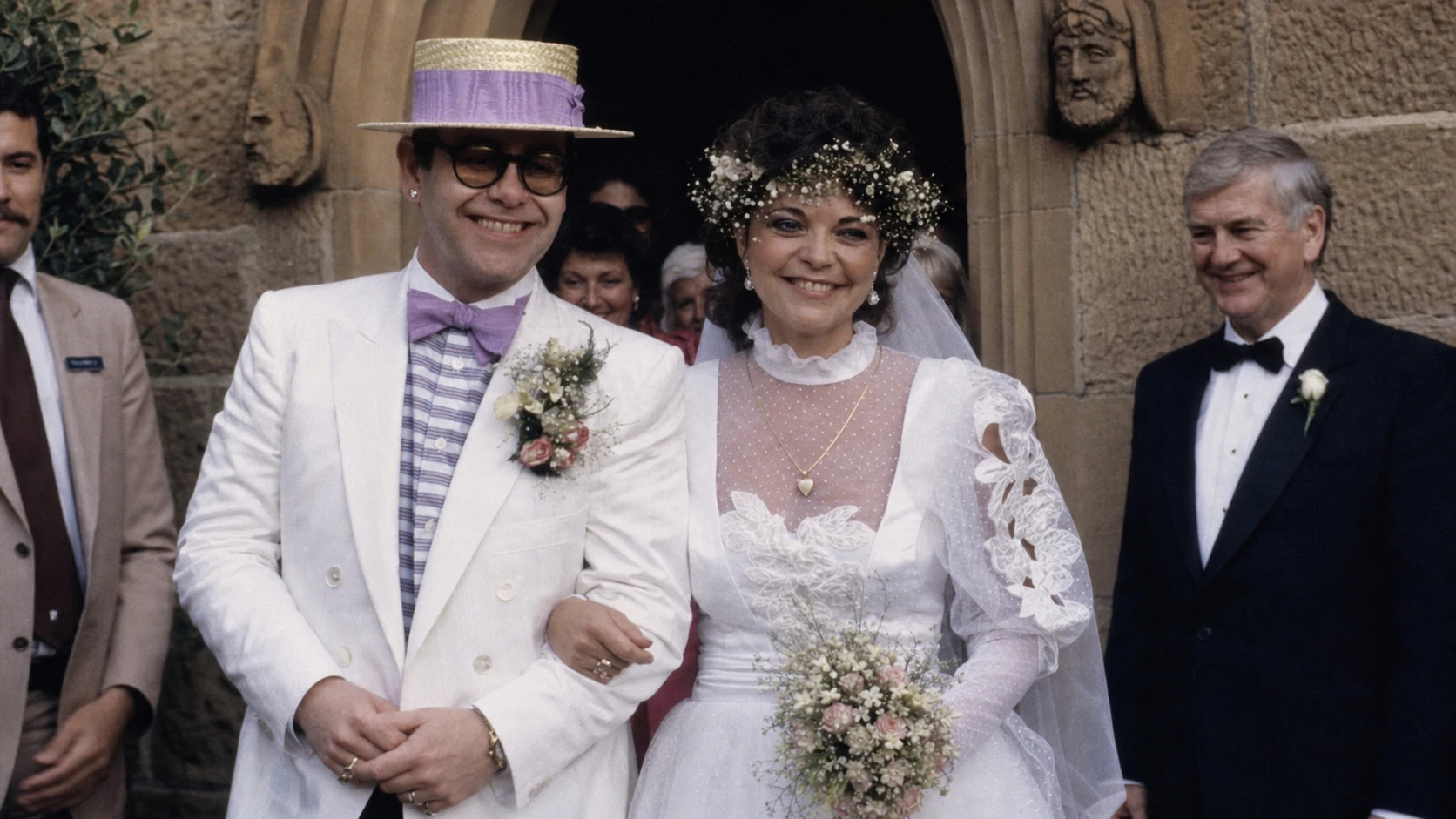
Blauel wore a white wedding dress with lace detailing and received a heart-shaped diamond pendant from John. He wore a white suit with lavender accents and a boater-style hat. Images from the ceremony remain among the few widely published photographs of Blauel.
The wedding took place only a few days after the engagement, encouraging immediate speculation about whether the marriage would last. Contemporary coverage often focused on John’s sexual identity and treated Blauel as an answer to questions about his personal life.
Blauel publicly supported her husband at the time and rejected suggestions that earlier reports about his sexuality made the marriage impossible. Still, she rarely gave interviews, and there is little first-person evidence explaining how she experienced the relationship.
Four Years of Marriage
Blauel and John remained married from 1984 until 1988. During those years, John maintained an intense recording and touring schedule while struggling with drug and alcohol dependence. He later described the period as emotionally unstable and said he had not yet accepted that he was gay.
John’s later accounts have strongly influenced how the marriage is remembered. He said he wanted to be a good husband but entered the relationship while hoping a major personal change would solve problems that marriage couldn’t fix.
Blauel hasn’t published her own detailed account. As a result, claims about their private arrangements, arguments or physical relationship are largely based on tabloid reporting and shouldn’t be treated as established fact.
Documents filed during her 2020 legal action offered a limited view of the emotional pressure she said she experienced. Her lawyers stated that attention connected to the marriage had affected her mental health and that she had taken serious steps to distance herself from John’s public life.
The filings also said the couple had tried to have children. No children were born during the marriage, and both remained without children together. The claim that they attempted to conceive challenged the common assumption that parenthood had never been part of their plans.
One particularly painful allegation in the legal documents was that Blauel attempted to take her own life during their honeymoon after John said the marriage was not working. The case ended in a settlement rather than a trial, so that account was never examined through a final court judgment. It remains an allegation made in formal filings and should be handled with care.
Divorce and Withdrawal From Public Life
Blauel and John announced their separation in November 1988. Their divorce was completed after four years of marriage, and the public statement issued at the time presented the decision as amicable.
The financial settlement wasn’t disclosed. Newspapers have published several different figures over the years, but none has been officially confirmed. Reports that John bought Blauel a home in Surrey have also circulated, though the exact terms of their separation remain private.
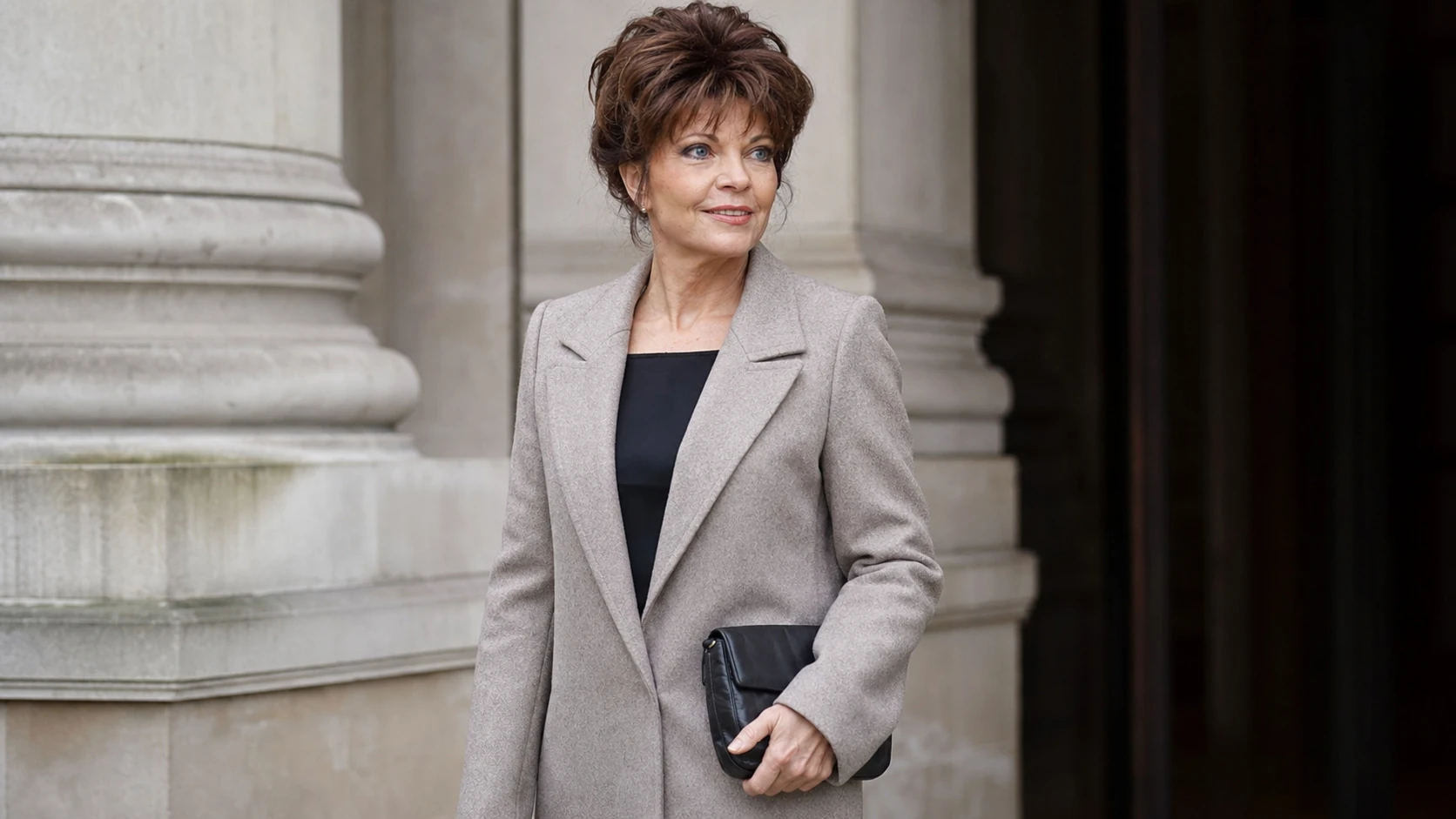
After the divorce, Blauel withdrew almost completely from public view. She didn’t pursue television appearances, publish a memoir or build a career around her former husband. Later legal documents said she changed her name and appearance in an effort to escape attention and separate her identity from the marriage.
Various publications have claimed that she lived in Surrey, returned to Germany or settled in another part of England. Her current residence is not publicly confirmed. Given her documented efforts to remain private, speculation about a precise address would be inappropriate.
John later spoke with regret about the marriage. He said Blauel deserved better and acknowledged that his inability to live honestly had caused her pain. He also indicated that they met years after the divorce and had an emotional conversation about their shared past.
Renewed Attention From Rocketman and Me
Public interest in Blauel increased again in 2019 with the release of Rocketman, the musical film based on John’s life. Actress Celinde Schoenmaker portrayed her in a brief section dealing with the marriage.
The film didn’t offer a full portrait of Blauel. She appeared mainly in relation to John’s struggle with addiction, sexuality and self-acceptance. That approach reflected the film’s focus on John, but it also reduced Blauel’s experience to a small part of someone else’s personal story.
John’s memoir, Me, was published during the same year. It discussed the wedding, marriage and divorce from his perspective. Blauel argued that these renewed disclosures violated a confidentiality agreement connected to their 1988 separation.
The disagreement reflected a difficult conflict between two interests. John wanted to tell his life story openly, while Blauel believed that private details about a shared relationship remained protected and that renewed publicity had caused her harm.
The 2020 Privacy Case
Blauel began legal proceedings against John in the High Court in London in 2020. She alleged that references in his memoir, the film and public comments breached the terms of their divorce agreement.
Her claim sought an injunction, damages and legal costs. Reports placed the possible value of the case at up to £3 million, but that figure represented the amount discussed in connection with the claim, not a confirmed payment.
John’s lawyers accepted that a confidentiality agreement existed but denied that he had breached it. They argued that much of the information involved was already part of the public record.
The case ended in October 2020 with a confidential settlement. A joint statement said the resolution recognized Blauel’s need for privacy. It also said she acknowledged that John had behaved respectfully toward her during the decades following their divorce.
Both sides agreed not to make further public comments about each other, the marriage or the legal dispute. No financial terms were released, and there was no court ruling establishing that either party had won the case.
Net Worth and Income Sources
Renate Blauel’s net worth is not publicly known. She earned money through her work as a recording engineer and received an undisclosed divorce settlement, but there is no verified account of her assets, investments, property or current income.
Online estimates often assign her a fortune of several million dollars. Those figures usually depend on unconfirmed newspaper reports about the divorce and don’t account for decades of private financial decisions.
The amount sought during the 2020 case also can’t be used to calculate her wealth. A damages claim isn’t the same as a settlement payment, and the final terms were confidential. Any precise net-worth figure attached to Blauel should be treated as speculation.
Current Status
As of 2026, Blauel appears to remain outside public life. There have been no widely verified recent interviews, appearances, professional announcements or public statements from her.
Her name still appears on music databases and newer collections that include recordings from earlier in her career. These credits reflect past studio work rather than confirmed new projects.
There is no reliable public evidence that she remarried or had children after divorcing John. Her present occupation, home and personal relationships are not publicly confirmed.
Frequently Asked Questions
Who is Renate Blauel?
Renate Blauel is a German recording engineer and Elton John’s former wife. Before their marriage, she worked on recordings connected with artists including Paul McCartney, Marvin Gaye and Mike Oldfield.
How old is Renate Blauel?
Her exact age is uncertain. March 1, 1953, is commonly reported as her birth date, but contemporary coverage described her as 28 in February 1984, creating a conflict that hasn’t been publicly resolved.
How did Renate Blauel meet Elton John?
They met through recording work associated with John’s 1983 album Too Low for Zero. Their professional connection developed into a relationship, and they became engaged during his 1984 Australian tour.
When were Renate Blauel and Elton John married?
They married on February 14, 1984, at St Mark’s Anglican Church in Darling Point, Sydney. Their marriage ended in 1988.
Did Renate Blauel and Elton John have children?
No children were born during their marriage. Court documents filed in 2020 stated that they had tried to conceive, but they didn’t become parents together.
Why did Renate Blauel take legal action against Elton John?
She alleged that disclosures in his memoir, Rocketman and other public comments breached a confidentiality agreement from their divorce. The case ended in a private settlement in October 2020.
Where is Renate Blauel now?
Her current location and occupation are not publicly confirmed. She has spent most of the period since her divorce avoiding publicity and protecting her private life.
Conclusion
Renate Blauel’s place in popular history is usually tied to a four-year marriage, but her life can’t be understood through that relationship alone. She had earned professional recording credits before meeting Elton John and worked in a technical field where women rarely received public recognition.
Her withdrawal after the divorce was consistent and deliberate. She didn’t seek to compete with John’s account of their marriage through interviews or commercial projects, choosing distance instead.
The 2020 legal case showed how strongly she valued that boundary. It also raised a broader question about what former partners owe each other when private experiences become material for memoirs and films.
Blauel remains a private person whose documented career and public choices deserve more care than gossip-driven profiles usually provide. The missing details in her biography aren’t invitations to guess; they are evidence of a life she has chosen not to place on display.
