

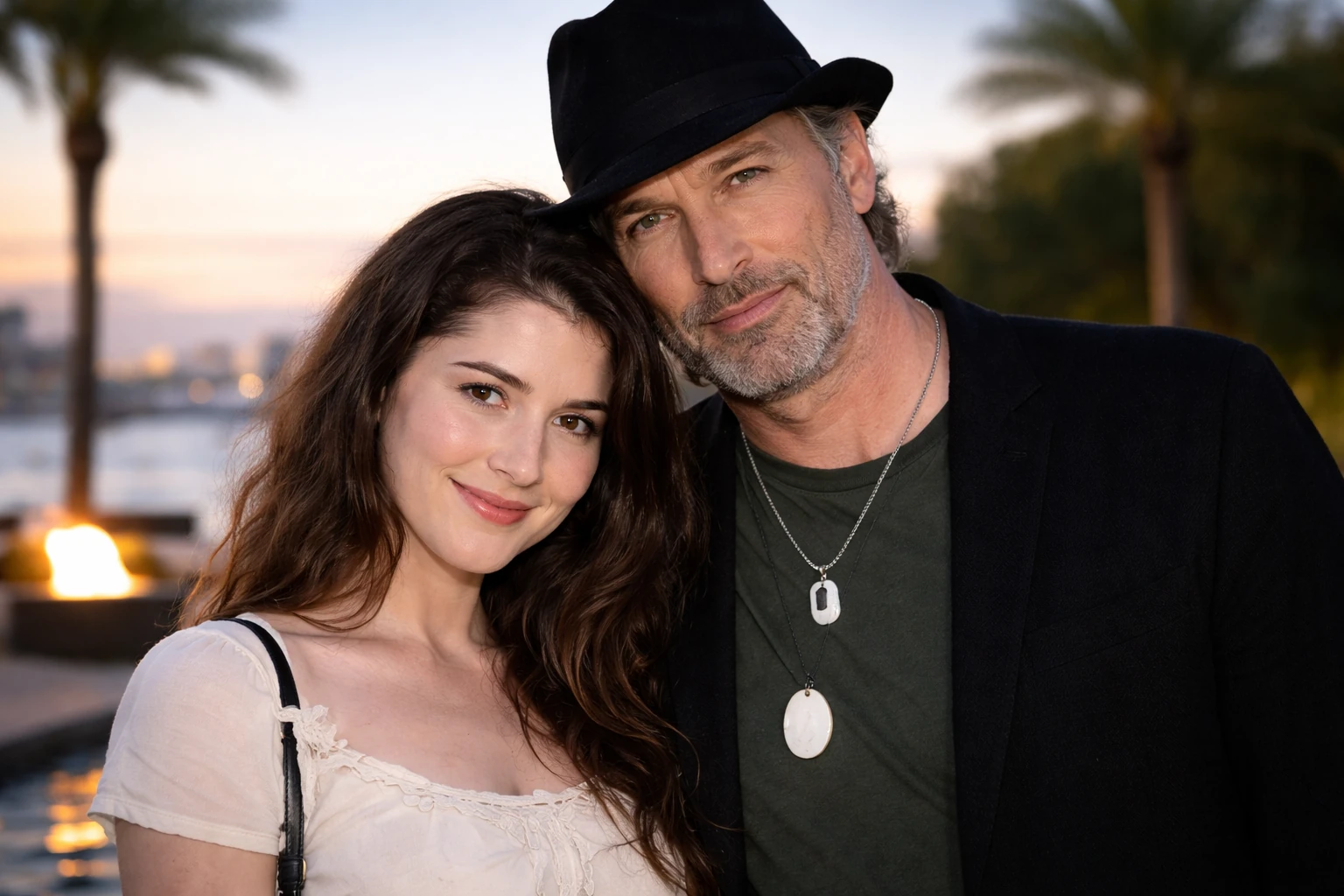
Most people who encounter the name Vera Davich arrive with a question already in mind. It usually starts with someone else—actor Scott Patterson, best known as Luke Danes on Gilmore Girls—and then circles back to her. Who was she? What happened to her? And why does her story feel both visible and out of reach at the same time?
The truth is quieter than many expect. Vera Davich is not a public figure in the conventional sense, and she never built a career in entertainment, media, or public life. Her name persists because of a brief early marriage to Patterson long before he became famous. What followed, by all available accounts, was a deliberate step away from public attention, leaving behind only fragments of a life that the internet has tried—often unsuccessfully—to fill in.
Early Life and Background
Reliable information about Vera Davich’s early life is limited, and that scarcity shapes how her story must be told. Unlike celebrities whose childhoods are documented through interviews and public records, Davich’s background exists mostly outside the reach of widely verified sources. Most accounts suggest she grew up in the United States, likely in the same region as Scott Patterson, who was raised in Haddonfield, New Jersey.
Some secondary profiles describe Davich and Patterson as high school sweethearts, implying that they met during their teenage years. This detail appears frequently in online biographies, but it lacks strong primary documentation, which makes it difficult to confirm with certainty. Still, the idea fits the timeline and geography of Patterson’s upbringing, which places him in southern New Jersey during his formative years.
What’s clear is that Davich’s early life unfolded far from public scrutiny. There are no widely cited interviews, school records, or family profiles that outline her upbringing in detail. That absence does not suggest anything unusual; it simply reflects a life lived privately, without the expectation of later public interest.
Relationship with Scott Patterson
The most documented chapter of Vera Davich’s life is her relationship with Scott Patterson. The two were married in 1983, at a time when Patterson was still years away from television fame. He was then focused on a professional baseball career, having been drafted by the Atlanta Braves in 1980 and working his way through the minor leagues.
Their marriage was short-lived, ending in divorce around 1985. While exact details of the relationship remain largely private, Patterson has, in later interviews, alluded to the challenges of being young and unprepared for marriage. Some reports attribute the split to the pressures of early adulthood and the demands of his baseball career, though these explanations are drawn from secondary accounts rather than detailed firsthand narratives.
The timing is significant. This was a period before Patterson transitioned into acting, before Gilmore Girls, and before any sustained public attention. In that sense, Davich’s marriage to him belongs to a pre-fame chapter that is often overshadowed by what came later in his life.
Life After Divorce
After her divorce from Patterson, Vera Davich appears to have stepped entirely out of the public sphere. There are no widely verified records of a career in entertainment, business, or any other high-profile field. Nor are there confirmed details about subsequent relationships, marriage, or children.
What’s surprising is how consistent that privacy has been. In an era when even minor public figures often maintain some online presence, Davich’s absence stands out. There are no verified social media accounts linked to her, no interviews, and no public statements reflecting on her past or present life.
This has led to a kind of informational vacuum, where speculation often fills the gaps. Various websites have attempted to reconstruct her life with estimates of age, profession, or personal interests, but these details frequently conflict and lack clear sourcing. The more responsible accounts acknowledge that little is known and avoid presenting unverified claims as fact.
Scott Patterson’s Rise and Its Impact
To understand why Vera Davich’s name continues to surface, it helps to look at Scott Patterson’s trajectory. After his baseball career ended, Patterson moved into acting, eventually landing the role of Luke Danes on Gilmore Girls in 2000. The show became a cultural touchstone, and Patterson’s character remains one of its most beloved figures.
As Patterson’s fame grew, so did public curiosity about his personal life. His later marriage to Kristine Saryan and their family life became part of his public profile. In that context, earlier relationships—including his marriage to Davich—naturally drew attention from fans and media outlets seeking to present a complete biography.
But here’s the thing: the increased interest in Patterson did not bring new verified information about Davich. Instead, it amplified existing fragments, leading to a proliferation of articles that often repeat the same limited facts while adding layers of interpretation or speculation.
Public Image and Media Portrayal
Vera Davich’s public image is unusual because it is almost entirely defined by absence. She has not cultivated a persona, given interviews, or participated in public storytelling about her life. As a result, media portrayals of her tend to rely heavily on her association with Patterson rather than on independent achievements or experiences.
Some online profiles attempt to characterize her personality or life choices, but these descriptions rarely cite credible sources. The lack of direct information creates a situation where repetition becomes mistaken for confirmation. Once a detail appears in enough places, it begins to look authoritative, even if it originated from guesswork.
This dynamic highlights a broader issue in digital media. The demand for complete narratives often leads to the expansion of incomplete stories. In Davich’s case, the gap between what is known and what is written about her is especially wide.
Privacy in the Age of Search
Vera Davich’s story offers a quiet counterpoint to modern expectations about visibility. Today, even people with minimal public roles often leave behind extensive digital footprints. Davich’s near-total absence from that landscape suggests a deliberate choice to remain private.
That choice deserves context. Being connected to a public figure does not automatically make someone a public figure themselves. Yet the internet tends to blur that distinction, treating relationships as extensions of celebrity identity. Davich’s experience shows how difficult it can be to maintain boundaries once a name enters public circulation.
At the same time, her case underscores the importance of restraint in reporting. Respecting the limits of available information is not a weakness; it is part of responsible storytelling. The fact that Davich has not shared her life publicly should shape how her story is told.
Financial Life and Net Worth
There are no credible, widely verified figures regarding Vera Davich’s net worth. Some websites offer estimates, but these numbers are typically speculative and unsupported by financial disclosures or reliable reporting. Without confirmed information about her career or business activities, any attempt to assign a specific net worth should be treated with caution.
Scott Patterson’s financial profile, by contrast, is more documented due to his acting career. However, it would be inaccurate to assume that his later success directly reflects Davich’s financial situation, especially given that their marriage ended long before his rise in television.
The absence of financial data reinforces a broader point: Davich’s life has remained largely outside the domains that generate public records of wealth, such as entertainment contracts, business ventures, or public company affiliations.
Where Vera Davich Is Now
As of now, there is no verified public information about Vera Davich’s current location, occupation, or daily life. This is not unusual for a private individual, but it contrasts sharply with the level of curiosity her name generates online.
Some articles suggest that she has chosen a quiet life away from media attention, but these statements are more interpretive than factual. What can be said with confidence is that she has not re-entered public discourse in any significant way. Her story, as it exists publicly, remains anchored in the past.
That said, the absence of updates should not be mistaken for absence of a life. It simply reflects the limits of what is publicly documented. Many people live full, meaningful lives without leaving a digital trail, and Davich appears to be one of them.
Frequently Asked Questions
Who is Vera Davich?
Vera Davich is best known as the former wife of actor Scott Patterson. Their marriage took place in the early 1980s, before Patterson became widely known for his role on Gilmore Girls. Beyond that relationship, there is little verified public information about her life.
When did Vera Davich and Scott Patterson get married?
Most secondary sources place their marriage in 1983. This timeline aligns with Patterson’s early adulthood and his career in professional baseball at the time. The exact date is not widely documented in primary sources.
Why did Vera Davich and Scott Patterson divorce?
The specific reasons for their divorce have not been detailed in publicly verified records. Some accounts suggest that youth and the pressures of early adulthood played a role, but these explanations are based on general statements rather than detailed reporting.
What does Vera Davich do for a living?
There is no confirmed public information about Vera Davich’s career. Various online profiles speculate about her profession, but these claims are not supported by reliable sources.
Does Vera Davich have children?
There are no verified reports indicating that Vera Davich has children. Information about her personal life after her divorce from Scott Patterson remains largely private.
Where is Vera Davich now?
Her current whereabouts are not publicly documented. She appears to have maintained a private life, with no confirmed presence in media or public records in recent years.
Conclusion
Vera Davich’s story resists the kind of neat narrative that often defines celebrity biographies. There is no dramatic arc, no public comeback, and no detailed timeline of achievements. What remains instead is a small set of confirmed facts and a larger context shaped by privacy.
That restraint is part of what makes her story worth telling carefully. In a culture that often demands constant visibility, Davich’s absence from public life stands out. It suggests a different way of existing alongside fame—one that does not depend on it.
Her name continues to circulate because of its connection to a well-known actor, but that connection does not fully define her. The truth is simpler and more grounded: Vera Davich is a private individual whose brief appearance in public records has been expanded far beyond what those records can support.
Understanding her story means accepting those limits. It means recognizing where the record ends and choosing not to invent what comes next. In that sense, Vera Davich’s biography is less about uncovering hidden details and more about respecting the space where details remain her own.
