


Raynor Winn spent years living far from celebrity culture, literary fame, or financial security. Before readers across Britain and beyond came to know her name, she and her husband, Moth Winn, were facing the collapse of nearly everything that had once defined their lives. They lost their home after a legal and financial crisis, and around the same period Moth received a devastating diagnosis of corticobasal degeneration, a rare neurological condition with no cure. Out of that experience came The Salt Path, the memoir that changed Raynor Winn’s life and eventually turned her into one of the best-known voices in contemporary British nature writing.
The question “raynor winn net worth” has become increasingly common because her story carries an unusual contrast. She first became known as a woman walking the South West Coast Path while homeless and uncertain about the future. Years later, her memoir became a bestseller, reached international audiences, inspired sequels, and was adapted into a major film starring Gillian Anderson and Jason Isaacs. Readers naturally want to know how much success followed such hardship, and whether her writing career transformed her finances as dramatically as it transformed her public profile.
The truth is more complicated than many celebrity-style net worth websites suggest. Raynor Winn’s exact net worth has never been publicly confirmed, and there are no verified financial disclosures showing her personal assets or earnings. Still, her career offers enough public information to paint a clear picture of how a memoir about survival became a literary and commercial success story.
Early Life and Family Background
Raynor Winn was born in Wales, although much of her adult life became closely associated with the southwest of England, especially Cornwall and Devon. Publicly available information about her childhood remains fairly limited, partly because Winn has always positioned herself more as a storyteller and memoirist than a celebrity personality. Unlike actors or television presenters whose early biographies are widely documented, Winn’s public identity grew from lived experience rather than media exposure.
Her writing suggests a deep connection to nature, walking, coastlines, and rural life that appears rooted in her upbringing and early adulthood. Readers of The Salt Path often notice how carefully she observes landscapes, weather, wildlife, and shifting emotional states during long walks. That attention to physical detail became one of the signatures of her writing style and helped separate her work from more conventional travel memoirs.
Not many people know this, but Winn was already in her fifties when The Salt Path was published in 2018. That matters because her breakthrough did not follow the familiar story of a young novelist finding instant literary fame. Instead, her success arrived after years of private struggle, family responsibilities, and financial instability that shaped the emotional honesty readers later connected with so strongly.
Marriage to Moth Winn and the Crisis That Changed Everything
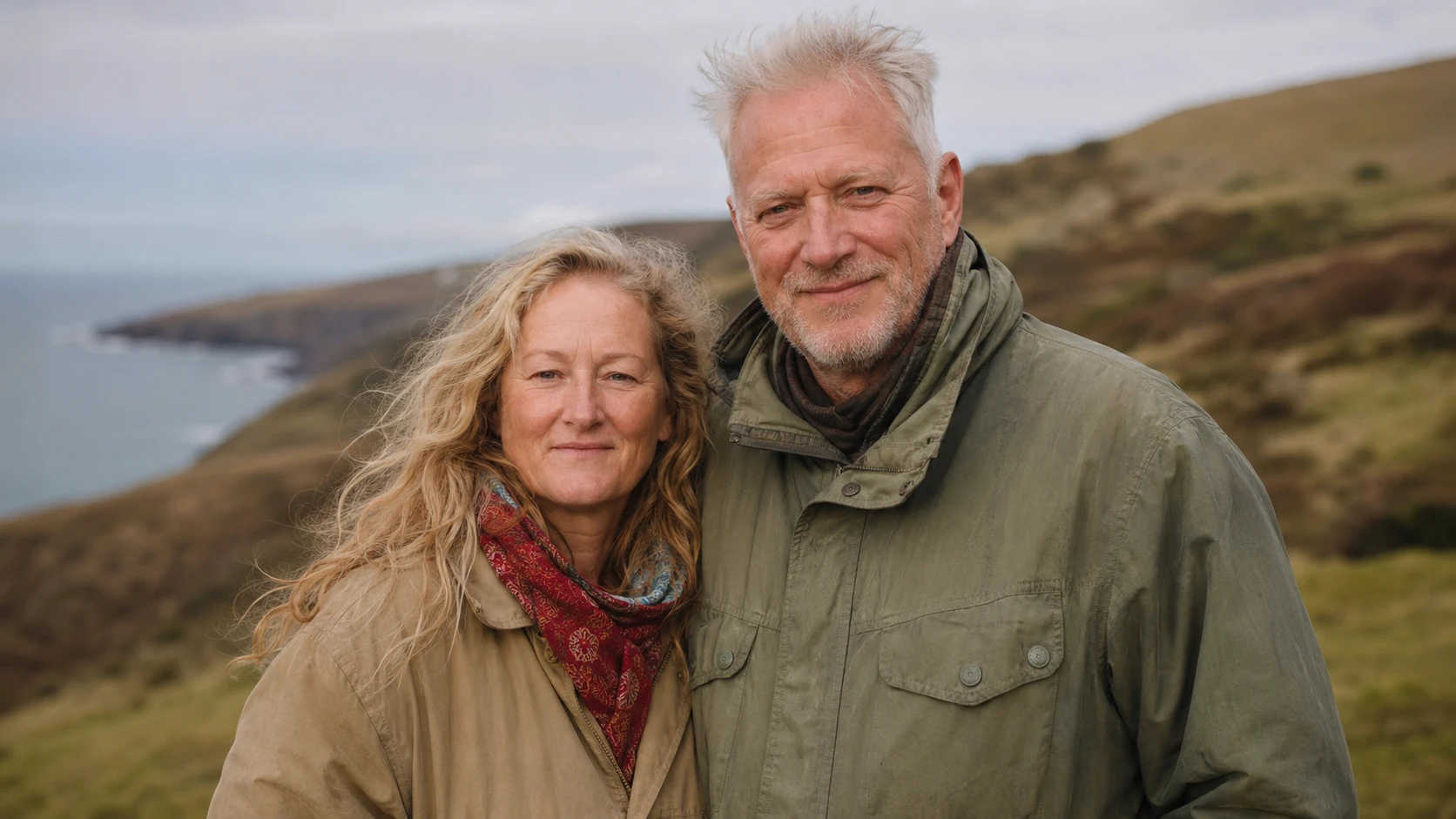
Raynor Winn’s marriage to Moth Winn became central not only to her personal life but also to her literary identity. The couple had been together for decades before the events described in The Salt Path. They raised children and built a life in rural Wales and southwest England, living what appeared to be a relatively stable existence before a legal dispute and debt crisis pushed them into severe financial trouble.
Around the same time they lost their home, Moth Winn was diagnosed with corticobasal degeneration, often shortened to CBD. The illness is a progressive neurological condition that affects movement, coordination, and cognitive function. In The Salt Path, Raynor described the diagnosis as emotionally crushing, especially because it arrived while the couple was already trying to cope with homelessness and uncertainty.
Instead of separating under pressure, the couple chose an unusual response. With limited money and few clear options, they decided to walk the 630-mile South West Coast Path, carrying only essentials in backpacks and sleeping outdoors or in temporary accommodation when possible. That journey eventually became the foundation of the memoir that introduced Raynor Winn to a worldwide audience.
The Writing of The Salt Path
Published in 2018, The Salt Path quickly stood out in the crowded memoir market because it blended several genres at once. It was part travel writing, part survival story, part love story, and part meditation on illness and belonging. Readers who expected a simple walking memoir often found something more emotionally raw and socially grounded.
The book followed Raynor and Moth as they traveled through Cornwall, Devon, and Dorset while trying to survive with very little money. Winn described encounters with strangers, difficult weather conditions, physical exhaustion, and the emotional strain of becoming invisible within society after losing a home. But here’s the thing: the memoir also carried moments of humor, resilience, and unexpected freedom that made it feel hopeful rather than hopeless.
Critics responded warmly to the honesty and observational detail in the writing. The memoir was shortlisted for several major awards, including the Costa Biography Award and the Wainwright Prize. In 2019, Winn won the Royal Society of Literature’s Christopher Bland Prize, an award created for writers who published their first work later in life.
Literary Success and Expanding Career
The success of The Salt Path dramatically altered Raynor Winn’s professional life. The memoir became a bestseller in the United Kingdom and later expanded internationally through translations and foreign rights deals. According to official publisher information, Winn’s books eventually sold more than two million copies in English alone, a remarkable figure for literary nonfiction and nature memoir.
That readership allowed Winn to continue writing full-time. Her second memoir, The Wild Silence, explored the aftermath of the coast walk and the couple’s attempt to rebuild a home and sense of identity after years of instability. The book also focused heavily on Moth’s illness and the emotional effects of living with long-term uncertainty.
In 2022, Winn published Landlines, another work centered around walking and emotional recovery. This time, the narrative followed a long-distance journey across Scotland. By that stage, she was no longer simply a first-time memoirist with one successful book. She had become an established literary figure associated with nature writing, endurance, and stories about human resilience.
Raynor Winn Net Worth and Sources of Income
Raynor Winn’s exact net worth has never been officially disclosed, but several factors help explain why public curiosity about her finances has grown. Bestseller status alone can create meaningful income, especially when combined with translation rights, audiobooks, festival appearances, film adaptation deals, and continued international sales.
That said, there is no confirmed figure showing how much money Winn personally earned from her books. Many celebrity net worth websites publish estimates without sourcing financial records, tax filings, or publishing contracts. Those numbers should be treated cautiously because publishing income is more complicated than readers often realize.
Authors do not receive the full retail value of every book sold. Royalties are usually a percentage of publisher earnings after retailer discounts and production costs. Agents also take commissions, and taxes significantly reduce final income. Even successful writers with millions of books sold may earn far less than public assumptions suggest.
Still, the commercial scale of Winn’s success cannot be ignored. Reports connected to publishing data suggested that The Salt Path and her later books generated millions of pounds in retail sales. Combined with speaking engagements, literary festivals, media appearances, and adaptation rights, Winn likely earned far more than the average British author.
Most realistic estimates place Raynor Winn’s net worth somewhere in the low millions, although no precise figure has been verified publicly. The truth is, only Winn herself, her accountants, publishers, and agents would know the complete financial picture.
Film Adaptation and Wider Fame
One of the biggest developments in Raynor Winn’s career came with the adaptation of The Salt Path into a feature film. The project attracted immediate attention because of the emotional weight of the source material and the casting of Gillian Anderson and Jason Isaacs as Raynor and Moth Winn.
For authors, film adaptations can create both financial and cultural changes. Beyond direct rights payments, adaptations often introduce books to entirely new audiences. Older titles return to bestseller charts, international sales rise again, and authors receive another wave of interviews and public attention.
The film version of The Salt Path also elevated Winn’s visibility outside literary circles. Before the adaptation, she was widely respected among readers of memoir and nature writing. After the film announcement, she became recognizable to a broader mainstream audience who may never have encountered the original book.
What’s surprising is how naturally Winn’s story translated to cinema. The emotional stakes were already deeply visual: long coastlines, physical hardship, illness, uncertainty, and a marriage tested by pressure. Those elements made the memoir attractive material for filmmakers looking for emotionally grounded human drama.
Public Controversy and Media Scrutiny
Raynor Winn’s public reputation changed sharply in 2025 after investigative reporting raised questions about parts of the story presented in The Salt Path. The reporting examined details surrounding the loss of the couple’s home and aspects of Moth Winn’s illness history. The allegations received widespread media attention because the memoir had long been promoted as a true account of homelessness and survival.
Winn strongly disputed several claims and defended the honesty of her work. She publicly rejected accusations that key elements of the memoir were fabricated and released supporting medical information connected to Moth’s diagnosis. The situation became emotionally charged because many readers felt deeply connected to the story on a personal level.
The controversy also affected professional plans. Penguin delayed publication of Winn’s upcoming book On Winter Hill while debate around the memoir continued publicly. Literary events connected to the author reportedly faced cancellations and refunds as media scrutiny intensified.
That said, the situation remained complicated rather than fully resolved. Some readers continued supporting Winn and defending the emotional truth of the memoir, while others questioned whether parts of the public narrative had been presented too simply. The debate highlighted the fragile relationship between memoir, memory, public trust, and commercial success.
Writing Style and Cultural Influence
Raynor Winn became part of a wider British literary movement that reconnects walking, nature, and personal recovery. Her work often sits alongside writers who explore emotional healing through physical journeys across real landscapes. But her voice remained distinct because she combined nature writing with direct experiences of poverty, instability, and illness.
Readers frequently describe her prose as calm, observant, and emotionally accessible. She avoids overly academic language and writes in a style that feels grounded in physical experience. Small details matter in her books: weather patterns, aching feet, conversations with strangers, and the emotional effect of sleeping outdoors without certainty about the next day.
The success of The Salt Path also helped renew public interest in long-distance walking routes across Britain. Tourism connected to the South West Coast Path reportedly increased after the memoir’s popularity expanded. Many readers said the book encouraged them to spend more time outdoors or rethink assumptions about homelessness and security.
Her cultural influence extends beyond literature because her story touched several social themes at once. Housing insecurity, chronic illness, aging, financial collapse, marriage, and environmental connection all became part of the public conversation surrounding her books.
Personal Life Away From the Spotlight
Despite her literary fame, Raynor Winn has generally maintained a fairly private personal life outside the themes explored in her books. She rarely presents herself as a celebrity figure in the traditional sense. Interviews often focus more on walking, writing, illness, or environmental issues than luxury lifestyles or fame.
Her relationship with Moth Winn remains central to her public image. Readers often see the couple as symbols of endurance and emotional partnership because their story depends so heavily on surviving hardship together. The memoirs repeatedly return to questions of loyalty, caregiving, and shared resilience.
Public details about their children remain relatively limited, which appears intentional. Winn has spoken about family life in broad terms but has mostly protected her children from public exposure. That restraint stands out at a time when many public figures build careers around constant visibility and personal disclosure.
The truth is, Raynor Winn’s appeal partly comes from the fact that she still feels like a writer first rather than a media personality. Even after major success, her public identity remains tied to walking boots, coastlines, notebooks, and lived experience rather than celebrity culture.
Awards, Recognition and Industry Standing
Raynor Winn’s literary standing became firmly established after the success of her debut memoir. Winning the Royal Society of Literature’s Christopher Bland Prize gave her credibility within British literary circles, while award shortlists introduced her work to readers who may not normally choose travel memoirs or nature writing.
Her books also performed strongly with general audiences rather than only critics. That balance between literary respect and commercial appeal is difficult to achieve in nonfiction publishing. Many memoirs receive critical praise but limited sales, while others sell well without earning long-term literary attention. Winn managed both for several years.
She also became a regular presence at literary festivals and public events across the UK. Audiences often responded to the emotional honesty of her story and the visible connection between her writing and lived experience. Her talks frequently explored themes of resilience, homelessness, aging, and the emotional effect of nature.
Even after public controversy complicated her reputation, her influence within modern British memoir writing remains significant. The Salt Path became one of the defining British nonfiction successes of its era, especially within nature and travel memoir publishing.
Where Raynor Winn Is Now
Raynor Winn remains closely associated with The Salt Path, even as her career expanded beyond that single memoir. Public discussion about her now exists in two parallel forms. One focuses on her literary success, emotional storytelling, and influence within contemporary nature writing. The other centers on disputes surrounding the accuracy of parts of her memoir and the public response that followed.
Professionally, the delay of On Winter Hill created uncertainty about the next stage of her publishing career. Still, her books continue to sell, and the film adaptation of The Salt Path introduced her story to another large audience. Whether her public reputation fully recovers may depend on future reporting, reader trust, and how the literary world continues responding to the controversy.
Personally, she remains tied to the image that first connected her to readers: a woman walking long coastal paths beside her husband while trying to rebuild a life after financial collapse. That image became powerful because it reflected fears many people quietly carry about illness, insecurity, and losing stability later in life.
What happens next for Raynor Winn may shape how her story is remembered. Some readers will continue seeing her as a voice of endurance and emotional honesty. Others will remain skeptical after later reporting challenged parts of the narrative. Either way, her impact on British memoir writing is already firmly established.
Frequently Asked Questions
What is Raynor Winn’s estimated net worth?
Raynor Winn’s exact net worth has never been publicly confirmed. Based on bestselling book sales, film adaptation rights, public appearances, and international publishing success, many observers believe she is financially comfortable and likely worth several million pounds. Still, those figures remain estimates rather than verified financial disclosures.
Why is Raynor Winn famous?
Raynor Winn became famous after publishing The Salt Path in 2018. The memoir described how she and her husband lost their home and decided to walk the South West Coast Path after Moth Winn was diagnosed with corticobasal degeneration. The book became a bestseller and later inspired sequels and a film adaptation.
Is The Salt Path based on a true story?
The Salt Path was published and marketed as a memoir based on real events. In 2025, investigative reporting challenged some parts of the story, particularly details surrounding the couple’s housing situation and aspects of Moth Winn’s illness history. Winn disputed several of those claims and defended the truth of her memoir publicly.
Who is Raynor Winn’s husband?
Raynor Winn’s husband is Moth Winn. He became widely known through The Salt Path and later memoirs that documented the couple’s walking journeys and experiences living with chronic illness. Their relationship remains central to Raynor Winn’s writing and public identity.
How many books has Raynor Winn written?
Raynor Winn is best known for The Salt Path, The Wild Silence, and Landlines. She also announced another book titled On Winter Hill, although publication plans were later delayed following public controversy connected to her memoir.
Was The Salt Path turned into a movie?
Yes. The Salt Path was adapted into a feature film starring Gillian Anderson and Jason Isaacs as Raynor and Moth Winn. The adaptation expanded public awareness of the memoir far beyond literary audiences.
Conclusion
Raynor Winn’s story remains unusual because it combines literary success with deep personal vulnerability. Readers first met her not as a celebrity or public intellectual, but as a woman trying to survive financial collapse while caring for a seriously ill husband. That emotional foundation gave The Salt Path a connection with audiences that many memoirs never achieve.
Her later success changed her public standing dramatically. Bestseller lists, literary awards, international sales, and film adaptation deals turned her into one of the most recognizable British nonfiction writers of recent years. Financially, that success almost certainly improved her life in major ways, even if the exact numbers remain private.
At the same time, public scrutiny and controversy complicated the image many readers once accepted without question. Questions about memoir, truth, memory, and storytelling became part of the conversation around her work. For some readers, those debates altered the emotional meaning of her books. Others continued valuing the writing and its themes regardless of disputed details.
What remains undeniable is Raynor Winn’s influence on modern memoir and nature writing. Her books captured fears about security, aging, illness, and belonging that resonate far beyond the literary world. Whether readers approach her story with admiration, skepticism, or a mix of both, her work continues to occupy a powerful place in contemporary British nonfiction.
