

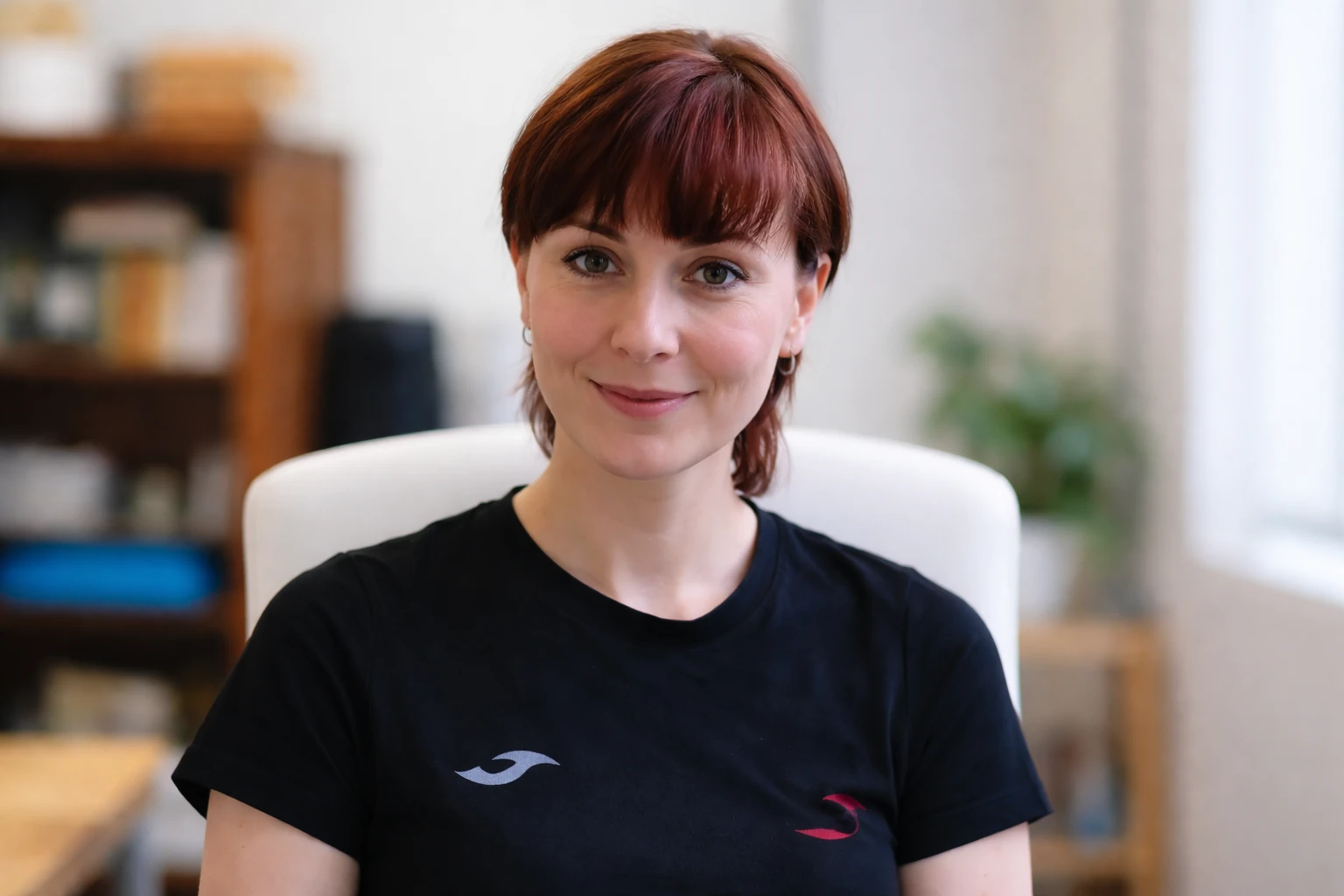
Yvette Amos did not set out to become a recognizable name. Yet in early 2021, at the height of pandemic-era remote broadcasting, she became one of the internet’s most unexpected viral figures—her brief appearance on BBC Wales Today turning into a global talking point for reasons she likely never intended. The moment was fleeting, almost incidental, but the afterlife of that broadcast has proven unusually durable, raising questions not only about Amos herself but about how modern audiences consume, distort, and remember ordinary people thrust into the spotlight.
To understand Yvette Amos is to begin with that moment—and then to move carefully beyond it, separating what is verifiable from what has been casually assumed, repeated, and embellished over time.
Early Life and Background
Publicly confirmed information about Yvette Amos’s early life remains limited, and that scarcity shapes any responsible biography of her. Unlike public figures who build careers in media, politics, or entertainment, Amos appears to have lived most of her life outside the spotlight. There is no widely documented record of her childhood, family background, or upbringing in major national publications.
What can be said with reasonable confidence is that she is associated with Wales, particularly Cardiff, based on both her BBC Wales appearance and her name appearing in academic and research contexts linked to Welsh institutions. That geographic connection places her within a specific cultural and social environment, one shaped by a mix of post-industrial economic challenges, strong community ties, and a vibrant public sector, including universities and health research bodies.
The absence of detailed early-life reporting is not unusual for someone who was not previously a public figure. It does, however, create a vacuum that later internet content has often filled with speculative or inconsistent claims. Some sites attribute specific schools, degrees, or personal milestones to Amos, but these are rarely backed by primary sources. A careful reading suggests that much of that material has been recycled rather than independently verified.
Education and Possible Academic Links
One of the few areas where Amos’s name appears in documented records is in connection with academic and public health research. A Cardiff University-affiliated newsletter from 2017 includes a Yvette Amos as part of work related to alcohol treatment services, suggesting involvement in research or project coordination. This is not a passing mention; it places her within a structured institutional setting tied to public health initiatives.
Further evidence appears in a 2020 report funded by the National Institute for Health Research (NIHR), which examines alcohol intoxication management services in the UK. A Yvette Amos is listed among the contributors, affiliated with Cardiff University’s Violence Research Group. The report indicates participation in data collection, analysis, and report writing, suggesting a substantive role rather than a nominal inclusion.
There is also a peer-reviewed academic paper connected to the same research area that includes her name among the authors. The study explores how specialized services can manage alcohol-related cases outside traditional emergency departments, aiming to reduce strain on hospitals. These are serious, policy-relevant topics, far removed from the lighthearted internet fame that later attached to her name.
That said, an important caveat remains. While the name, location, and timeline strongly suggest that the researcher and the BBC interview guest are the same person, there is no widely cited primary confirmation linking the two identities. Most later articles treat this connection as established fact, but responsible reporting leaves room for uncertainty where direct confirmation is absent.
The BBC Wales Interview That Changed Everything
On January 26, 2021, Yvette Amos appeared on BBC Wales Today in a segment discussing unemployment during the COVID-19 pandemic. At the time, Wales was experiencing a measurable rise in joblessness, with official statistics showing an unemployment rate increase and a drop in employment levels. The segment aimed to humanize those numbers by giving voice to individuals affected by the economic downturn.
Amos’s contribution fit squarely within that framework. She spoke about her own experience of unemployment, offering a personal perspective on a widespread issue. It was the kind of interview that regional news programs regularly produce—grounded, sincere, and focused on real-life impact.
But here’s what changed everything. Viewers noticed something in the background of her video call: an object on a shelf that appeared explicit in shape. Within minutes of the broadcast, screenshots began circulating on social media. The focus shifted almost entirely from what Amos was saying to what was behind her.
The speed of the reaction was striking. Social media platforms filled with jokes, commentary, and speculation, and the clip quickly spread beyond Wales to a global audience. In an era when remote interviews had become the norm, audiences were already attuned to the quirks and surprises of home-based broadcasting. Amos’s background became one of the most talked-about examples.
Viral Fame in the Age of Zoom
To understand why this moment resonated so widely, it helps to consider the broader context. By early 2021, millions of people were living their lives through screens, conducting work meetings, interviews, and even social gatherings via video calls. The boundary between private and public space had blurred in ways that were both practical and unsettling.
In that environment, backgrounds took on new significance. Bookshelves, wall art, furniture, and personal items became part of the visual narrative of every interaction. Viewers were no longer just listening to what people said; they were scanning the frame for details, often subconsciously forming judgments based on what they saw.
Amos’s interview became a perfect storm of these dynamics. The object in question was visually striking enough to draw attention, and the setting—a serious news segment—heightened the contrast. The result was a moment that felt both accidental and oddly emblematic of the times.
What’s surprising is how quickly the substance of the interview was eclipsed. The discussion of unemployment, which had prompted the segment, faded into the background of public memory. What remained was a single image, endlessly shared and reinterpreted.
Public Reaction and Media Coverage
Mainstream media outlets quickly picked up the story, framing it as a lighthearted example of the unexpected moments that had become common during lockdown broadcasting. Coverage was generally measured, noting the humor of the situation without veering into personal criticism of Amos herself.
The tone of online reaction, however, varied widely. While many users treated the moment as harmless comedy, others engaged in speculation about the object’s nature or Amos’s intentions. Some suggested it was a deliberate joke, while others argued it was an oversight. There is no evidence to support the idea that it was intentional, and most reporting treated it as accidental.
The distinction matters. In the absence of a public statement from Amos clarifying the situation, the most responsible interpretation is the simplest one: a private object happened to be visible during a live interview, and viewers noticed.
Life Outside the Spotlight
After the initial burst of attention, Yvette Amos largely disappeared from public view. Unlike many viral figures who capitalize on sudden fame, she did not appear to pursue media opportunities, build a public profile, or engage extensively with the narrative that had formed around her.
This choice, whether deliberate or circumstantial, has shaped how her story is told. Without ongoing public appearances or interviews, there is little new material to add to the original account. As a result, many later articles rely heavily on the same handful of facts, often supplemented with speculation or recycled details.
There is no widely verified information about her current occupation, personal relationships, or daily life. Some websites claim she returned to academic or research work, while others suggest she remained outside the public sphere entirely. Without primary sources, these claims remain unconfirmed.
What is clear is that Amos did not become a traditional public figure. Her name remains searchable, but her personal narrative has not expanded in the way that often follows viral fame.
The Question of Identity and Privacy
Yvette Amos’s story raises broader questions about identity and privacy in the digital age. She did not seek fame, yet a single moment turned her into a subject of widespread attention. The internet’s response illustrates how quickly a person can become a symbol, detached from their original context.
The tension between public curiosity and private life is particularly evident in the way her biography has been constructed online. In the absence of detailed reporting, various sites have filled in the gaps with assumptions, presenting them as facts. This creates a version of Amos that may feel complete but is not necessarily accurate.
The truth is more restrained. We know the moment that made her visible. We have some evidence of professional work that may belong to her. Beyond that, much remains unknown, and that uncertainty should be acknowledged rather than smoothed over.
Cultural Impact and Lasting Recognition
Despite the limited scope of her public record, Yvette Amos has achieved a form of cultural recognition that extends beyond her individual story. Her name is often referenced in discussions about remote work, video-call etiquette, and the unpredictable nature of live broadcasting.
The moment has also become part of a broader collection of pandemic-era media incidents that captured the oddities of life under lockdown. These moments, often humorous, also serve as reminders of how quickly norms shifted during that period.
Amos’s experience highlights how attention operates online. A single visual detail can outweigh context, intention, and even the purpose of a broadcast. It is a reminder that visibility does not always align with significance, and that what people remember is not always what was meant to matter.
Where Yvette Amos Is Now
As of the most recent publicly available information, Yvette Amos has not re-emerged as a public figure. There are no widely reported interviews, projects, or appearances that update her story in a definitive way. This absence is itself a form of resolution.
It suggests that she has either chosen to step away from public attention or simply returned to a life that does not involve media visibility. Both possibilities are consistent with the limited evidence available.
In a media environment that often rewards continued exposure, her disappearance from the spotlight stands out. It underscores the difference between being seen and choosing to be known.
Frequently Asked Questions
Who is Yvette Amos?
Yvette Amos is best known for her appearance on BBC Wales Today in January 2021, where she discussed unemployment during the COVID-19 pandemic. The interview went viral due to an unexpected object visible in the background, which drew widespread attention online.
Why did Yvette Amos become famous?
She became widely recognized after viewers noticed an explicit-looking object on a shelf behind her during the interview. The moment quickly spread on social media, turning a routine news segment into a viral clip.
What was Yvette Amos’s profession?
There is some evidence linking a Yvette Amos to public health research associated with Cardiff University, particularly in studies related to alcohol treatment services. However, it is not definitively confirmed that this is the same individual who appeared on BBC Wales Today.
Did Yvette Amos respond to the viral moment?
There is no widely verified public statement from Amos addressing the incident. Some sources claim she commented, but these accounts are inconsistent and not supported by strong primary evidence.
Is Yvette Amos active on social media?
There is no confirmed public social media presence associated with her that has been widely reported or verified. Any accounts claiming to represent her should be treated cautiously unless backed by credible sources.
What is Yvette Amos doing now?
Her current activities are not publicly documented in reliable sources. It appears that she has remained out of the public eye since the viral moment in 2021.
Conclusion
Yvette Amos’s story is both simple and complex. At its core, it is about a single moment—an ordinary interview that became extraordinary through circumstance. But the layers that have formed around that moment reveal much about how modern media works.
Her experience shows how quickly attention can shift, how easily narratives can form without firm evidence, and how difficult it can be to maintain privacy once a moment becomes public. It also highlights the limits of what we can truly know about someone who did not choose to be a public figure.
What remains is not a traditional biography but a snapshot of a specific time and place. Yvette Amos matters not because of a long list of achievements or public roles, but because her story captures something recognizable about the way we live and watch each other now.
In that sense, her name continues to circulate not as a record of a life fully documented, but as a reminder of how a single image can outlast the context that created it.
