

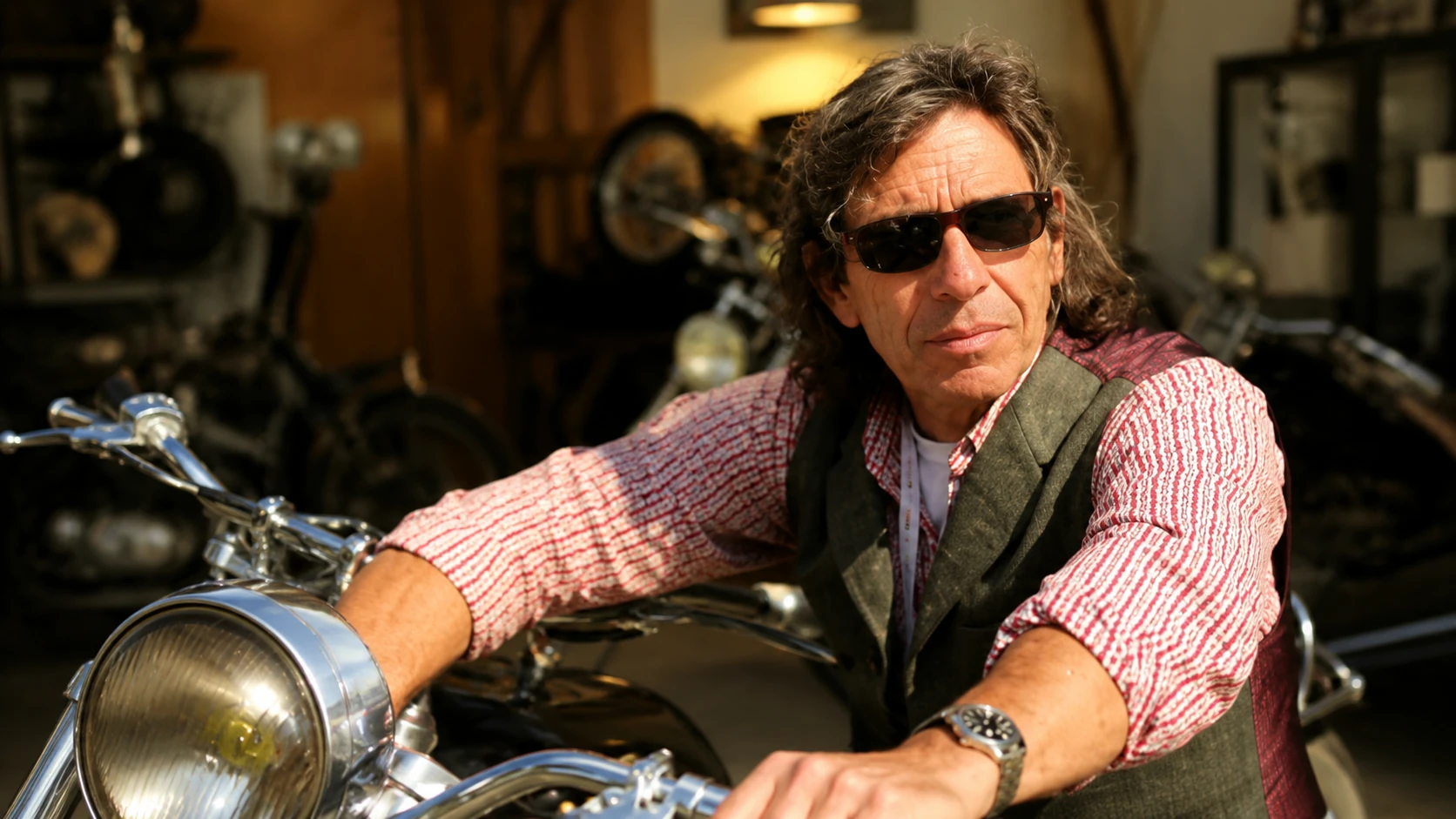
Guy Willison has spent most of his life around motorcycles, but he never built his reputation through noise or celebrity theatrics. Long before television audiences knew him as “Skid,” the dry-humored mechanic and designer from The Motorbike Show and Shed & Buried, he was riding through London traffic as a despatch rider, tuning bikes in workshops, and shaping ideas that would eventually become some of Britain’s most recognizable custom motorcycles.
To motorcycle enthusiasts, Willison represents something increasingly rare: a builder whose credibility comes from years of riding, repairing, designing, and understanding machines from the inside out. His name became more widely known through his work with television presenter Henry Cole and through 5Four Motorcycles, the company behind a series of limited-edition Honda specials that mixed classic endurance-racing style with modern engineering. Yet despite his visibility in British motorcycle culture, Willison has remained unusually private, which is part of why so many people search for him today.
Readers usually want to know the same things. Who exactly is Guy Willison? How old is he? What did he do before television? Is he still involved with 5Four? And what explains the respect he commands among riders and builders alike? The answers are less about fame than about consistency. Over several decades, Willison built a career that moved from despatch riding to engineering, from music-industry technical work to television restoration shows, and from workshop experiments to officially backed production motorcycles sold through Honda dealerships.
Early Life and Family Background
Guy Willison was born in October 1962 in the United Kingdom. Public records confirm his birth month and year, though he has kept most details about his early family life away from public discussion. Unlike many television personalities who turn their personal stories into part of their brand, Willison has generally preferred to let the motorcycles speak for themselves.
What is known is that motorcycles entered his life early and stayed there. He has spoken publicly about moving to London at the age of 18 and becoming a motorcycle despatch rider during an era when London’s courier culture was fast, rough, and physically demanding. Despatch riding in the late 1970s and early 1980s was not a glamorous profession. Riders spent long hours crossing the city in every kind of weather, relying on speed, instinct, and mechanical reliability to survive the day.
Those years shaped much of Willison’s outlook. He later said he rode more than a million miles as a despatch rider, an extraordinary figure that helps explain his practical approach to motorcycles. His machines tend to emphasize rider feel, handling, comfort, and purposeful design rather than exaggerated styling. That preference did not come from theory. It came from living on motorcycles for years.
The name “5Four,” which later became the identity of his company, reportedly came from his despatch-rider call sign. What sounds today like a carefully planned brand name actually started as a working-life detail from the streets of London. That origin story matters because it reflects the broader truth about Willison’s career: many of the things that later became commercially successful began as practical parts of his everyday life.
Learning Motorcycle Engineering
Willison’s interest in bikes quickly moved beyond riding alone. He studied motorcycle engineering at Merton Technical College, where he developed the mechanical grounding that would shape the rest of his professional life. Technical training gave him a deeper understanding of how motorcycles behaved, but more importantly, it taught him how to solve problems rather than simply admire machines.
After college, he worked on motorcycles in workshops and dealerships, including time with a Honda dealership in Ruislip. He also serviced despatch riders’ motorcycles from a railway arch in Hammersmith, which placed him directly inside London’s courier culture. The riders who depended on those bikes needed machines that worked every day, often under punishing conditions. Repairs had to be fast, practical, and reliable.
Not many people know this, but Willison also spent part of his career working with motorcycles imported from the United States, redesigning and tuning them for British riders. That experience broadened his understanding of how motorcycles could be adapted, personalized, and improved for different purposes. It also gave him experience balancing performance with appearance, something that later became central to his design philosophy.
Those early years rarely appear in flashy television biographies, yet they explain why other builders and riders take him seriously. Many custom-bike personalities arrive through media first and mechanical work second. Willison’s path was the opposite. He built technical credibility long before television introduced him to a wider audience.
The Friendship With Henry Cole
One of the most important relationships in Guy Willison’s public life has been his long friendship and professional partnership with television presenter Henry Cole. The two men knew each other well before viewers saw them together on screen, and their shared background in motorcycles created an easy chemistry that later became part of several successful television projects.
At one stage, Willison trained as a sound recordist and worked freelance in the music industry, including projects connected to major touring bands. That career shift surprised many people who only know him from motorcycle television, but it reflected his wider technical interests and adaptability. Even during those years, though, he continued building motorcycles and working on engineering projects.
The partnership with Cole eventually brought those worlds together. Cole’s enthusiasm for storytelling, travel, restoration, and machinery blended naturally with Willison’s quieter workshop-based expertise. On screen, the contrast worked well. Cole often acted as the enthusiastic frontman, while Willison provided practical judgment, dry humor, and the mechanical reality check.
That relationship became one of the foundations of British motorcycle television over the next decade. Viewers trusted the dynamic because it felt genuine rather than manufactured. The conversations sounded like the exchanges of people who had spent years around each other, not presenters reading scripted lines.
Television Fame and The Motorbike Show
Guy Willison became more widely recognized through The Motorbike Show, which debuted in 2011 and grew into one of Britain’s best-known motorcycle television programs. The series combined travel, restoration, motorcycle history, and riding culture, offering something broader and more relaxed than traditional motoring television.
Willison’s role on the show centered largely around restorations and technical projects. He was not presented as a celebrity mechanic performing dramatic reveals for the camera. Instead, he came across as someone who genuinely understood how motorcycles worked and what made them appealing to riders.
That authenticity became his defining television quality. He spoke plainly, avoided exaggerated performance, and often approached motorcycles with the mindset of a rider rather than a collector. Audiences responded to that approach because it felt credible. Even people without deep mechanical knowledge could tell they were watching someone with real workshop experience.
His television profile expanded through shows such as Shed & Buried and Find It Fix It Flog It. In these programs, Willison helped uncover neglected vehicles, restore old machines, and evaluate projects that many viewers would overlook entirely. He brought a sense of practicality to the shows, often balancing enthusiasm with realism about cost, effort, and value.
The truth is, Willison’s television appeal comes partly from restraint. He does not dominate scenes or force attention toward himself. Instead, he tends to draw viewers in through competence and quiet confidence. That can be more compelling than loud presentation, especially in a genre filled with exaggerated personalities.
Building Gladstone Motorcycles
Before 5Four became widely associated with his name, Willison worked closely with Henry Cole on Gladstone Motorcycles. The project reflected both men’s affection for classic British motorcycle culture while also giving Willison an opportunity to shape complete machines according to his own ideas.
One of the best-known projects from that period was the Gladstone No.1, a hand-built motorcycle produced in a very limited run. Willison reportedly built the motorcycles himself in a workshop environment that was far removed from mass production. That approach gave the bikes an artisan quality that appealed strongly to collectors and enthusiasts.
Another important project was the Gladstone Red Beard, developed with engineer and television personality Sam Lovegrove. The motorcycle later became associated with a British land speed record for a vintage 350cc machine. Projects like these reinforced Willison’s standing as more than a television figure. He was actively involved in building motorcycles that performed in the real world.
What’s surprising is how much these smaller projects helped prepare him for larger manufacturer collaborations later on. Building a one-off custom motorcycle requires creativity and skill, but producing machines that can be repeated consistently demands something different. It requires discipline, design clarity, and attention to detail across every stage of construction.
The Norton Commando 961 Street
One of the most important moments in Guy Willison’s career came through his involvement with Norton Motorcycles and the Norton Commando 961 Street. The project gave him the chance to redesign and reinterpret one of Britain’s most iconic motorcycle names.
The Norton Commando already carried enormous emotional weight among motorcycle enthusiasts. Any attempt to redesign it came with expectations and scrutiny. Willison approached the project by refining the machine rather than radically reinventing it, creating a version that felt cleaner, more modern, and more usable while still respecting Norton’s visual identity.
The limited production run reportedly sold out quickly, helping establish his reputation beyond television audiences. More importantly, it demonstrated that manufacturers and buyers trusted his design instincts. That level of trust is difficult to earn in the motorcycle industry, where authenticity matters deeply and audiences can quickly reject work that feels superficial.
Willison later described the Norton project as the realization of a childhood ambition. He had wanted to see one of his motorcycle designs enter genuine production since he was young, and the Commando project helped turn that ambition into reality. It also opened the door to what became the most commercially visible stage of his career.
Founding 5Four Motorcycles
Guy Willison founded 5Four Motorcycles in 2018, turning years of design ideas and workshop experience into a dedicated brand. The company focused on limited-edition motorcycles that blended modern engineering with hand-built craftsmanship and racing-inspired aesthetics.
The philosophy behind 5Four was simple. The bikes were intended “for the few, not the many,” emphasizing exclusivity, individuality, and rider connection rather than mass-market production. But here’s the thing. The appeal of 5Four motorcycles was not based only on scarcity. Riders were drawn to the fact that the machines still felt usable and grounded in real-world riding experience.
The company’s major breakthrough came through its partnership with Honda. Rather than building motorcycles entirely from scratch, 5Four worked from Honda production platforms and reshaped them through custom bodywork, revised ergonomics, upgraded finishes, handcrafted details, and visual references to endurance-racing history.
The first major collaboration, the CB1100 RS 5Four, arrived as a limited-edition reinterpretation of Honda’s retro-styled CB1100 platform. Inspired partly by classic Honda endurance racers, the motorcycle featured handcrafted aluminum components, custom upholstery, upgraded exhausts, and individually numbered production plaques.
The project attracted major attention because it carried official Honda backing. Buyers could order the motorcycles through Honda dealerships, giving the bikes an unusual mix of custom individuality and manufacturer legitimacy. That balance became one of 5Four’s defining strengths.
Honda Collaborations and Industry Reputation
The success of the CB1100 RS 5Four led to additional collaborations, including the CB1000R 5Four and later projects connected to the Honda Hornet range. Each motorcycle followed a similar philosophy: preserve the strengths of the base machine while refining the rider experience and visual identity.
Willison’s designs often focused on rider touchpoints. Seats, handlebars, mirrors, fairings, and exhaust systems were treated as part of a complete sensory experience rather than isolated modifications. The motorcycles looked distinctive without becoming impractical.
Motorcycle journalists generally responded positively to the projects because they avoided one of the common problems of custom motorcycles: sacrificing usability for appearance. The bikes still behaved like polished modern Hondas, which made them enjoyable to own beyond simple display value.
Collectors also responded strongly to the numbered production runs. Limited-edition motorcycles carry obvious appeal, but the connection to Willison’s television profile and workshop reputation added another layer of interest. Buyers were not only purchasing motorcycles; they were buying into a recognizable design identity shaped by a real builder.
His standing within British motorcycle culture grew steadily during this period. Willison became associated with a style of motorcycle building that respected history without becoming trapped by nostalgia. The motorcycles nodded toward classic endurance racers and café-racer traditions while remaining rooted in contemporary engineering.
Personal Life and Public Privacy
Despite years in television and motorcycle media, Guy Willison has remained notably private about his personal life. Publicly available information about his marriage, partner, or children is limited, and he has generally avoided turning family matters into public content.
That privacy has led to curiosity online, especially as his television profile increased. Search traffic often includes questions about his wife, family life, health, and finances. Yet reliable information remains limited, and many internet claims about his personal relationships appear unsupported or speculative.
What can be said with confidence is that Willison has consistently presented himself through work rather than personal branding. Unlike many television personalities who build public identity around lifestyle exposure, he has kept the focus on motorcycles, design, and engineering.
That decision may actually strengthen his appeal. Viewers often feel they are watching a real craftsman rather than someone carefully managing celebrity image. His privacy creates a degree of mystery, but it also protects the credibility that comes from appearing grounded and authentic.
Business Interests and Net Worth
Guy Willison’s income has likely come from several connected areas over the years, including motorcycle design, workshop projects, television appearances, production collaborations, consulting work, and branded motorcycle sales. Exact financial details are not publicly confirmed, and many online estimates of his wealth should be treated carefully.
Some websites speculate about his net worth, but few provide reliable sourcing or financial documentation. Without verified disclosure, any precise figure remains speculative. What is clearer is that his professional value comes from a rare combination of practical engineering knowledge, design credibility, and media recognition.
The commercial success of the Honda-backed 5Four projects almost certainly strengthened his standing within the industry. Limited-edition motorcycles can command premium prices, especially when tied to respected manufacturers and known builders. Still, Willison has never projected the image of a flamboyant celebrity entrepreneur.
His public identity remains rooted in workshops, garages, and motorcycles rather than luxury branding. That consistency matters because motorcycle audiences tend to distrust personalities who appear disconnected from actual riding culture.
Changes at 5Four and Recent Projects
Public company records show that Guy Willison ceased being a director of 5Four Motorcycles Limited in April 2023. That development created some confusion among followers of the brand, especially because official materials connected to later motorcycles continued to reference his involvement.
The distinction is important. A change in legal company status does not necessarily mean someone has stopped designing motorcycles or contributing creatively. In later promotional material connected to Honda collaborations, Willison still appeared closely associated with the building and assembly process.
Recent years have also seen continued television activity connected to the wider Motorbike Show world, including online and streaming-focused projects. Reports surrounding newer content suggest that Willison remains active in motorcycle media and workshop culture, even if his public appearances remain selective.
What’s interesting is that his reputation now extends beyond any single company or television series. Within British motorcycle culture, “Skid” has become shorthand for a certain type of builder: practical, experienced, understated, and deeply connected to real riding life.
Frequently Asked Questions
Who is Guy Willison?
Guy Willison is a British motorcycle designer, builder, and television personality best known for his work with 5Four Motorcycles and shows including The Motorbike Show and Shed & Buried. He is widely recognized by the nickname “Skid” and has built a strong reputation within British motorcycle culture through both workshop projects and manufacturer collaborations.
How old is Guy Willison?
Public company records show that Guy Willison was born in October 1962. As of 2026, he is 63 years old. He has remained active in motorcycle television and custom-bike projects well into his sixties.
Why is Guy Willison called Skid?
The nickname “Skid” has been associated with Willison for many years within motorcycle circles. His company name, 5Four, reportedly came from his old London despatch-rider call sign during his courier-riding years.
What is 5Four Motorcycles?
5Four Motorcycles is the motorcycle company founded by Guy Willison in 2018. The brand became known for limited-edition Honda-based motorcycles that combined handcrafted custom work with official manufacturer backing.
Is Guy Willison married?
Guy Willison has kept most details about his personal relationships private. There is no widely confirmed public information about his marriage or family life, and responsible reporting avoids treating online speculation as fact.
What TV shows has Guy Willison appeared in?
Willison is best known for appearances on The Motorbike Show, Shed & Buried, and Find It Fix It Flog It. His work on these programs helped introduce him to a much broader audience beyond dedicated motorcycle enthusiasts.
Is Guy Willison still involved with motorcycles today?
Yes. Although public company records show changes in his formal role at 5Four Motorcycles, recent motorcycle projects and television-related activity indicate that he remains active in motorcycle culture, design, and workshop work.
Conclusion
Guy Willison’s career makes more sense when viewed as a long chain of connected experiences rather than a sudden rise to television fame. The despatch-rider years, the engineering training, the workshop jobs, the music-industry technical work, and the restoration projects all fed into the builder people recognize today.
What separates him from many television personalities is that his credibility existed before the cameras arrived. Riders and mechanics respect him because his knowledge appears earned through repetition, mistakes, mileage, and years of practical work. That kind of reputation cannot be manufactured quickly.
His motorcycles reflect the same philosophy. They are rarely about excess or attention-seeking design. Instead, they focus on rider experience, craftsmanship, and mechanical honesty. Even his television presence carries that same grounded quality.
For many fans, Guy Willison represents a version of motorcycle culture that still values skill over image and experience over performance. In a world increasingly shaped by branding and fast visibility, that may be exactly why he continues to matter.
