

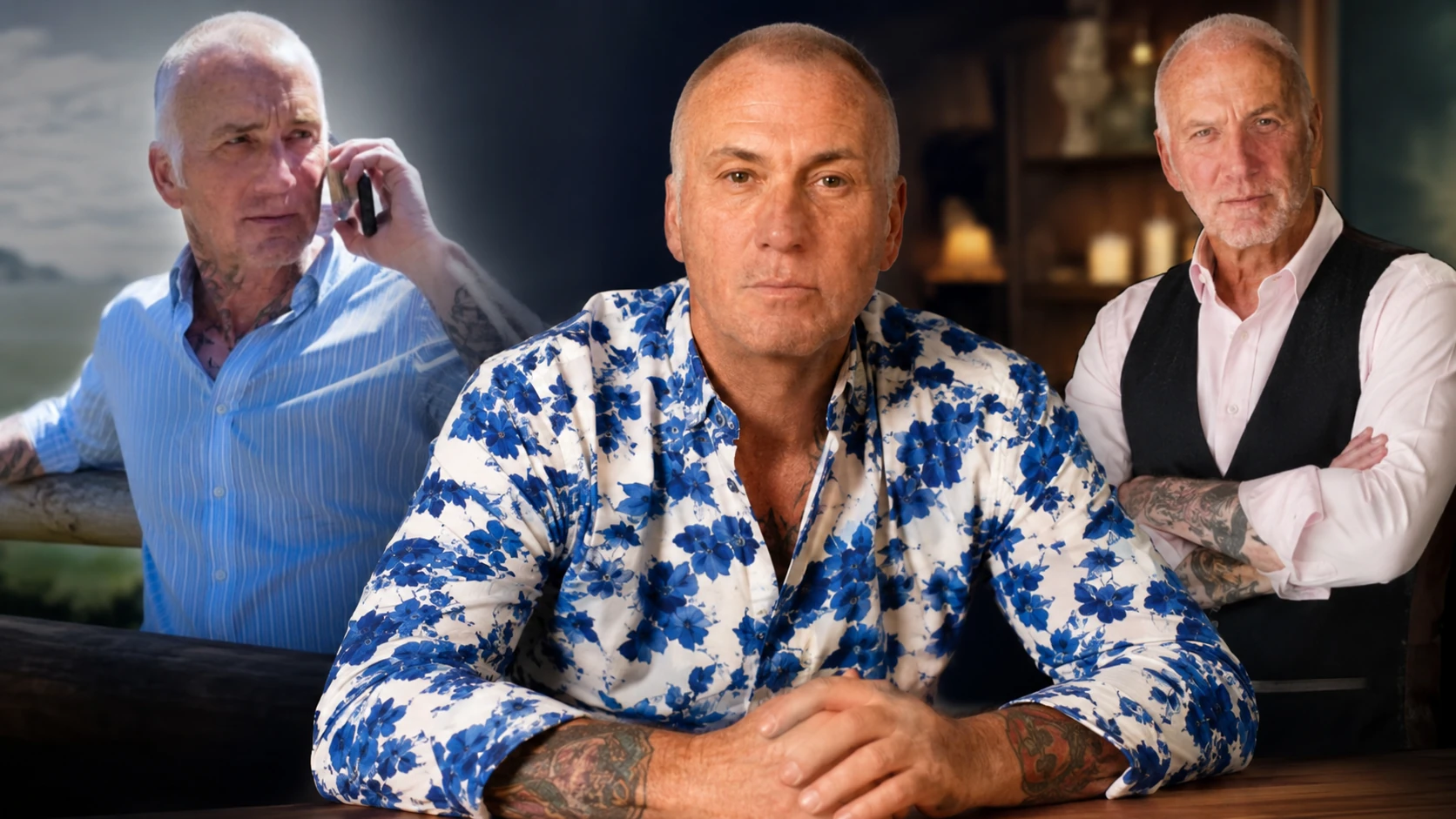
Ian Humphries is the kind of antiques dealer viewers remember before the bidding even starts. On television, where antiques experts are often imagined as formal, polished, and traditional, he cuts a different figure: experienced, relaxed, tattooed, and plainly comfortable in his own skin. That contrast is why so many people search for Ian Humphries tattoos, hoping to understand the man behind the visible ink and the career that made him familiar to daytime TV audiences.
Humphries is best known to many viewers as one of the dealers on BBC One’s The Bidding Room, the antiques show hosted by Nigel Havers. The programme places members of the public in front of dealers who compete to buy unusual, decorative, collectible, or sentimental items. Humphries stands out in that room not only because of his appearance, but because he brings the confidence of someone who has spent decades buying, selling, judging, and living with old objects.
His tattoos have become part of his public image, but they are not the whole story. The more interesting story is how a tattooed antiques dealer came to represent a broader shift in the antiques trade itself. Humphries shows that expertise does not have to look old-fashioned to be real, and that a person can respect history without dressing like a museum label.
Who Is Ian Humphries?
Ian Humphries is a British antiques dealer, television personality, auctioneer, and the owner of Manormonkeys Antiques. He has been publicly associated with the antiques trade for many years, with available professional profiles describing a career that reaches back to the mid-1980s. His work spans furniture, decorative antiques, vintage pieces, unusual finds, and objects with strong visual character.
For many viewers, his name became familiar through The Bidding Room. The show’s format suits dealers with clear instincts because they have to make quick decisions while explaining value to a general audience. Humphries’ manner on screen is direct and practical, which helps make antiques feel less intimidating to viewers who may not know the difference between a reproduction, a bargain, and a serious collectible.
His business, Manormonkeys Antiques, reflects the same personality. It has been described as a source for antique and vintage furniture, decorative objects, and distinctive pieces for homes, interiors, collectors, and display settings. That kind of stock requires a dealer who can see both history and usability in an object, not just age or rarity.
Humphries’ appeal comes from that mix of experience and accessibility. He does not present antiques as a closed world reserved for specialists. He appears more like a working dealer who understands the trade from the ground up, which is why his public image feels credible rather than manufactured.
Why People Search for Ian Humphries Tattoos
The search interest around Ian Humphries tattoos comes from a simple visual fact: he does not look like the antiques dealer many viewers expect. His visible tattoos make him instantly recognisable, especially in a television setting filled with dealers who each need a clear identity. Viewers notice the ink first, then often become curious about what it means and whether it connects to his personality or career.
There is no widely confirmed public record explaining every tattoo Humphries has, when he got each one, or what each design means. That matters because tattoos are personal, and guessing at their meaning can quickly become unfair or inaccurate. The honest answer is that his tattoos are publicly visible and part of his image, but their private meanings have not been fully explained in reliable public detail.
Still, the tattoos clearly shape how audiences read him. They suggest individuality, confidence, and a willingness to stand apart from older ideas of professional appearance. In the antiques world, where reputation often depends on trust, that makes his success even more interesting.
People are not only asking about ink on skin. They are asking how someone with a modern, tattooed look fits into a trade built around old furniture, ceramics, paintings, and decorative objects. Humphries’ career answers that question better than any single tattoo could.
Early Life and Private Background
Ian Humphries has kept much of his early life private. Public information about his childhood, parents, schooling, and family background is limited, and that privacy should be respected. Unlike some television figures, he is not known mainly through personal interviews about his upbringing or family history.
What can be said is that Humphries’ long career suggests an early and sustained interest in objects, trade, design, and value. Antiques dealing is rarely a career someone masters quickly. It usually develops through buying mistakes, market experience, specialist contacts, restoration knowledge, and years of handling real pieces.
His path appears to have been shaped more by practical experience than by celebrity. Before television made him recognisable, he had already built a working life in antiques. That background helps explain why he comes across as a dealer first and a TV personality second.
The lack of public detail about his early life also separates him from modern influencers who build careers around constant personal disclosure. Humphries’ public identity rests on his work, his eye, and his screen presence. That makes the visible tattoos more noticeable, because they offer a glimpse of personal style without opening the door to every private detail.
Building a Career in Antiques
Ian Humphries’ career in antiques is best understood as a long working education. Dealers learn through markets, auctions, house clearances, private sales, trade fairs, and the constant discipline of buying well. The job is not only about loving old things; it is about knowing what they are worth, who wants them, and how condition affects value.
Professional profiles have linked Humphries with dealing experience dating to the 1980s. That period matters because the antiques trade has changed sharply since then. Dealers who began before online selling had to learn through physical markets, face-to-face negotiation, catalogues, specialist shops, and auction rooms.
As the trade moved online, dealers had to adapt. A modern antiques business may need a shop presence, online listings, social media visibility, delivery networks, and television exposure. Manormonkeys Antiques reflects that newer model, where personality, photography, trust, and digital reach can matter almost as much as location.
Humphries’ career also shows the importance of taste. Many antiques dealers specialise narrowly, but public-facing dealers often need a wider eye. They must understand furniture, decorative pieces, quirky objects, interiors trends, and the difference between something merely old and something genuinely saleable.
Manormonkeys Antiques
Manormonkeys Antiques is central to Ian Humphries’ public and professional identity. The business is associated with antique and vintage furniture, decorative items, and characterful pieces that can work in real homes as well as collections. Its identity fits Humphries’ television persona: practical, visual, slightly unconventional, and open to objects with personality.
A dealer’s shop or online store tells you a lot about how they see the market. Some businesses focus on elite collecting, rare provenance, and high-ticket works. Others focus on interiors, atmosphere, and usable pieces with age and charm. Humphries appears closer to the second tradition, though his knowledge clearly extends across a wide range of antique and vintage material.
The name Manormonkeys itself has a memorable, informal quality. It does not sound like a stiff old antiques house, and that is part of the appeal. It suggests a business built around character rather than distant formality.
This is also where his tattoos and business identity naturally meet. Both signal a preference for individuality over bland polish. Whether he is buying a decorative object or appearing on television, Humphries gives the impression of someone drawn to things with a story, a surface, and a bit of life.
Television Breakthrough on The Bidding Room
The Bidding Room gave Ian Humphries a wider audience. The BBC One format brought together dealers who competed to buy items from members of the public after an expert valuation. Hosted by Nigel Havers, the show mixed antiques knowledge with the tension of negotiation.
Humphries suited the format because he looked memorable and spoke like a working dealer. In a room full of personalities, he had a clear screen identity without needing to force one. The tattoos helped viewers recognise him, but his buying decisions and reactions gave him substance.
The programme also allowed audiences to see how dealers think. They do not simply ask whether something is old or attractive. They consider condition, resale potential, current taste, transport, storage, restoration costs, and whether a buyer exists beyond the studio.
Humphries’ value on the show comes from that visible calculation. He can like an item and still avoid overpaying, or he can spot a chance others may miss. That is the real drama of antiques television: the moment when taste, nerve, and money meet.
Other Television Work and Public Profile
Ian Humphries has also been associated publicly with other antiques and lifestyle television formats. His name has appeared in connection with programmes such as The Vintage French Farmhouse, Antiques Road Trip, Celebrity Antiques Road Trip, Salvage Hunters, and Flipping Profit. These shows all sit in the wider world of buying, selling, restoring, and reassessing objects.
This kind of television work suits dealers who can communicate clearly. Viewers do not want a lecture every time an object appears on screen. They want to know what it is, why it matters, what it might be worth, and whether the expert would actually spend money on it.
Humphries’ tattooed image gives him a visual edge in that environment. Television rewards people who are easy to place in the viewer’s mind. Still, longevity depends on more than appearance, because audiences quickly recognise whether someone knows the trade.
His public profile now sits between dealer, business owner, and TV expert. That combination is common in the modern antiques world, where media exposure can support a business and a working business can make television appearances more credible. Humphries benefits from both sides of that equation.
What His Tattoos Say About His Public Image
Ian Humphries’ tattoos have become a form of visual shorthand. They tell viewers immediately that he is not trying to fit the most traditional antiques stereotype. That makes him feel contemporary, approachable, and a little unexpected.
It would be wrong, though, to reduce him to the tattoos. Body art can attract attention, but it cannot create real expertise. Humphries’ authority comes from his years in the trade, his business activity, and his ability to judge objects under pressure.
The tattoos may also help bridge a generational gap. Younger viewers or casual antiques fans may find him less intimidating than experts who appear more formal. His look suggests that antiques are not only for inherited country houses or specialist collectors.
That matters because the future of the antiques trade depends on new buyers. If people see dealers who look different, speak naturally, and enjoy objects without snobbery, they may feel more welcome. Humphries’ image helps make that invitation visible.
Tattoos, Antiques, and Personal Storytelling
Tattoos and antiques have more in common than they first appear to. Both can carry memory, craft, style, and personal meaning. Both also age with time, developing a relationship with the person or place that carries them.
An antique piece may show wear on the arms of a chair, fading on fabric, repairs to a drawer, or marks left by generations of use. A tattoo also changes with the body and becomes part of a person’s visible history. That shared interest in surfaces, time, and identity makes Humphries’ look feel less out of place than it might seem.
The antiques trade has always valued character. A perfect object can be desirable, but a marked object can sometimes be more interesting. Collectors often talk about patina, which is really a way of saying that time has left evidence.
Humphries’ tattoos fit that idea in human form. They give his appearance texture and make him memorable, but they also sit naturally beside a career built around objects that have lived complicated lives. The result is a public image that feels consistent rather than staged.
Marriage, Family, and Private Life
Ian Humphries has not made his private family life the main subject of his public profile. There is limited reliable public information about his marriage, children, or close family relationships. Because of that, any biography should avoid presenting rumours as facts.
This privacy is not unusual for people who work in factual entertainment rather than celebrity culture. Many antiques experts become familiar faces without turning their homes and families into public content. Humphries appears to belong to that category.
The absence of confirmed personal information should not be treated as a mystery to solve. It simply means his public story is centred on antiques, business, television, and personal style. Readers looking for details about partners or children should be cautious with unsourced claims online.
What is clear is that Humphries has built a recognisable professional life while keeping many personal boundaries intact. That balance may be one reason his image feels grounded. He lets the work and the objects remain in the foreground.
Income Sources and Net Worth
There is no credible, verified public net worth figure for Ian Humphries. Any website claiming a precise amount should be treated carefully unless it explains the evidence behind the estimate. Most online net worth claims about television dealers are guesses based on visibility rather than documented finances.
His income likely comes from several professional sources. These may include buying and selling antiques, online and direct sales through Manormonkeys Antiques, television appearances, auctioneering, public speaking, and related event work. That mix would be typical for a modern antiques expert with a public profile.
Antiques dealing can be financially uneven. A dealer may make strong profit on one item and lose money or wait months on another. Stock, storage, transport, restoration, commission, platform fees, and market taste all affect the real return.
For that reason, it is more accurate to discuss Humphries’ business model than to invent a fortune. He appears to have built a long career from trade experience, television exposure, and a distinctive public brand. That is meaningful even without a confirmed number attached to it.
Public Image and Audience Appeal
Ian Humphries’ audience appeal rests on contrast. He deals in old objects but presents himself with modern confidence. He works in a field associated with tradition but does not seem trapped by traditional appearance codes.
Viewers respond to experts who feel real. Humphries does not come across as someone wearing a costume for the antiques world. His tattoos, plain-speaking manner, and practical buying instincts make him seem like a dealer with lived experience rather than a presenter reading from notes.
There is also warmth in the way audiences discuss him. People remember the tattoos, but they also remember the ease with which he fits into a room of dealers. A good antiques expert on television needs to be knowledgeable without making the viewer feel small.
That is where Humphries succeeds. He makes the trade feel more open. He proves that a dealer can be serious about objects without being severe about image.
Current Status
Ian Humphries remains best known as an antiques dealer and television personality connected with The Bidding Room and Manormonkeys Antiques. His public profile continues to be tied to the world of decorative antiques, vintage pieces, auctions, and factual entertainment. While precise current personal details are limited, his professional identity remains clear.
His tattoos continue to be part of the way audiences recognise him. In a media world where public figures are often reduced to one visual detail, Humphries has managed to make that detail work without letting it define the whole of his career. The ink draws attention, but the antiques knowledge gives that attention somewhere to go.
His place in the antiques world is also a sign of how the field has changed. Dealers today can be television regulars, online sellers, social media personalities, restoration advisers, and traditional traders all at once. Humphries fits that blended model well.
For readers searching Ian Humphries tattoos, the answer is both simple and layered. Yes, the tattoos are real and visible. But the reason they matter is that they belong to a dealer whose career challenges old ideas about what antiques expertise should look like.
Frequently Asked Questions
Does Ian Humphries have tattoos?
Yes, Ian Humphries has visible tattoos and is widely recognised by viewers for his tattooed appearance. His ink has become one of the features that makes him stand out on antiques television. It is part of his public image, especially for audiences who know him from The Bidding Room.
What do Ian Humphries’ tattoos mean?
The exact meanings of Ian Humphries’ tattoos have not been fully confirmed in reliable public detail. Some viewers may speculate, but there is no strong basis for assigning personal meaning to individual designs without his own explanation. The safest answer is that the tattoos reflect his visible personal style.
Why is Ian Humphries famous?
Ian Humphries is best known as a British antiques dealer and television expert. Many viewers recognise him from BBC One’s The Bidding Room, where dealers compete to buy items brought in by members of the public. He is also associated with Manormonkeys Antiques and wider antiques television work.
What is Manormonkeys Antiques?
Manormonkeys Antiques is Ian Humphries’ antiques and interiors business. It is linked with antique and vintage furniture, decorative objects, and characterful pieces for homes and collectors. The business reflects his practical eye for objects with age, use, and visual appeal.
Is Ian Humphries married?
There is limited reliable public information about Ian Humphries’ marital status or family life. He has kept his private relationships away from the centre of his public profile. Because of that, claims about his marriage or children should be treated carefully unless they come from a trusted source.
What is Ian Humphries’ net worth?
Ian Humphries’ net worth has not been reliably verified in public records or trusted reporting. His income likely comes from antiques dealing, business activity, television work, auctioneering, and public appearances. Any precise net worth figure online should be treated as an estimate unless backed by clear evidence.
Why do people search for Ian Humphries tattoos?
People search for Ian Humphries tattoos because his appearance stands out in the antiques world. His visible ink challenges the traditional image of an antiques expert and makes him memorable on television. The curiosity is really about both his personal style and the way he represents a more modern face of the antiques trade.
Conclusion
Ian Humphries’ tattoos are part of what makes him instantly recognisable, but they are not the reason his career matters. The real foundation is his long work in antiques, his business identity through Manormonkeys Antiques, and his ability to bring trade knowledge to television in a clear and engaging way. The tattoos simply make that authority look different from what some viewers expected.
His story is also a reminder that expertise does not have one uniform. The antiques world may deal in old things, but the people who keep it alive are varied, modern, and often surprising. Humphries represents that shift without making a speech about it.
The public may never know the full private meaning behind every tattoo he wears, and that is fair. What viewers can see is enough to understand the larger point. Ian Humphries has turned individuality into part of a credible professional presence.
For anyone drawn to Ian Humphries tattoos, the lesson is not only about body art. It is about confidence, craft, and the freedom to bring your whole self into a traditional field. In that sense, his ink is less a distraction from his antiques career than a visible sign of the character that helped make him memorable.
